
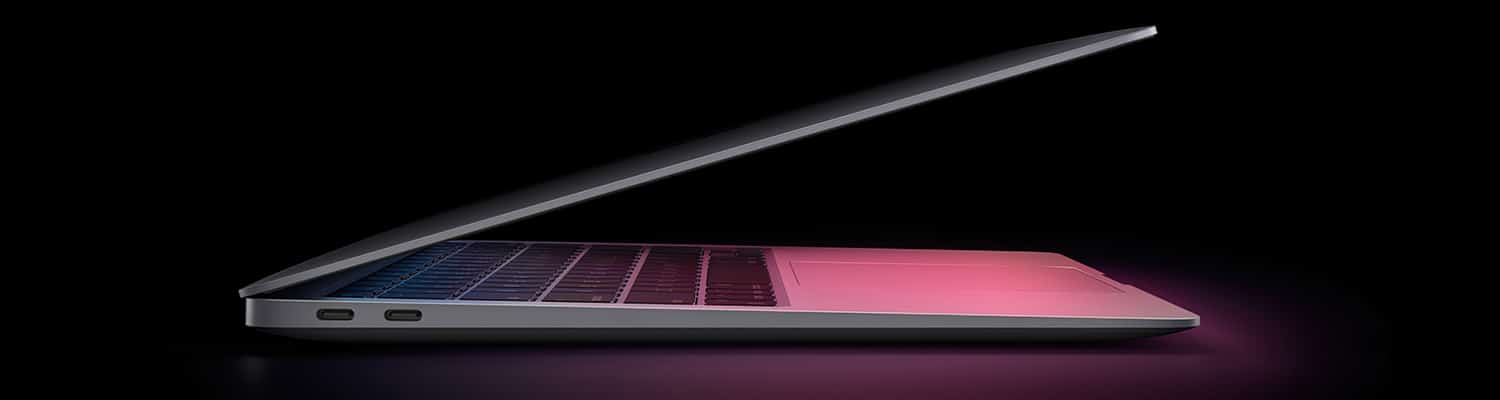
Here at Ultrabookreview.com, we’ve reviewed hundreds of ultrabooks and portable lightweight laptops over the last 15 years, of all kinds and from all brands.
In this guide, I’ll tell you which are our favorite portable notebooks right now, to help you choose the best ultrabook for your needs and budget out of the multitude of available models.
Table of Contents
- Table of contents – the best ultrabooks in 2025
- The best premium thin-and-light laptop
- Apple MacBooks – unmatched daily drivers
- Asus Zenbooks – the best-value options
- Lenovo ThinkPad X1 Carbon, ThinkPad X13 – the best business ultrabooks
- Framework Laptop 13 and Framework 12 – configurable, upgradable, repairable
- Asus ROG Flow Z13 and ProArt PX13, Zephyrus G14 – powerful options for work and gaming
- Honorary mentions
- The best-value ultrabooks and thin-and-light laptops
- The best gaming ultraportables
- Productivity lightweight laptops for work, creators, or programmers
- 2-in-1 convertibles with touchscreens
- Fanless ultrabooks and tablets
- Wrap-up – what’s the best ultrabook?
With the multiple types of light compact laptops out there, I’ve split this guide into a few different sections, based on their overall size, capabilities, and pricing; the Table of Contents will point you toward the section of interest. I kept things as simple as possible, with only the best options mentioned in each category, but I’ve added links to our reviews and more detailed guides that go in-depth over each subtopic, if you’re interested in more variants or details.
I also mention that we update the article several times a year, or when something remarkable comes out, and if you need more guidance or have any questions, there’s a comments section at the end of the post where you can get in touch with us.
That aside, please account for the fact that thorough testing and analysis take a lot of time and effort, thus if you’ll find the article helpful, I’d appreciate you supporting our work. Sharing the post with your friends, disabling your adblocker, or buying from our links greatly helps us continue what we do here.
Table of contents – the best ultrabooks in 2025
- our favorite premium ultrabooks;
- the best-value options – best bang for your buck;
- productivity 14 to 17-inch portable notebooks – larger, but still fairly portable laptops, best suited for engineers, creators, or programmers;
- 2-in-1 touchscreen ultrabooks – 2-in-1 convertible/tablet designs with touchscreens;
- portable gaming laptops – the best compact powerful laptops for demanding workloads and games;
- fanless designs– the completely silent options.
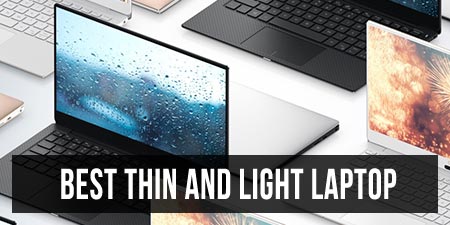
This section goes over our recommendations for premium thin-and-light ultrabooks with the latest hardware specs and modern features. We’re only looking at traditional clamshell formats here, as we’re also covering 2-in-1 models with convertible touchscreens or tablet formats in the following section.
Apple MacBooks – unmatched daily drivers
For most potential buyers, MacBooks are my recommendation for portable all-purpose notebooks these days, with either the lightweight and thin MacBook Air models (available in 13 and 15 inch sizes) or the more powerful MacBook Pro lineups (with 14 and 16 inch variants).
What you’re getting here is pristine build quality, minimalist aesthetics, excellent inputs, and an unmatched daily use experience in terms of general performance, noise/thermals and battery life. That’s because these laptops are built on Apple M silicon hardware and run Apple’s OS, allowing for a symbiosis not possible today on non-Apple devices. You can find these MacBooks in various hardware generations, with the latest hardware being the Apple M4/M4 Pro/M4 Max at the time of this update (early 2025) – go through reviews to figure out the performance differences between them.
At the same time, someone coming from a Windows device will most likely struggle adapting to the OS and general software functionality of these MacBooks. It can be frustrating at first, but with time, I’d reckon you get used to how things are done on MacBooks. More importantly, though, you must consider what you plan on running on your laptop: if it’s software designed specifically for Windows or games, MacBooks aren’t for you.
And then, you should also be aware that these MacBooks are somewhat limited in terms of certain features and ergonomics. For instance, the MacBooks Airs are only available with regular IPS low-refresh displays and minimal IO, while the Pros get more ports and a mini LED display, but there’s no OLED. And they are all clamshell formats with glossy displays and limited screen angles, and this bothers me every time I’m using my MacBook Air on the lap.
However, as long as you understand the ergonomics and functionality particularities of these MacBooks, there’s hardly anything better out there. Even value is excellent with recent MacBooks, with the Air starting at $999 and the Pro at $1599. Sure, the base-tier MacBook Air only gets you 8 GB of RAM and 256 GB of storage, but for casual use, that’s still fine. Upgrades, on the other hand, are darn expensive for MacBooks. And repairability is pretty much nil. Something to keep in mind if you plan on using these for years.
Follow these links for more details on the MacBook lineups, updated configurations, and potential discounts: the MacBook Air and the MacBook Pro.
Asus Zenbooks – the best-value options
Zenbooks are available in a handful of different variants and sizes and specs, most models being competitive in specific niches. Here are a few to consider, with links to our detailed reviews:
- Zenbook 14 – mid to premium tier metal chassis, OLED displays touch or non-touch, excellent inputs and good IO, latest Intel or AMD hardware, 75 Wh batteries, dual-speakers, affordable pricing;
- Zenbook A14 – mid to premium tier metal chassis, ultra-lightweight at <1 kg, OLED display, Snapdragon hardware, 70Wh battery, great pricing;
- Zenbook S 14 – lightweight premium metal 14-inch chassis, 1.2 kg, OLED touch, Intel Ultra V hardware, 72 Wh battery, 4x speakers;
- Zenbook S 16 – lightweight premium metal 16-inch chassis, 1.5 kg, OLED touch, AMD Strix Point hardware, 78 Wh battery, 6x speakers;
- Zenbook Duo – dual-display format with two 14-inch OLED, good ergonomics, Intel Ultra H hardware, more expensive.
These are all ultrabooks, with similarities and notable differences between them. Among the similarities, these are 14-inch designs with OLED displays, with good IO and inputs. But then…
The Zenbook A14 is an excellent options for casual use, with Snapdragon hardware, snappy daily-use performance and amazing battery life. It’s also more affordable that most other options. But then, you must be aware that Snapdragon laptops cannot handle all the applications and software that you can run on regular x86 Intel/AMD platforms.
The Zenbook 14 models are excellent value options as well, a mid-quality 14-inch design with mid-level specs, either Intel or AMD.
The Zenbook S 14 is a more premium-tier chassis, with better build quality and overall feel. It’s also more compact than the regular Zenbooks, and lighter, despite implementing an advanced cooling module with a vapor-chamber. On the other hand, Asus’s quest for a thin chassis only allowed space for a shallower keyboard, and all the materials and engineering translates in a higher price.
The Zenbook S 16 is another premium-tier chassis, but a larger 16-inch format. It’s still highly portable for its size, at just around 1.5 kilos in weight, and is built on AMD Strix Point Ryzen AI 9 hardware, making it an excellent daily driver for those interesting in a computer with a larger display.
Finally, the Zenbook Duo is an unique design with two displays and a detachable keyboard-folio. It’s a great laptop and a great desk computer, but it’s thicker and heavier and more expensive than the regular single-display options.
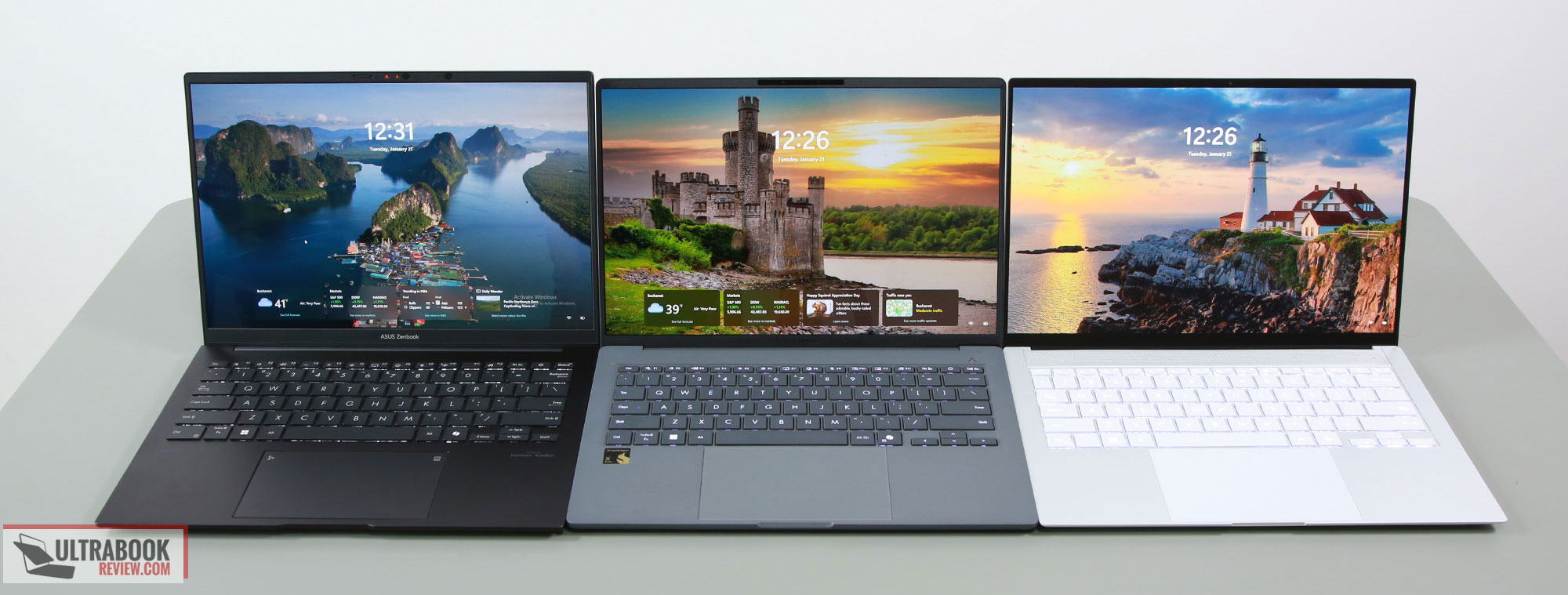
You’ll find more about each of these devices, including their strong point and the quirks, in our reviews. And here’s a side by side pic of the Zenbook 14 (left), Zenbook A14 (center), Zenbook S 14 (right) lineups.
Lenovo ThinkPad X1 Carbon, ThinkPad X13 – the best business ultrabooks
The X1 Carbon is still Lenovo’s flagship premium ThinkPad thin-and-light laptop, while the X13 is a more balanced mid-tier offer.
The ThinkPad X1 Carbon (reviewed here) is a 14-inch laptop and a premium lightweight chassis made out of magnesium alloys. It looks like a ThinkPad and offers what you would expect from a ThinkPad: the build quality, the keyboard, clickpad, and TrackPoint, a diversified IO, configurability and repairability.
The latest X1 Carbon generations are available with OLED displays and improved speakers, but still only a 57 Wh battery inside, which is smaller than what you can get with many other 14-inch ultrabooks. Sustained performance under load isn’t quite on par with the competition either, due to the minimalist cooling design, implemented most likely in order to keep the weight down.
follow this link for up-to-date details on the available ThinkPad X1 configurations and potential discounts, or this link for all our reviews of the ThinkPad lines.
The ThinkPad X13 is a more mid-range series, but still a ThinkPad with all the bells and whistles expected from such a computer.
These are available as either a clamshell or 2-in-1 variant, both lightweight and well built and highly configurable, with either Intel or AMD hardware, up to 64 GB of RAM and up to 55 Wh batteries – still small.
Unlike most other options mentioned so far, these ThinkPads are offered with IPS displays, so not with punchy and vivid OLEDs. But at least this means you can get a matte panel on the clamshell X13 model.
These X13s are also fairly priced in most markets, making them competitive built-to-last daily drivers in the mid-range segment.
Framework Laptop 13 and Framework 12 – configurable, upgradable, repairable
Framework is a smaller laptop manufacturer specialized in building devices that are highly customizable and repairable. The Framework Laptop 13 has been available in stores for a few years now, and is a clamshell 13-inch laptop, while the Framework 12 is a newer launch and a more compact 2-in-1 convertible chassis with a 12.2-inch touchscreen.
These are both barebone designs, which means they come with swappable motherboards, RAM, storage and ports. The latest versions of the Framework 13 are available in either Intel Core Ultra or AMD Ryzen AI variants in mid-powered implementations (around 30W sustained), with mid-range cooling and 61 Wh batteries. You can either get models preconfigured from Framework, or can build your own and user your own memory and SSD sticks – prebuilt configurations are usually more affordable priced, though.
The chassis is a slightly taller 13-inch format, designed to accommodate a 13.5-inch 3:2 display. It weighs around 1.3 kilos / 2.9 lbs, and is entirely built out of metal. The build quality and overall feel are alright, but not on par with MacBooks and even some of the better Windows models (Zenbook S 14, Dell Premium, etc).
The ports are on user-replaceable slots, which means you can replace and swap them around based on your needs. The keyboard is a full-layout with 1.5 mm of travel, excellent for a thin-and-light design, and the touchpad is matte glass. Finally, the display is matte with IPS panels, either 2K 60 Hz or 2.8K 120 Hz, both with 100%sRGB color coverage. There’s no OLED option, no touch and no wide-gamut colors.
Pricing can get fairly steep for the Framework 13, so this laptop is not necessarily a best-value buy. Latest Ryzen Ai models start at $899 for the Ryzen AI 5 Krackan configuration, but the Ryzen AI 9 version starts at $1500++. Both without RAM and SSD, those are extra. So you’re paying a premium for the format and internal design.
The Framework 12 is a convertible chassis expected for mid-2025. It’s a similar barebone design with upgradeable internals and ports, a touchscreen, and Intel hardware. Look for more details over the next few months.
Asus ROG Flow Z13 and ProArt PX13, Zephyrus G14 – powerful options for work and gaming
These are more powerful devices, with faster processors and graphics chips and higher-end cooling capabilities, but still portable and lightweight.
I’ve mostly covered these options in a separate article that discusses high-performance and gaming ultrabooks and thin-and-light laptops, but here’s a brief summary of these lineups as well, with links to our reviews.
The Zephyrus G14 is a 14-inch laptop with a premium design and a weight of around 1.55 kilos. It comes with an OLED display, latest gen hardware from AMD and Nvidia (up to Ryzen 9 AI HX 370 + RTX 5080), complex tri-fan cooling, 6x speakers, and a 73 Wh battery. Is available in a multitude of configurations and at the very top, is the fastest device in its segment today.
The ROG Flow Z13 is a 13-inch tablet format built on AMD’s Strix Halo Ryzen AI Max hardware, with a powerful CPU and a Radeon iGPU that offers similar performance to mid-tier Nvidia RTX chips. This can be specced with up to 128 GB of RAM and comes with a fast IPS display. It’s expensive, though.
The ProArt PX13 is a 13-inch convertible 2-in-1 laptop format, thus more versatile in laptop mode. It is built on AMD Strix Point Ryzen AI hardware with up to an RTX 4060 and 32 GB of RAM, and comes with an OLED display. It’s expensive as well.
There are quite a few other options in this space of powerful portable computers, such as the previous-gen ROG Flow X13 and Z13 that you can get at discounts today, as well as a multitude of other 14-inch models such as the Razer Blade 14 to the HP Omen Transcend 14. But these latter ones aren’t as portable as the Zephyrus.
Honorary mentions
Given the multitude of excellent premium ultrabooks out there, I’ve also put up together this list of honorary mentions in this segment, with links towards our detailed reviews and guides.
You might want to consider these for specific features and traits that might not be available with our recommendations above, such as certain screen formats and types of panels, certain design choices, longer battery life, or more affordable price tags in your region.
- Asus ExpertBook B9 series – review – sub 1-kilo 14-inch business laptop with low-power modern Intel specs, IPS matte screen, big battery, uncompromised IO and business features;
- Dell XPS/Premium series – configurations and prices – Dell’s premium-tier 13 to 16 inch models, with excellent build quality and features, but questionable ergonomics and minimalist IO;
- Microsoft Surface Laptop – configurations and prices – compact 13.5-inch and 15-inch ultrabooks with 3:2 high-resolution screens, AMD or Snapdragon hardware, and excellent keyboards, all tucked inside portable unibody designs; small batteries and limited availability;
- Lenovo ThinkPad T14 and T14s – mid-range 14-inch business ultrabooks, clamshells or 2-in-1s, value alternatives for the X1 Carbon, with mostly similar traits, but increased dimensions/weight and mid-tier builds;
- Lenovo Yoga Slim 9i – preview – premium ultra-compact 14-incher, 1.2 kilos, modern Intel specs and 75 Wh battery;
- LG Gram series – configurations and prices – compact and ultralight 13 to 17-inch ultrabooks with matte screens, good inputs, and large batteries; not as sturdily built as other premium options;
- Samsung Galaxy Book series – ultralight premium 13 to 16-inch laptops with Intel hardware and big batteries, available as clamshell or 2-in-1 convertibles; only offered in some markets.
- XMG Neo 14 – barebone mid-tier 14-inch chassis, IPS display, good IO, Intel or AMD specs, 80 Wh battery, competitive pricing but not available everywhere.
And don’t forget this section mostly touches on premium clamshell ultrabooks, and we’re also covering the value options and the 2-in-1 convertibles further down.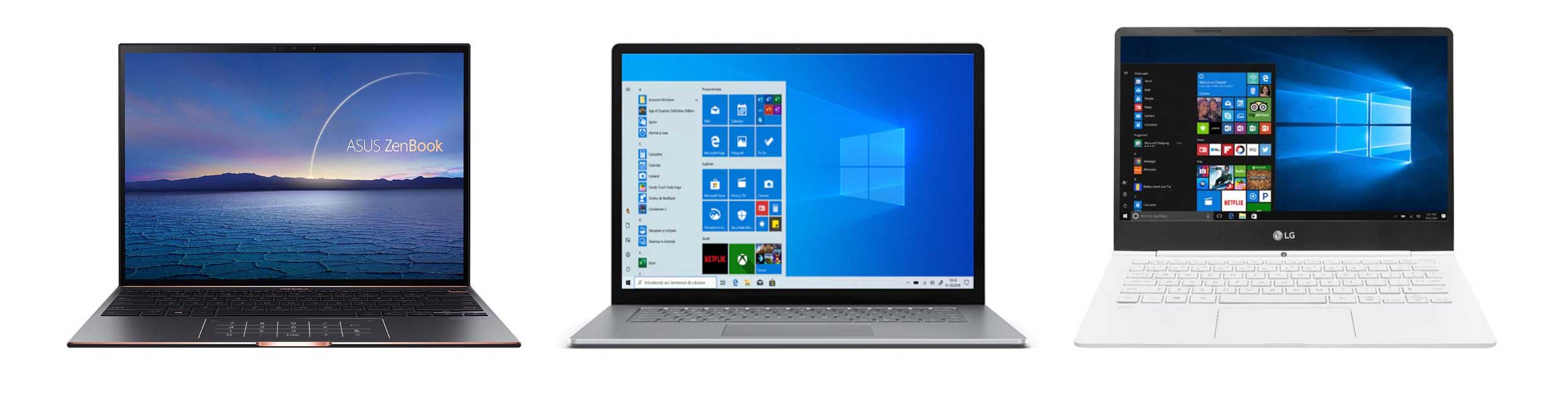
The best-value ultrabooks and thin-and-light laptops
While the market offers compact laptops that range from between several hundred to several thousand dollars, most of you are looking to maximize the return of your money, and my years of experience show me that the sweet spot for that is somewhere in the $700 to $1000 price range or local equivalents in your area.
Shopping at the higher limit of that budget would allow you to get versatile mid-specced variants of some of the premium ultrabooks mentioned earlier (such as the Apple MacBook Air M2, Asus Zenbook 14, Lenovo Yoga Slim 7).
There are, however, some excellent-value options to consider at the lower-end as well, in the $500 to $800 price range, and we’ll go over them down below, listed alphabetically.
Acer Swift Go
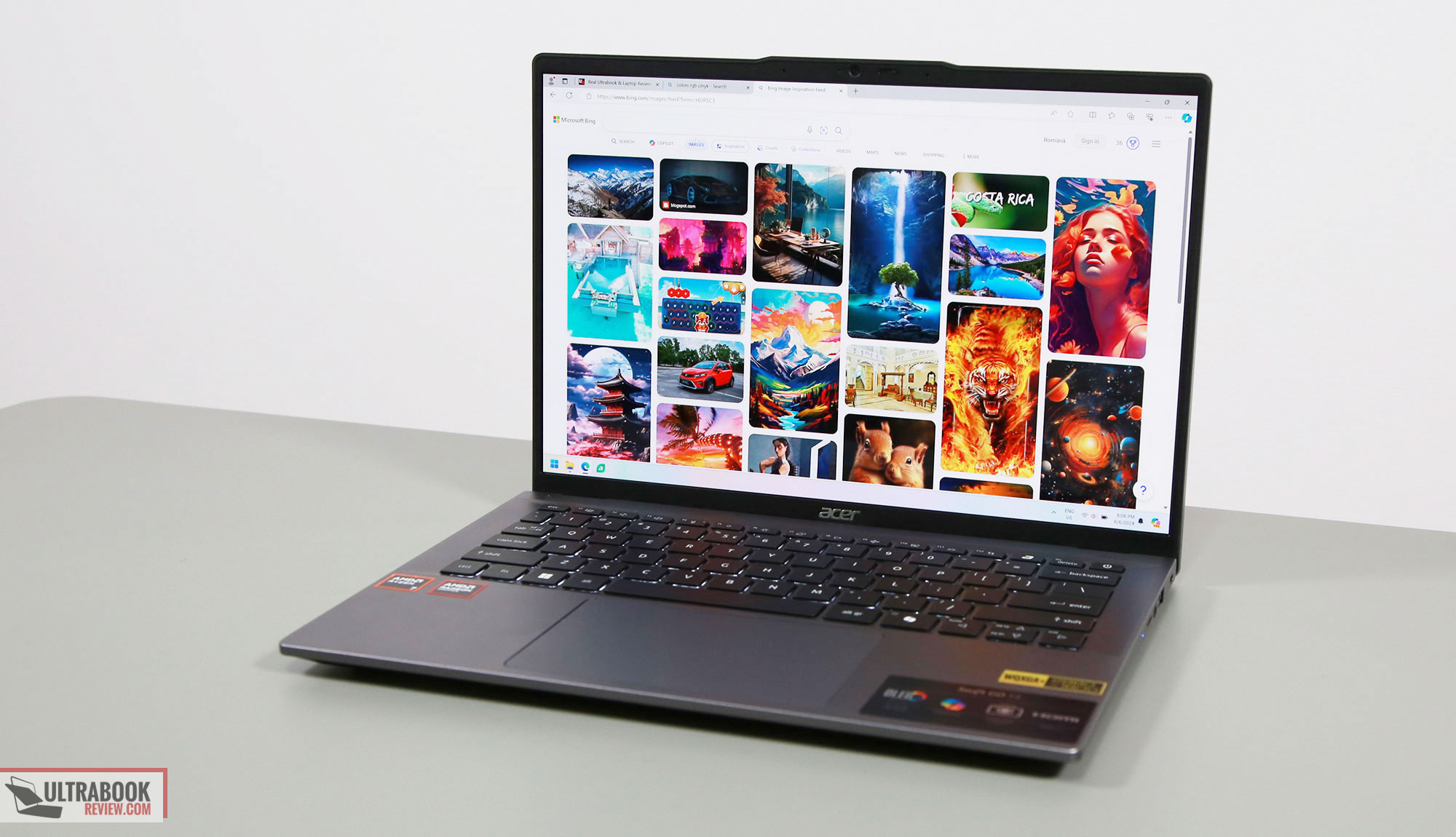
The Acer Swift Go is one of the best-selling lineups of thin-and-light laptops for the last many years, and a direct follow-up of the even more popular Swift 3 series. Over the years, Acer refined this series into mature and uncompromised products, while keeping prices competitive.
The Swift Go series is available in a multitude of options, in 14 and 16 inch clamshell formats. They’re built alright and ergonomic, and offers the latest features and specs available today. That means you will find these laptops with either IPS or OLED displays, and AMD, Intel or Snapdragon hardware. They tend to perform faster than the average thin-and-light, due to the higher power settings and beefier cooling, but at the same time implement 54 to 65 Wh batteries, smaller than the segment’s average.
We’re reviewed many Swift 3 and Swift Go models and generations over the years, and you’ll find our articles over here.
Apple MacBook Air M1
While this is an older design and doesn’t look as exquisite as the updated Air M2-M4 models, the Air M1 is still a recommendation if you can snag it for around $500-$600.
It’s still a sturdily built unibody laptop with decent performance for daily use and excellent battery life, as well as good inputs. The IO is minimalist and the display is average at best, with an older-gen IPS panel and chunky bezels, but I’d reckon these could be compromises worth taking when shopping on a budget.
The video below goes over reasons why the MBA M1 was a solid budget choice in 2024, and those reasons are still valid in 2025 as well.
Asus VivoBook S 14 OLED
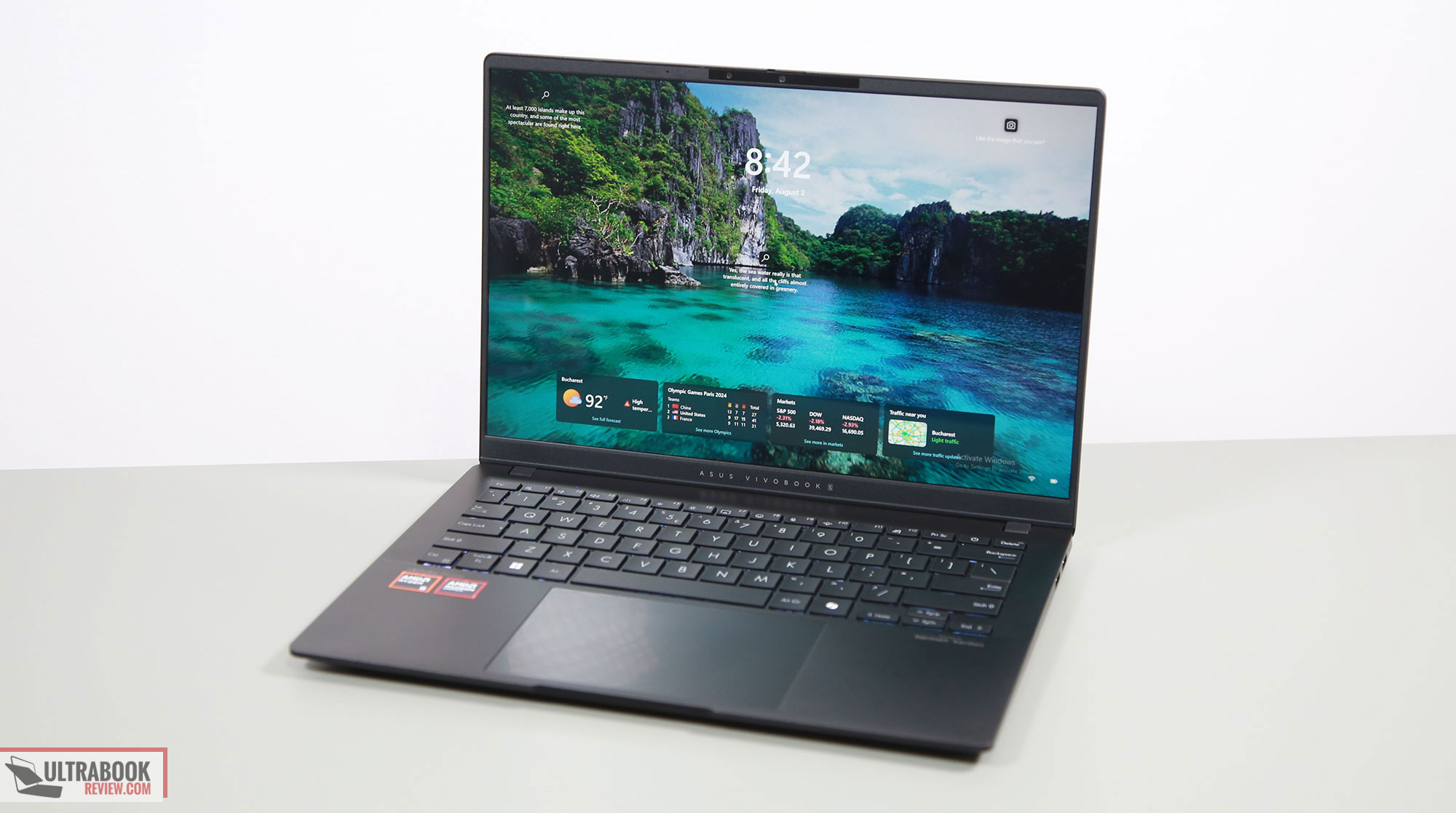
The Asus VivoBook S series is a worthy alternative to the Acer Swift Go lineup, Asus’s mid-range lineup and a slight step-back from the Zenbooks.
VivoBooks are still all-metal builds with compact clamshell formats, OLED displays, good inputs and IO, as well as either Intel, AMD and Snapdragon hardware and 75 Wh batteries. These are mostly the same features and specs that Asus offers on their mainstream Zenbook models, but with some subtle differences. Among them, Vivobooks are a little heavier and get lower-quality speakers, but at the same time are more powerful and implement better cooling.
For the most part, VivoBooks tend to be somewhat more affordable than similarly specced Zenbooks, but the differences are limited. The Snapdragon-powered VivoBook S 15 is especially well priced, but that’s ARM-based, so meant for casual use.
You’ll find more about this series from our detailed review of the VivoBook S 14 OLED, as well as this review of the VivoBook S 15 OLED model.
HP Pavilion Plus 14 and Pavilion Aero 13
HP have been constantly pushing and improving their mid-range laptop lineups over the last years, and they end up with two value mentions in this section.
The Pavilion Plus 14 is a mid-range metal chassis that weighs around 1.4 kilos. The laptop is offered with either IPS matte or OLED touch displays, Intel or AMD specs and a 68 Wh battery. It’s also cooled well, although the internal cooling module differs between generations and configurations, so you’ll want to get the one with two fans and heatpipes.
The Pavilion Aero 13 (reviewed here) is an older series from a few years ago, and a compact 13-incher that weighs just 2.2 lbs (1 kilo). If you can still find this in stores, you’ll get AMD Ryzen specs, a matte IPS display, a good keyboard, but a rather small battery. This was affordable in its prime, and can be dirt cheap today. Worth considering used as well, if that’s an option.
You’ll find more about HP laptops from our reviews and coverage over the years.
Lenovo IdeaPad Slim 5 and Pro 5
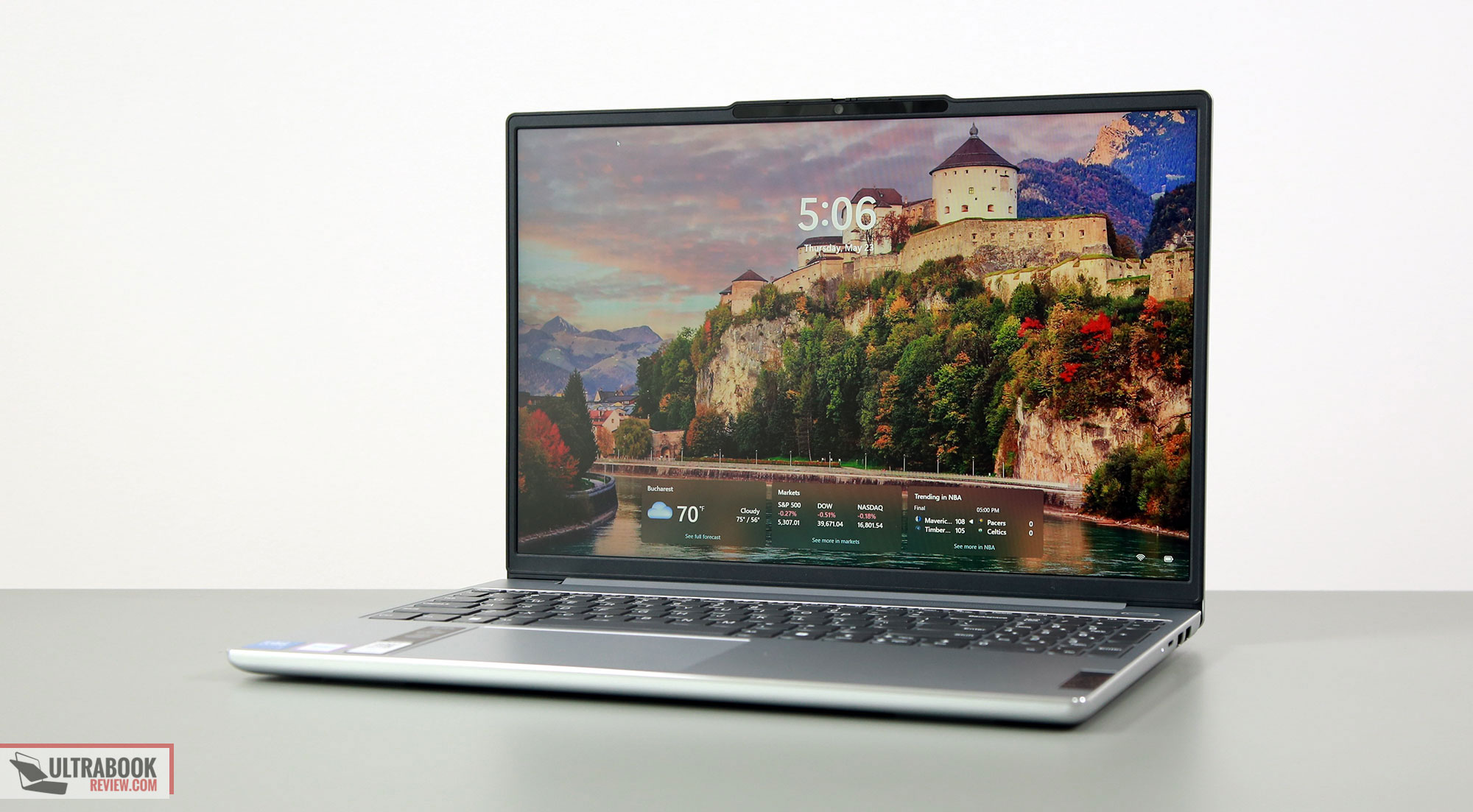
While alphabetically last in this section, Lenovo make some of the most competitive mid-tier and budget ultrabooks right now, with the IdeaPad Slim 5 and IdeaPad 5 Pro series.
As the name suggests, the Slim 5 is a lower-powered and lighter options, while the 5 Pro implements more advanced cooling and allows for higher power settings. These are offered in multiple versions, with Intel or AMD hardware, mid-sized batteries and 14 to 16 inch displays with IPS or OLED panels. The IPS 2K options are low-quality, so stay away from those.
You’ll find more about Lenovo IdeaPad laptops from our reviews and coverage over the years.
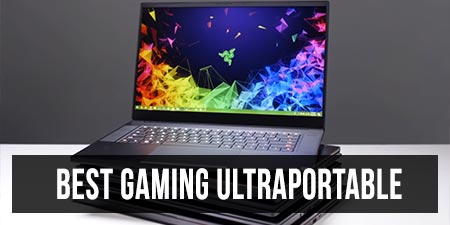
The best gaming ultraportables
We’ve already thoroughly covered this topic in a separate article, sofollow this link for our detailed guide on gaming ultrabooks and portable gaming laptops.
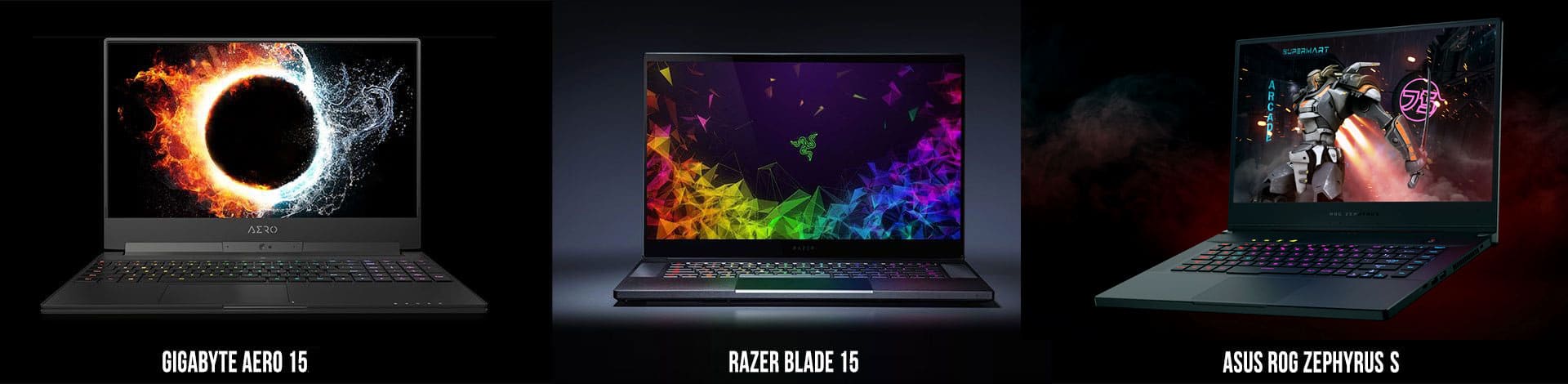
In just a few words, though, gaming ultraportables are compact and light-performance laptops with capable processors and graphics, as well as matching cooling module to handle those specs in sustained loads. Most of these are full-size devices with 15 to 17-inch screens, but with compact designs.
The best options include premium 16-inch ultraportables such as the Razer Blade 16, Asus ROG Zephyrus G16, Lenovo Yoga Pro 9i, or the MSI GS68 Stealth, but also good-value full-size notebooks like the Lenovo Legion Pro 7 or the Asus ROG Strix G lineups.
Those interested in smaller and lighter options should consider some of the available 13 and 14-inch gaming ultrabooks, such as the compact Asus ROG Flow X13 and ROG Flow Z13, as well the 14-inch gaming notebooks with more capable graphics such as the Razer Blade 14 or the Asus ROG Zephyrus G14.
As mentioned, follow this link for our detailed guide on gaming ultrabooks, or this one for a wider coverage of the thinnest and lightest 14/15-inch laptops out there.
Productivity lightweight laptops for work, creators, or programmers
This section caters to those among you in need of a portable and powerful laptop for complex workloads and school tasks, the kind you could not properly run on most of the ultra-compact devices mentioned in the previous sections of the article. These recommendations are meant for university students, engineers, programmers, architects, and creatives, but still with a portable and slim form-factor in mind.
For sure, the gaming/performance ultraportables already covered above make for excellent all-around work&play devices. However, most of those laptops are primarily gaming-focused and thus prioritize performance over fan-noise and fast high-refresh-rate screens over the color coverage (100% DCI-P3 or AdobeRGB) and image fidelity that you might require in your creative endeavors. And here’s where the options in this class come in handy, which offer power profiles better optimized for everyday use and work, high-gamut high-resolution displays, as well as certain software and hardware optimizations meant to enhance your productivity.
Apple MacBook Pro 16
I’ve listed these options alphabetically and hence the Apple MacBook Pro 16 comes first, but this is nonetheless the prime choice in this space, as long as you’re OK with the software particularities of Mac OS and your work applications run on a Mac.
Even in a performance computer, beating the smoothness of the hardware and software integration on a recent-gen MacBook is darn tough for other models. On top of these, the overall build quality, typing experience and battery life are nearly impeccable on a Mac as well. On the other hand, the IO is rather minimalistic and certain ergonomics aspects are questionable, such as the sharp edges and limited screen angle, but perhaps these don’t matter as much on a 16-inch chassis as on the more portable versions.
Among the features added by the latest refresh of the MBP 16, there’s a new nano-texture finish, Thunderbolt 5, a wider webcam and a brighter mini LED display with quantum-dot technology. And M4 Pro/Max Apple silicon, of course.
And then there’s the price factor. These days, the entry-tier MacBook Pros are priced around 2500 USD/3000 EUR, but these come with 24 GB RAM and 512 GB SSD space, and upgrading the RAM and storage is expensive. Outrageously expensive. You’ll most likely want at least 24 GB of RAM and 1 TB of storage on this sort of a computer, so a properly-configured version will set you back 3-4K $.
Asus ProArt P16
The ProArt P16 is an ROG Zephyrus G16 with a cleaner all-black design and a 4K OLED display. Otherwise, it’s the same chassis and functionality, with a compact 16-inch format, sturdy build quality, good IO, excellent inputs and punchy speakers that can even keep-up with the audio in the MacBook. The display is 4K OLED, so not as bright as the mini LED on the MacBook, but mostly comparably otherwise.
Specs wise, the ProArt P16 is built on Ryzen AI processors and up to an RTX 4070 dGPU (with updates to RTX 5000 perhaps following at some point). That’s a mid-level performance configuration in the Window space, and paired with mid-level cooling. The Zephyrus G16 is available with newer RTX 5000 graphics already for the 2025 generation, and the higher-tier vapor-chamber cooling on the top models.
I’ll also add that the ProArt P16 is fairly well priced for what it is, at sub $2000 for the 4060 model with 32 GB RAM and 1 TB SSD. More details on this series are available in our review.
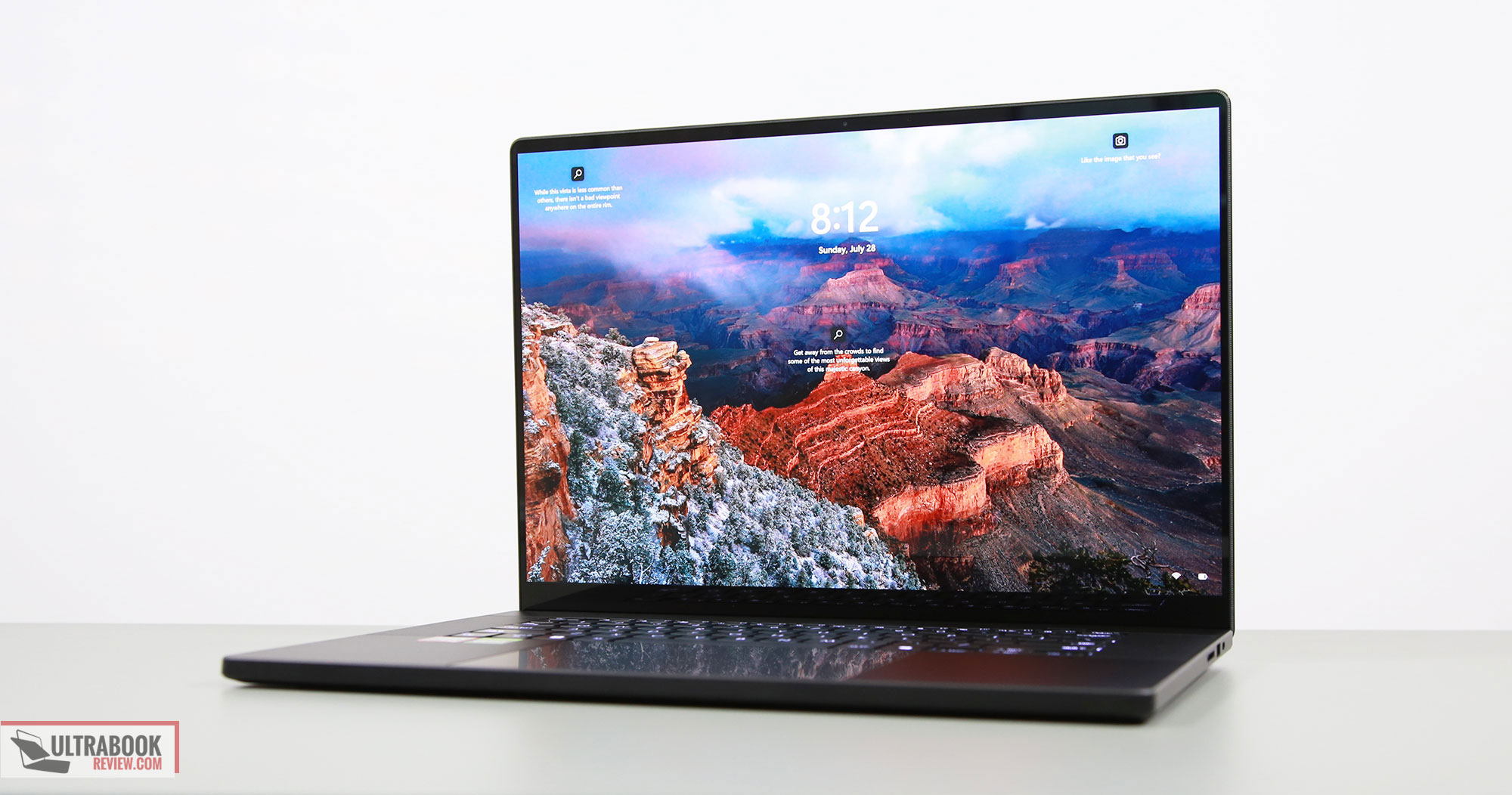
These here are a bunch of other portable workstation lineups from Dell (XPS 16, and the updated Premium 16 Pro Premium 16), Lenovo (ThinkPad P1, ThinkBook P16), HP (ZBook Power) or MSI (Stealth 16 Studio, Stealth A16 AI+).
They’re designed to balance a premium portable chassis with mid-level performance and good efficiency on battery power, while offering excellent displays, audio, inputs and IO. That means you’re getting metal builds here and mid-powered implementations of the latest Intel, AMD and Nvidia hardware platforms – however, not all these models have been refreshed to 2025 specs at the time of this update.
You’ll need to look into reviews for the exact particularities, pros and quirks of each of these models. You’ll also want to set aside a consistent budget if aiming for a higher-specced configuration, although these are all highly customizable and the lower-tier models aren’t that expensive.
2-in-1 convertibles with touchscreens
Hybrids are modern devices with convertible or detachable touchscreens, and they can be used as either regular notebooks or as tablets. We’ve covered this topic in-depth in this separated article about the best 2-in-1 laptops, which you should head over to if you’re primarily interested in a convertible over any of the other ultrabooks in this article., But we’ll also quickly go through our top recommendations down below.
First, though, you need to be aware that there are mainly two kinds of 2-in-1s: stand-alone tablets that can act as laptops when hooked to an external dock or keyboard-folio, and regular notebooks with 360-degrees convertible screens. The latter are more versatile in laptop use, especially when used on the lap, and tend to get larger batteries, faster hardware, and more ports, while the former are highly portable and excellent tablets, but less practical when not used on a flat surface.
Tablets: Microsoft Surface Go, Surface Pro, and iPad Pro
Microsoft makes some of the best Windows tablets out there, with the compact and affordable Surface Go and the powerful Surface Pro series.
The Surface Go is an older-generation 10-inch tablet with a high-resolution 3:2 touchscreen, fanless Core Y hardware, and a base selling price of around $400. It’s compact, lightweight, and rather inexpensive, which makes it an awesome mini-computer for school or travel companion. It runs Windows S by default but can be upgraded to regular Windows for extra functionality. Follow this link for more details.
The Surface Pros are more powerful and capable devices, able to handle daily multitasking and demanding chores, in a lightweight and compact magnesium chassis. For many generation, the Surface Pros came with 13-inch IPS 3:2 touchscreen and Intel hardware, while the latest generation has transitioned towards an OLED display and Qualcomm Snapdragon hardware. That has a positive impact over the daily-use snappiness and efficiency on battery power, but a negative impact over what you can actually run and do on these devices.
The latest Surface Pros start at $999, but previous-gen models can still be found for much less. Follow this link for more details.
Finally, the iPad Pro makes its way into this section as well, as a competent choice for graphics artists and creators. It’s a lot more versatile than in the past, with the latest hardware and software updates, and includes an excellent OLED screen with pen support, for the same budget you’ll pay for a fully accessorized Surface Pro. Of course, it’s not a Windows tablet and can’t run the things you can run on the Surface devices, but has its own software advantages and integration with the Apple ecosystem. Follow this link for more details.
All these lineups of premium 2-in-1s have been available for a while now, and were incrementally updated and improved over the years.
The HP Spectre x360 14 is available in either a 14-inch or a 16-inch variant. The Spectre x360 14 makes more sense as a convertible, due to its more compact build, but the x360 16 offers faster hardware, a larger battery, and improved IO. Both are premium computers and bundle the latest and greatest in terms of features, connectivity, and everyday user experience in their niche. They also emphasize on their excellent OLED screens and premium chassis.
The Lenovo Yoga 9i is a 14-incher, while the more powerful Yoga Pro 9i 16 is not a convertible. The latest iterations of the Yoga 9i make it more portable than the Spectre 14, despite packing a similar OLED and extra speakers in the screen hinge.
Follow this link for a more thorough list of recommended 2-in-1 laptops and hybrids.
Affordable 2-in-1 convertibles: Lenovo Yoga 7 2-in-1 and Lenovo Flex 5i Chromebook Plus
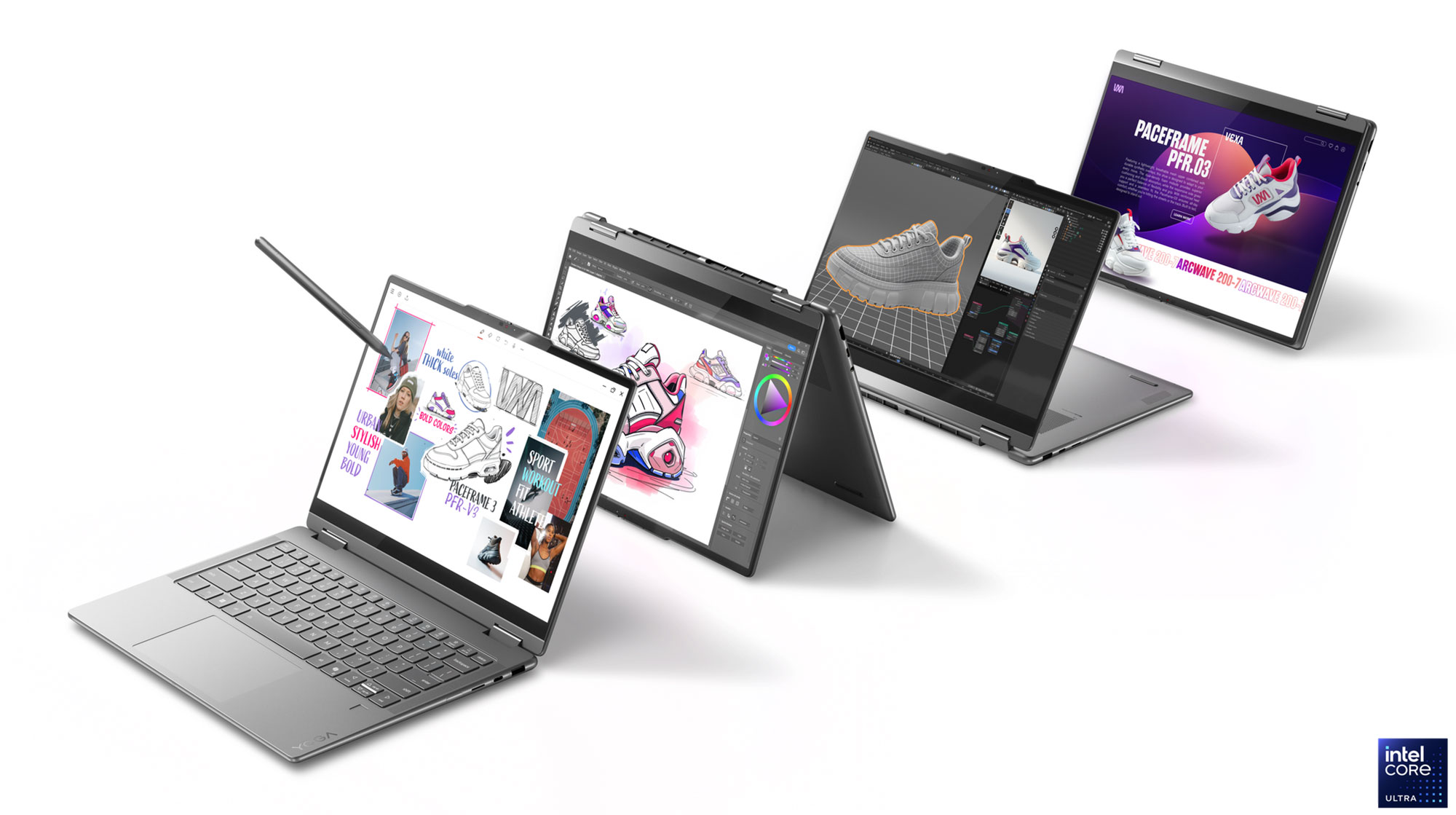
As far as Windows laptops go, the Lenovo Yoga 7 2-in-1 series is the best value 2-in-1 available today. You can get these in either 14-inch or 16-inch sizes, and built on multiple hardware platforms over many generations, either Intel or AMD. The latest models as of 2025 are built on Intel Lunar Lake V hardware.
What you’re getting here are good-quality metal chassis, good IO, good keyboards, quad speakers and either IPS or OLED touchscreen displays. Plus 70 Wh batteries.
As far as pricing goes, the latest generations are available from around 800 USD/EUR an up, but previous-gen variants can be found for less.
There are many compelling 2-in-1 Chromebooks available today, but the Flex 5i from Lenovo is the better value option, with plenty-powerful hardware, decent build quality and a decent IPS display. Just make sure a ChromeBook meets your expectations and requirements. More options and details on the latest Chromebooks are available in this separate article.
The Flex 5i Chromebook Plus is available for around $350 at the time of this update. Follow this link for more details.
Fanless ultrabooks and tablets
If you want a completely silent computer without a fan inside, fanless passively-cooled options are the ones for you. Just keep in mind that most of these passively-cooled models are not going to be as powerful in sustained loads and multitasking as the beefier platforms with more competent active cooling.
The Apple MacBook Air (M1 or later) is by far the go-to fanless multi-purpose ultrabook to get these days and the exception to the rule mentioned above, as it’s at the same time both faster and more efficient than the Intel variants of the MacBook Air or most of the available Windows ultrabooks.
MacBooks aside, most of the competent Windows models are not fanless, with very few exceptions. Here’s a complete list of fanless ultraportables if you’re interested in a deeper dive into this topic.
Wrap-up – what’s the best ultrabook?
Ultrabooks have come a long way over the years.
The hardware is more powerful and more efficient these days, and alongside came new form factors and features, as well as improvements on all the fundamentals that make for a competent laptop: build quality, inputs, screens, IO and connectivity, and battery life, among them. As a result, there are now many excellent options to choose from.
As for what’s the best ultrabook for you, that’s for each one of you to decide. You know what you want and value in a laptop, so go through the options in this article and pick the one that best fits your needs and budget.
And if by any chance you haven’t found what you were looking for in this massive post, you could also check out these other articles on the site:
- gaming thin-and-light laptops with dedicated graphics chips (recommended for gaming, but also programmers, engineers, or creators);
- 2-in-1 convertibles with touchscreens;
- fanless ultra portables – perfectly quiet, without a fan or a spinning HDD inside;
- best-rated Chromebooks – affordable mini-laptops for Internet-based activities, selling for between $150 and $400;
- what is an ultrabook and how do ultrabooks compare to regular laptops?
Last but not least, you can check out the reviews posted here on the site and our thorough comparisons, or get in touch in the comments section if you need any help with your decision, have any questions, or just want to add something to this article.
Keep in mind that we’re updating this list of recommended ultrabooks and portable lightweight laptops every three to four weeks, if not more often. Your support is greatly appreciated.



Chloe
February 1, 2017 at 5:29 am
Hey Andrei,
This article was definitely enlightening and helpful. Ill be a student starting university this year and looking for thin (but not too thin) but still portable laptop and looking for something with good build so will last long. I am willing to stretch the budget but just needing the guidance. I will mainly be in research area and would like a battery that lasts at least 10 hours on a charge. As I will be attending lectures and dont want the laptop dying on me during a session. So Id like to stay safe and long battery life will be a bonus and still have everything mentioned above. Thank you so very much! C
Andrei Girbea
February 2, 2017 at 6:14 am
This post should help narrow down your options. You should start by deciding on size (13-inch screen, smaller or bigger) and then pick what best fits your budget. You haven't mentioned any, so can't make any recommendations. Few options will offer 10h of continuous daily use though.
Mantas
February 4, 2017 at 2:33 pm
Hi, Andrei,
It's great overview of laptops !
I'm still struggle with selection. What would be the best (or few) choice for such requirements:
* MATTE Screen 11.6 to 14 (for reading, now reflections)
* Fanless (silent, activities: browsing, video)
* Longer than average Battery Life, rather light
* OS: Windows (price up to 1000 $) or chromebook (more quality)
Charry
March 23, 2017 at 12:37 pm
Hi again Andrei
I wrote to you about getting a new laptop for my desires, you told me to wait for spring 2017 and and here we are. As mentioned in that comment I was hoping for a mulimedia ultrabook, with a great graphics card for now demanding games, while also being thin and goodlooking since I also need it for college. Last year i had my eyes on the asus zenbook UX501/10 but I want a better graphics card. Any laptops that cames out for now that his these demands? :P being under 1700$?
-Charry
Andrei Girbea
March 28, 2017 at 6:54 am
Hi Charry. I'd look at the Dell XPS 9560 or the MSI GS63 or GS73, depending on the type of graphics card you'd need and the design lines you prefer. Both are withing your budget and have been reviewed here on the site.
Charry
March 31, 2017 at 1:09 pm
Hey it seems that is a lil bit 2 much money for the Dell, but it's something like that, also it doesnt have the numpad on the site :/, the msi looks cool but I dont want it to scream gaming pc, like the logo of GAMERS it doesn't look good haha imo. I am waiting for something more like the dell xps, u know if some of the other companies makes something similiar this year? before august?
Andrei Girbea
April 1, 2017 at 3:38 am
perhaps you'd find something you'd want in this list: https://www.ultrabookreview.com/11702-laptops-nvidia-1060/ , there are also lists of laptops with NVidia 1050 and 1070 graphics, use the search at the top to find them pls.
Charry
April 1, 2017 at 10:10 am
Hey Again, I just found out that the Asus Zenbook Pro UX550 is coming out soon, I think i will get that, you know the exact date for release? and will you do a review of it?
-Charry
Andrei Girbea
April 2, 2017 at 11:41 am
I don't, and can't tell if i'll review it for the time being. Will ask for it though.
Mikhail
April 8, 2017 at 5:07 pm
Tried reading the article, but the page gets reloaded every half a minute or so and you are at the top again and have to scroll down to where you were. Can you please make it not to reload?
Andrei Girbea
April 9, 2017 at 11:22 am
what browser? that shouldn't happen
zinbo
May 14, 2017 at 10:37 am
is there a ultrabook finder application like we have phone finders in gsmarena and phonearena? i think they both are great.
despite your big efforts i still struggle to find what i am looking for.
https://www.ultrabookreview.com/11638-intel-kabylake/
this list was a good starting point but i dont know which one has active pen support.
i am looking for:
+13", preferably 15.6"
+8gb ram
+1080p ips screen
active pen support
ssd
preferably convertible but detachable is ok too
kabylake processor, preferably Core U but Core Y is ok too
budget friendly
i know Dell XPS 13, Hp Spectre x360 and Acer Spin 5
what other options do i have?
Chris LOPEZ
June 16, 2017 at 6:50 pm
Dear Mr. Girbea,
I own a Lenovo Thinkpad E330 currently that has 3 years. It's an i5 processor and 4Gb RAM plus a HDD of 500Gb.
Originally it came with Windows 7 but I upgraded it to Windows 10 last year.
I am now wanting to either upgrade it to 8Gb RAM and replace the HDD by an SSD OR buy a new laptop/ultrabook.
What would you recommend? Is the upgrade risky or maybe not worth it?
I can't make up my mind.
Thanking you upfront for your advice.
Best regards,
Chris
Andrei Girbea
June 17, 2017 at 12:16 pm
Depends on what you do on the computer. For daily use, that older processor is still good enough imo, and upgrading the RAM and especially the HDD to an SSD is going to make a big difference. Plus, it should cost that much. Of course, with a 3 year old laptop there's always the chance of something falling apart at some point, but that's mostly a matter of luck. I still own a 2012 ThinkPad and works just fine, for example.
If you need a faster computer and especially one that can last longer on a charge, you could consider getting a new laptop. Up to you.
Chris LOPEZ
June 18, 2017 at 3:32 pm
Thank you Mr. Girbea.
Having looked on the web, it's true that specification wise my computer is still good.
Considering the price of some additional RAM and an SSD drive I'll go for that option to give my machine a second breath in life.
Is there anything special I need to do once I have copied my HDD contents to the SSD drive?
Or is it just copying my actual disk to the SSD disk and plug in the SSD into laptop afterwards?
A friend told me I might need to change things in the BIOS… but at that part I am for sure not good.
Thanking you once again.
Best regards,
Chris
Nathan
July 12, 2017 at 8:19 am
is there an alternative to Acer Spin 5 in terms of bang for buck? thanks
Andrei Girbea
July 12, 2017 at 8:42 am
You might have some options with the new Lenovo Yoga series scheduled for the second part of the year, but otherwise, not really if the budget is limited. HP, Dell and Asus have a few nicer options, like the Dell Inspiron 5000 13-inch, Asus Vivobook Q302/TP300 or the HP Pavilion x360 13t, but they're usually more expensive for similar specs. Worth considering though, the Spin 5 has quite a few quirks as far as I remember: https://www.ultrabookreview.com/13486-acer-spin-5-review/
Jan Pinxter
July 24, 2017 at 7:57 am
As I read your udate, se below:
Update: As of late 2016 there’s a new version of the HP Spectre x360 available, with a more compact and lighter body, Intel Kaby Lake hardware and two Thunderbolt 3 ports, and you can read all about it in our in-depth review. Spoiler alert: it’s an excellent 13-incher, but it no longer offers a digitizer and pen support like the previous version.
Pity it is not really updated yet having now support of an active pen and, optionally, a 4K/UHD display, although at least in Europe!
Andrei Girbea
July 24, 2017 at 8:03 am
Yes, this article is in need of a rehaul, I'm sorry for the misinformation, working on it.
Carina Potgieter
August 9, 2017 at 9:34 am
Hello Andrei,
I have to commend you on your excellent use of language and clear, unambiguous writing style. I shy away from many review sites because of their poor language, which simply does not instil (British English :)) confidence. Thank you also, for not alienating the man in the street, like me, with heaps of confusing jargon.
I am urgently looking for a new computer for work purposes – possibly a 15" laptop to use in conjunction with a wide screen on my desktop at times. My requirements are, roughly:
– SILENT operation
– Soft-touch responsive keypad (spill-proof would be great!) or even chiclet
– Relatively fast processing speed supporting latest software
– Large screen
– If possible fanless, with SSD
– A computer which will NOT overheat easily (I work very long hours)
– Matt screen, preferably
– If possible, number pad
– I am not a gamer, so I won't need elaborate graphics, nor will I need a touchscreen
I am from South Africa (different model types here) and have been looking at middle-of-the-range computers, such as the HP Envy 15 (Core i7, 12 gig RAM, 512 SSD, fanless, with number pad, USB-C slot and Windows 10). I have, however, previously had HP machines and found them to overheat easily. Does this happen with the Envy too? I don't want a repeat of the same problem! If so, what can you recommend? Any other computers?
In South Africa, Dell has better after-sales service than HP, which is also a consideration for me.
Also, I have back problems and was wondering about the strain caused by working on a laptop with a desktop screen further away. Is this a problem?
Kind regards
Carina
Andrei Girbea
August 10, 2017 at 3:26 am
Hi, thank for the kind words. You didn't mention a budget, that would have been very helpful, but you do say mid-range and I'll work with that.
What I can tell you is that there are no 15-inch fanless options that I can think of, and the thinner the laptop, the hotter it would get. I don't have a lot of experience with HP laptops lately, they are not that widely available over here. Could be good options, ut I suggest looking for reviews on notebookcheck.net and other websites, I can't share any insiders.
I would also suggest checking on the mid-level Dell Inspiron laptops, series 5000 and 7000, should check most boxes. Lenovo makes some good 15-inchers as well, their IdeaPad 320, 510 and 710 lines. The Asus Zenbook Pro UX550 could be an option if you want something nicer and more powerful, as well as the Dell XPS 15, but these are expensive. Not sure if any of these are available down there, but check them out.
Pinxter
August 10, 2017 at 4:05 am
The new Matebook X might be a good fanless option too although just 13". Have a look:
theguardian.com/technology/2017/jul/05/huawei-matebook-x-review-fanless-macbook-pro-rival
Andrei Girbea
August 11, 2017 at 3:17 am
Yes, thanks for the suggestion. I'd wait for reviews first, there's plenty that could go wrong on such a build. But Huawei made some pretty interesting WIndows devices in the last year, so this can be good too.
Jan Pinxter
August 11, 2017 at 4:36 am
The many reviews I read sofar were pretty positive, except maybe the battery time its limited connectivity and no touch panel but ultraslim (less than 1/2 inch), gorgeous display and no fan but still having proper Intel® Core™ i7-7500U processor.
Looking forward to your review Andrei!
Aaron
August 24, 2017 at 8:39 am
Hi, any recommendations of a laptop which is suitable for students to make notes for long hours yet powerful enough for games like Dota 2? It will be best if it is light enough to carry around whole day (around 3.5 lbs). Preferably Asus products or similar design. I can afford price range below $800. Thank you for your help.
Andrei Girbea
August 26, 2017 at 4:12 am
I'd get at least a laptop with Nvidia 940MX for Dota 2 so that means the Zenbook UX303UB or perhaps the UX410UQ, if available in your region. Not sure if you can find them in your budget though.
antoine amanieux
November 18, 2017 at 3:28 pm
great site, very useful thanks.
i had one suggestion : try to add rough estimates of numbers of units sold because we want to buy a machine a lot of people also bought.
1/ for the wisdom of the crowd that will translate good choice into high sell number (we are all unique but 80% of our "jobs to be done" are the same)
2/ we will always at one time come upon a problem due to hardware/firmware/software conflicts and when you buy a laptop a lot of people also bought you increase your chances of googling a right answer to your problem if a lot of people had the same problem on the same machine.
Andrei Girbea
November 20, 2017 at 5:44 am
Hi, that would be helpful, but unfortunately there's no way I can add it, as nobody provides such info.
Ahmed
December 28, 2017 at 10:38 pm
Love how you break down the categories, quite helpful.
I'd like to ask about the Lenovo yoga e11, please. I have three options right now: one with a n3160 processor, another with an n3150, and a third with an m5y10c. I looked up the processors online and am getting mixed messages, which one is best? My main use for this unit will be remotely accessing my workstation which (i.e. the workstation) will be running fairly intense graphics.
Many thanks,
Tora
December 29, 2017 at 10:38 am
Hello Andrei!
Thank you for a great site with thorough reviews that are easy to understand.
I am looking to buy an asus zenbook 3, but then I noticed that all the zenbooks were described as too fan active, which worries me. I live in Sweden but dont mind ordering from outside and waiting for delivery.
Budget: 1100 euro.
Mostly quiet.
Doesnt have to handle games at all, but multitask for example tor guard and around 15 browser windows and powerpoint.
Max weight 1.6 kg, the lighter the better.
No need for a backlit keyboard, but I like low resistance keys.
Not apple.
Matte screen.
I dont care what it looks like.
I need to buy it on sunday 31st at the latest, and I completely understand if you dont have time to answer so fast. Thank you so much!
Tora
Andrei Girbea
January 2, 2018 at 7:04 am
Hi, sry for the late reply, something like the new Zenbook UX331 or the Zenbook UX430 should meet your requirements fine. You'll probably get the i5 configuration with 8 GB of RAM for that kind of money, though.
Dimonoid
April 12, 2019 at 11:57 am
Hello,
I am looking for a laptop weighting 1.0-1.2kg with touch screen and resolution quad hd or greater(1080p is not enough for me). The diagonal must be 14 inch or greater. Also I need a great battery life at least 8-10 hours.
I was looking at the lg gram 17, but it does not have touchscreen, and it is a little too heavy.
Thinkpad x1 yoga 3rd gen is also too heavy, as it is whole 1.4 kilograms, and I heard it's battery is bad.
Thanks.
Andrei Girbea
April 12, 2019 at 1:25 pm
That's not realistic.
You'll need a big battery for that kind of battery life, I'd say at least 60 Wh, preferably more. And a big battery + touch + 14-inch screen add up on the weight. You can go through this list, it doesn't include all the latest launches, but it's a starting point: https://www.ultrabookreview.com/4219-the-lightest-ultrabooks/ .
My first choice for what you need is probably the Surface Pro (yes, it's smaller, I know), with the Lenovo Yoga 920/930 as a second, but you'll have to compromise on some of those requirements.
Hong
June 10, 2019 at 7:42 pm
Hi Andrei,
I am looking for an ultrabook which can support Microsoft office (for business emails), wifi and for watching movies.
My budget is ~$1000. Please recommend a few models for me.
Andrei Girbea
June 11, 2019 at 10:43 am
there are many that can fit within that budget, go through he options int eh article and find the one that best fits your needs. I'd recommend something with a Core i5 processor, 8 GB of RAM and a 256 GB SSD.
Yury
June 15, 2019 at 8:09 pm
why microsoft surface laptop is not on the list?
isn't it the option to consider among thin and light laptops?
Jeanette
July 22, 2019 at 1:51 pm
Hi Andrei, Thank you for a lovely site with lots of info, unfortunately it confused me more. I am going overseas shortly but still need to keep up with my e-mails, making payments and use a couple of Document files while away. Also need some space for saving photos. I do not want to take my Lenovo G50-30 as it is too big and heavy. What should I look for?
Andrei Girbea
July 22, 2019 at 2:15 pm
Hi, a budget would help in proving any recommendations, as well more details on certain features that you might want: long battery life, premium construction, touchscreen, etc etc.
Jeanette
July 22, 2019 at 7:53 pm
Hi, Battery life is important, construction – should withstand everyday wear and tear and travelling. Size and weight is important – smaller/lighter, touchscreen not that important but would like to work with cordless mouse. It should also not be sluggish.
Andrei Girbea
July 22, 2019 at 9:36 pm
Jeanette, you still didn't mention a budget
Jeanette
July 23, 2019 at 12:07 am
Budget is not a problem.
Andrei Girbea
July 23, 2019 at 10:32 am
I that case, I'd go with one of the best ultraportables out there:
– Dell XPS 13 9370 – small, light, excellently crafted, good battery life, matte opt touch screen options, miniaturized ports
– Lenovo Thinkpad X1 Carbon – bit larger, different design, better keyboard, full-size ports
– Huawei MateBook X Pro – excellent touchscreen with 3:2 aspect ratio (taller than most screens), good battery life
– Huawei MateBook 13 – smaller and more compact, similar 3:2 screen, shorter battery life
– Asus Zenbook S13 UX392 – compact and small, miniaturized ports, more affordable than the others
On top of that, aim for at least a Core i5 processor, 8 GB of RAM and 256 GB of storage.
You'll find reviews for all of these on the site, have a look and narrow down the one you like best.
rob
November 4, 2019 at 11:53 pm
ok andrei, new category.
-BYOD for office and work from home. Haul to the work office 2-3 days a week and haul to home office 2-3 days a week, only use as a literal laptop a handful times per year, but often enough that any present-day iteration of a slab PC like the old XPS 18 is a non-starter.
-Valued attributes:
* USB-C PD for universal docks in office and home (no dell/hp/lenovo proprietary docking solutions that have zero legs for personal use)
* 14-15" display. 13" and smaller screens are useless when combined with desktop monitors, and 17" displays refuse to leave empty space in the chassis making them too heavy.
* thermals. workflows that dip into a variety of intensive processes like video renders, code compiles, data/user modeling, high quantity shell pipeline looping. all together, something like 5% of the time but more time-important than the 95% of menial tasks. I hate modeling something that completes in under 5 minutes, then extrapolated expectation is wrong because thermal throttling kicks in when the real processing happens. workloads don't happen often enough to run them in an on-demand cloud solution.
* weight. nothing over 5-6 lbs. every day even if it's only a couple hundred yards a day wears on you over the years.
-low/zero value attributes:
* all inputs; keyboard-trackpad-touchscreen, mic-speakers-camera, i/o ports that aren't named usb-c or tb3.
* turbo performance over 2-5 minute workloads. workload assumption is anything that invokes turbo will run 15-60 minutes at a time, and anything that doesn't will bore any CPU/GPU in this system to death.
* thinness. as a proxy for weight, sure fine whatever. but as a literal measure, I don't care about thin chassis at all. I actually would go out of my way to find a thicker chassis if it was a similar weight as the thermals would inherently improve.
* battery life. 3 hours is more than enough. always plugged in to a wall anyway, and the only time I'm not plugged in is literally because I'm too lazy to plug in for a 2 hours meeting even though a power outlet is available.
* budget. if it's too expensive I just won't buy it, but I'm alternating between gamer/media laptops and 2-in-1s over the past 6-7 years so ballparking it should be over $1k and less than $2k US.
-comp to current daily driver.
current driver x360 (2017) convertible 15-bl1xx, i7 8550u, 16gb ram, some SSD who knows. it's fine, but the thermals ssssuck. I don't need a heavy 15 inch tablet mode so clamshell would be fine in a new system. it's not heavy but at 4.1 lbs I wouldn't want to go a ton heavier unless there was an amazing performance advantage. I don't really game anymore so as long as it plays terrible freemium mtx junk and 10 year old stuff on low res that's good enough for me.
Colin
November 28, 2020 at 10:22 am
Hi Andrei,
Thanks for this extensive work !
Have you ever mind reviewing the Honor MagicBook series ?
Andrei Girbea
November 28, 2020 at 11:55 am
I haven't' so far because the Honor lineup of laptops is not available over here. However, those are very similar to the Huawei laptops and we've reviewed a couple of them. They're pretty solid value in their niches. Let me know if you're interested in one model in particular and I will come back with impressions based on the Huawei counterpart, if I've reviewed it.
Colin
November 28, 2020 at 1:45 pm
@Andrei, thanks for your comment.
I'm thinking about buying the MagicBook Pro 16, which comes with 16 GB of RAM and a Ryzen 4xxx processor.
It will basically have to manage large number of tabs in Firefox or Chrome, simultaneously with raw photos post-processing in Lightroom, and occasionnally light video editing.
It would be great if it can do this without being always plugged to power outlet.
I cannot see any competitor at this price point, but I may be missing some ?
Andrei Girbea
November 28, 2020 at 8:21 pm
That chassis is used by Honor and Xiaomi, and unfortunately, I don't have any hands-on experience with it, so I can't comment on the performance when unplugged. For what is worth, there's an in-depth review over here on NBC: https://www.notebookcheck.net/Honor-MagicBook-Pro-in-review-16-inch-multimedia-laptop-with-a-lot-of-power.501957.0.html
I'd suggest getting it from a store that allows returns, that shouldn't be a problem if you're in the UK/US. Give it a try, see how it works for you, and return if not satisfied. Based on my experience with the 14/15-inch models from the Chinese brands, I think this should be fairly solid. Not sure about that fan noise that Notebookcheck mentions in their article, that could be deal-breaker but no way to tell without trying it in person.
Colin
November 28, 2020 at 9:07 pm
Thanks a lot for your inputs.
I'll take a look at this review by NotebookCheck.
Here in France, we can buy Honor products from hihonor.com which, I think is directly operated by the brand, and apply the European obligation to accept returns for 14 days.
So your idea may be the best, just try and see :-)
Thanks again
Maria
January 7, 2021 at 12:17 am
Hi Andrei,
I've had a read through some of your reviews- thank you! I'm very torn about what laptop to get for the past few weeks and I'm desperate. Ultimately I need something that is light, handles basic web browsing, MS office, emails, netflix etc (plus a few programmes for grad school), and beautiful (sorry to be vain haha!) without breaking my bank account. I was tempted to get the Acer Swift 3 but then read your review where you mentioned you found the keyboard to be a little cramped which put me off it.
My old Asus Zenbook Flip UX360U has breathed it's last breaths and it was actually the perfect laptop for me. Light, had an incredible keyboard, pleasant to use and powerful enough for me. Terrible speakers but that's not a priority for me. What would you recommend? I can live with paying £800max. Many thanks!
Andrei Girbea
January 7, 2021 at 9:28 am
The recent Swift 3 14-inch models should be fine for what you need. Aim for at least a core I5 processor (preferably the newer i5-1135G7), 8 GB of RAM and 512 GB SSD.
The Lenovo Yoga Slim 7 and Asus VivoBook 14 are also good options, especially the former. These aside, since you're in the UK you could also consider the Huawei MateBook 13 2020, with the 3:2 screen. Bit small battery, but good keyboard/clickpad and nice build/design.
Maria
January 7, 2021 at 9:47 am
Thank you for getting back to me so quickly, I really appreciate it! I'll look into the ones you recommended.
Ultimate priority for me is size, battery life and comfortable typing/using experience. It's a bit of a problem because I can't actually check out the laptops in real life before buying it due to the lockdown!
I think I'll skip the huawei matebook despite the keyboard, purely because you mentioned the battery not being as good.
Is the swift 3 14inch not as cramped keyboard wise as the 13.5inch model? Did you find it easier to use?
Andrei Girbea
January 7, 2021 at 9:53 am
This is the latest 14-inch Swift 3: https://www.ultrabookreview.com/42008-acer-swift-3-14-sf314-59-review/ . Not my favorite keyboard, but fine. Mind that what you'll find in shops comes with the backlit keyboard, which I like better than the non-backlit model on that review unit.
Still, out of the three mentioned, I'd say the Lenovo gets the best keyboard, with the Asus coming second and this Acer coming last. If you can find that Ideapad Slim 7 within your budget, that's what I'd go with. You'll find reviews for all of these here on the site.
Since you're in the UK, you should also consider buying from stores that allow easy returns, just to be on the safe side in case you're not entirely satisfied with your purchase.
Ariella Knopp Warner
February 22, 2021 at 9:35 pm
You have one of the best sites for reviews I've found. Thank you! I'm searching for a new laptop, and while your reviews helped, I'm still a tad lost. I use Adope apps for video and photo editing, hobby right now, I do a lot of writing, video meetings, multitasking, often a lot of browsers and apps open at once. I currently run an older i7, 1TB ssd, 16gb ram, HP Spectre 2017. It didn't hold up as well as I'd like, and the screen is going on it already, it runs extremely hot when I'm barely doing more than browsing. I paid a lot for it at the time. I'd like to pay less than 1500 or less USD for my new laptop, which is half of what I spent for the current one. I do light gaming, and not very often. Ultimately I would like the option, but it doesn't have to be the newest fastest gaming laptop. This will be my work/play laptop so I have to be able to do whatever I need. Any help or suggestion would be great.
LB
April 15, 2021 at 12:02 pm
DELL Inspiron 13 (7306) 2 in 1, COD: DI7306UI71165G716GB32GB512GBW3Y vs ASUS ZenBook S UX393EA-HK001R, pe care il recomanzi, amandoua fiind cam la aclesi pret. Care ar fi mai fiabil? Avantaje si dezavantaje?
Ar face fata la lucrat cu baza de date statistice in fisiere excel sau word de marimi mari cca 100 MB, pline de tabele si formule si grafice? Am dell latitude e6540 face fata cu greu la astfel de fisiere. Trebuie sa fie ultraportabil ca munca acasa si apoi il plimb dupa mine. Multumesc.
Andrei Girbea
April 15, 2021 at 1:43 pm
Please keep it to English. Both should be fine, I'd go with the Asus for that larger screen though.
Not sure about the performance, though, the i7-1165G7 might not be ideal for that kind of use. If possible, get the laptop, give it a try, and return if not good enough. Something Like a Lenovo IdeaPad Slim with a Ryzen 7 4800U or Ryzen 7 5700U might be better for those kinds of tasks.
Joe Mass
January 7, 2022 at 6:14 pm
HellO!
I travel a lot and need a 13 or 14" computer. I also do very intense excel. I want something super fast – but can be counted on with great build quality.
I currently use an HP Spectre X360 with Core i7-1065G7 1.3 Mhz.
What do you recommend? I will pay for it. I really do not want super heat, super loud fans, or horrible battery life.
I know.. I am looking for a unicorn – but what is your best recommendation – assuming that you are working on the go 50% of the time.
Andrei Girbea
January 8, 2022 at 2:07 pm
Ideally, I'd go with something built on a Ryzen 7 8C platform, with 16-32 GB of RAM and a big battery. You might want to research what's available in your area. From the top of my mind, the Lenovo IdeaPad 5 Pro is a more budget friendly option that should fit these requirements, and there are also some Thinkpads to consider, such as the T14/T14s series. Finally, the ZenBook 14X UM5401 should be interesting, with the largest battery of them all and good cooling – I don't it's available in stores yet.
Joe
February 22, 2022 at 6:49 pm
When do you think Dell will release the XPS 13 Plus with the new multi-threading processors? I am hoping any day now!
Andrei Girbea
February 22, 2022 at 7:20 pm
should be available soon, end of the month or early March
Tobi
November 12, 2022 at 3:24 pm
I'm looking for a mid-range laptop (14-16 inches) with the best possible IPS display and decent performance (I tested Vivobook and Zenbook with an OLED matrix, but unfortunately my eyes hurt). What would you recommend?
NCK
June 22, 2023 at 8:42 pm
Clearly a lot of work has gone into this review. Thank you for this.
I'm looking for an ultrabook with USB-A, 13-14" 16:10 or 4:3 aspect IPS non-touch screen, longest lasting battery and best value (e.g. need not be intel i7, need not be more than 8gb RAM/256gb SSD) to run MS office/Chrome browsing in windows 10/11. Available in the UK, whether currently or in the last 3 years (perhaps in the 2nd hand market). Could you please provide some suggestions? I am at a loss to find one. I can think of the Thinkpad X1 Carbon 14 Gen 9/10, but that's quite pricey (>£900 second hand). Many thanks!
John
September 25, 2023 at 2:13 pm
I have owned both XPS 13's and Macbook Air's and my only thing with both are the lack or external ports. The XPS 13 used to offer a good mix of ports but its mostly a Windows version of the MacBook Air anymore. I guess both Dell and Apple consider these light and small notebooks more about basic use cases then adding a lot of externals to them. Personally, I am feeling less inclined to buy another small laptop again. The screen size get's on my nerves with such small desktop space. I used my wife's 15" latitude the other day and realized how nice a bigger screen is.