
Table of Contents
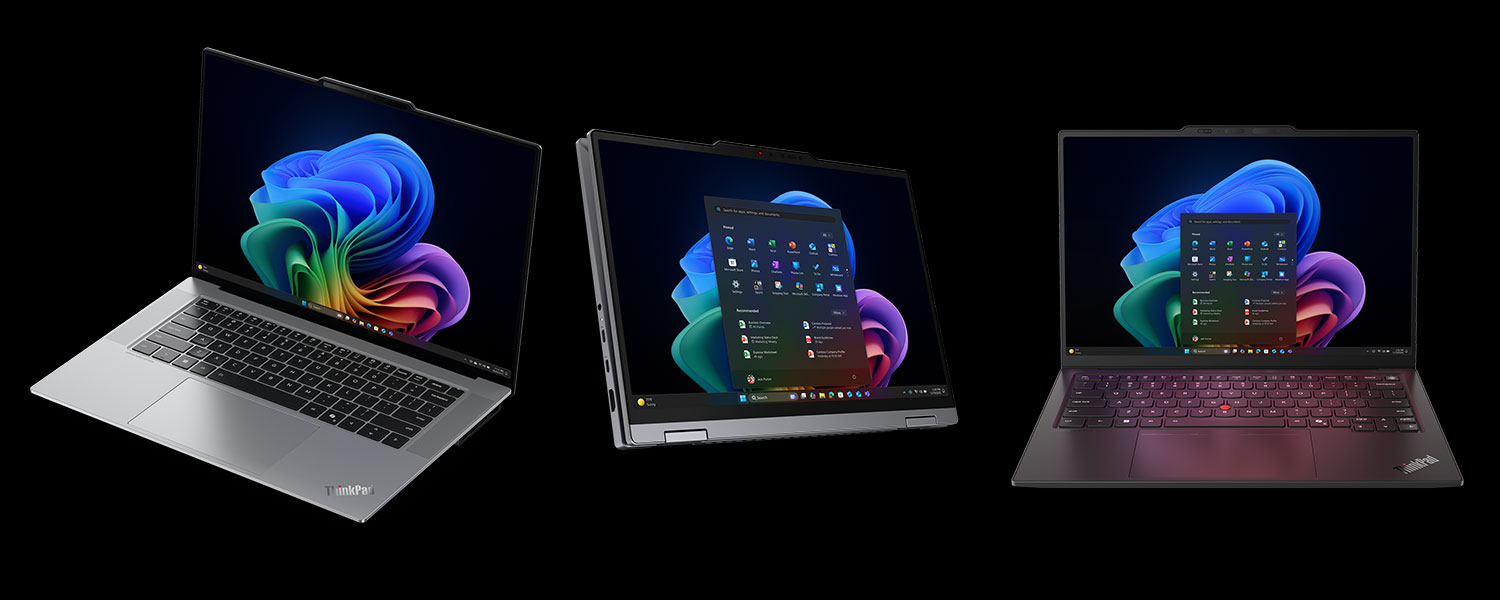
Lenovo completely revamped their premium lineups of ThinkPad laptops for this year, and that includes the ThinkPad X1 Carbon gen 14 professional business series, the ThinkPad X1 2-in-1 gen 11 business convertible, and refreshed ThinkPad X1 15p, a business laptop in a more casual package.
I’m specifically excited about the X1 series seeing an overhaul. The X1 Carbon is one of my favorite lineups of pro-level ultraportables and I’ve been following it since its debut, testing most iterations over the years. The latest gen13 ThinkPad X1 Carbon was discussed over here, a Lunar Lake V platform with limited cooling and performance.
Well, that’s no longer the case for the gen 14 Carbon (and the matching gen 11 X1 2-in-1 convertible, for that matter), which is now a higher-power Panther Lake Core Ultra X7 platform with an updated chassis and thermal design. And all that while still starting at under 1 kilo / 2.2 lbs in weight (for the Carbon).
Let’s go over the specs, and then we’ll get indepth on what has changed.
Lenovo ThinkPad X1 Carbon, Aura Edition, gen14
Here’s the 2026 gen14 X1 Carbon next to the 2025 gen13 variant.
| Lenovo ThinkPad X1 Carbon Aura Edition, 2026 model, 14th gen |
Lenovo ThinkPad X1 Carbon Aura Edition, 2025 model, 13th gen |
|
| Screen | 14 inch, 16:10 aspect ratio, touch or non-touch, OLED 2.8K 2880 x 1800 px, 120Hz, 500-nits SDR brightness, 100% DCI-P3 colors or IPS FHD 1920 x 1200 px, 60Hz, 400-nits SDR brightness, 100% sRGB colors |
|
| Processor | Intel Panther Lake up to Core Ultra X7 358H, series 3 processor, 30W sustained TDP |
Intel Lunar Lake Core Ultra V, Core Ultra 7 258V, 4PC+4Ec/8T, up to 4.8 GHz 20W sustained TDP |
| Video | Intel Arc B390, 12Xe | Intel Arc 140V, up to 1.95 GHz |
| Memory | up to 64 GB LPDDR5x-9600 (soldered) | up to 32 GB LPDDR5-8533 (soldered) |
| Storage | single M.2 2280 slot, gen5 support | |
| Connectivity | Wireless 7 (Intel BE201) 2×2, Bluetooth 5.4, Optional 5G/LTE | |
| Ports | left: 2x USB-C with Thunderbolt 4, 1x USB-A 3.2 gen1, nano SIM slot, right: Lock, HDMI 2.1 TMDS, 1x USB-C with Thunderbolt 4, mic/headphone, power button |
left: 2x USB-C with Thunderbolt 4, 1x USB-A 3.2 gen1, nano SIM slot, right: Lock, HDMI 2.1 TMDS, 1x USB-A 3.2 gen1, mic/headphone, power button |
| Battery | 58 Wh, 65W USB-C GaN compact charger | 57 Wh, 65W USB-C GaN compact charger |
| Size | 312.5 mm or 12.30” (w) x 216 mm or 8.49” (d) x up to 15.3 mm or 0.60″ (h) | 313 mm or 12.31” (w) x 215 mm or 8.45” (d) x up to 16 mm or 0.63″ (h) |
| Weight | from 1 kg (2.2 lbs) + .3 kg (.66 lbs) for the USB-C charger and cables, EU version | |
| Extras | clamshell format with 180-degree hinge, white backlit keyboard, 1.5 mm travel, Trackpoint, larger glass haptic touchpad, dual up-firing speakers, dual microphones, 10 MPx wide field camera with IR and physical shutter, fingerprint sensor, updated cooling – 30W sustained TDP, available in ThinkPad Eclipse Black with ThinkPad design accents |
clamshell format with 180-degree hinge, white backlit keyboard, 1.5 mm travel, Trackpoint, glass haptic touchpad, dual up-firing speakers, dual microphones, 2/8 MPx camera with IR and physical shutter, fingerprint sensor, dual-fan dual-radiator single-heatpipe cooling – 20W sustained TDP, available in ThinkPad Black with ThinkPad design accents |
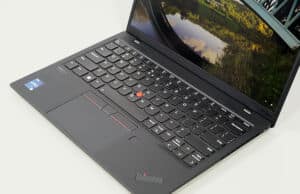
On the outside, the gen14 X1 Carbon still looks and feels like its predecessors: a standard 14-inch ThinkPad premium design. It’s just minimally thinner, and still about the same weight, starting at 1 kilo. Here are a few images of the gen13 ThinkPad X1 Carbon reviewed a few months ago. The gen14 looks and feels similar.
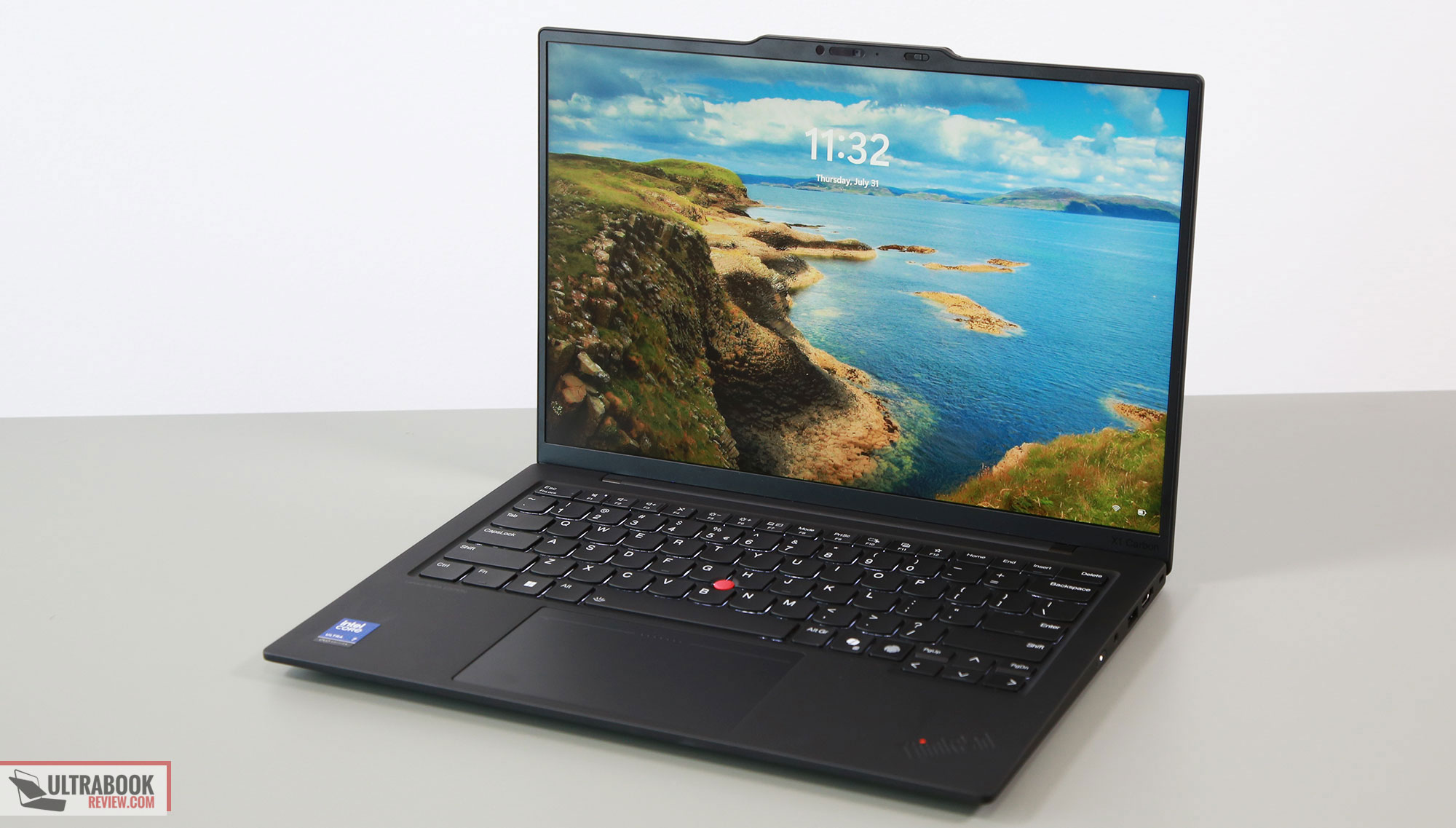
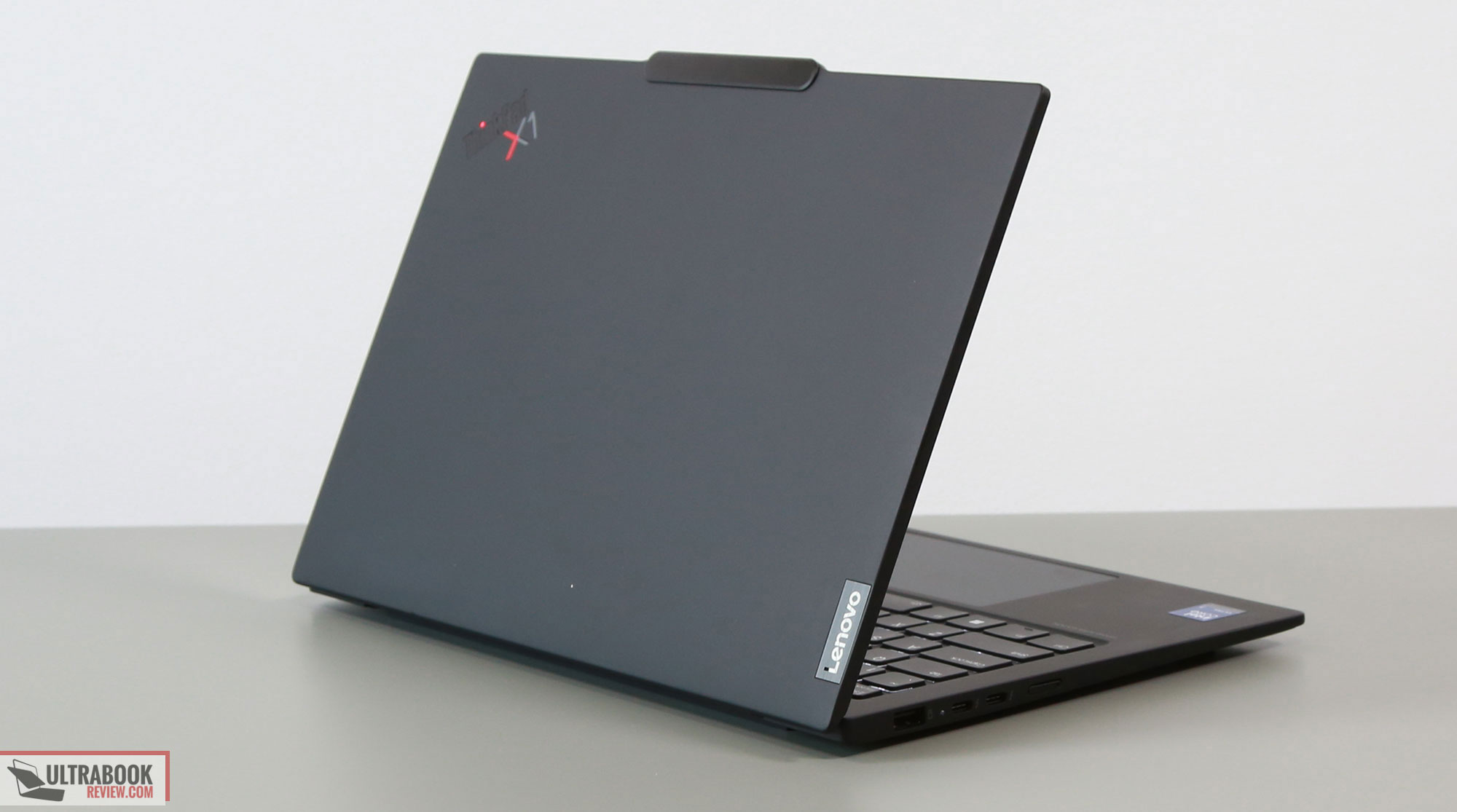
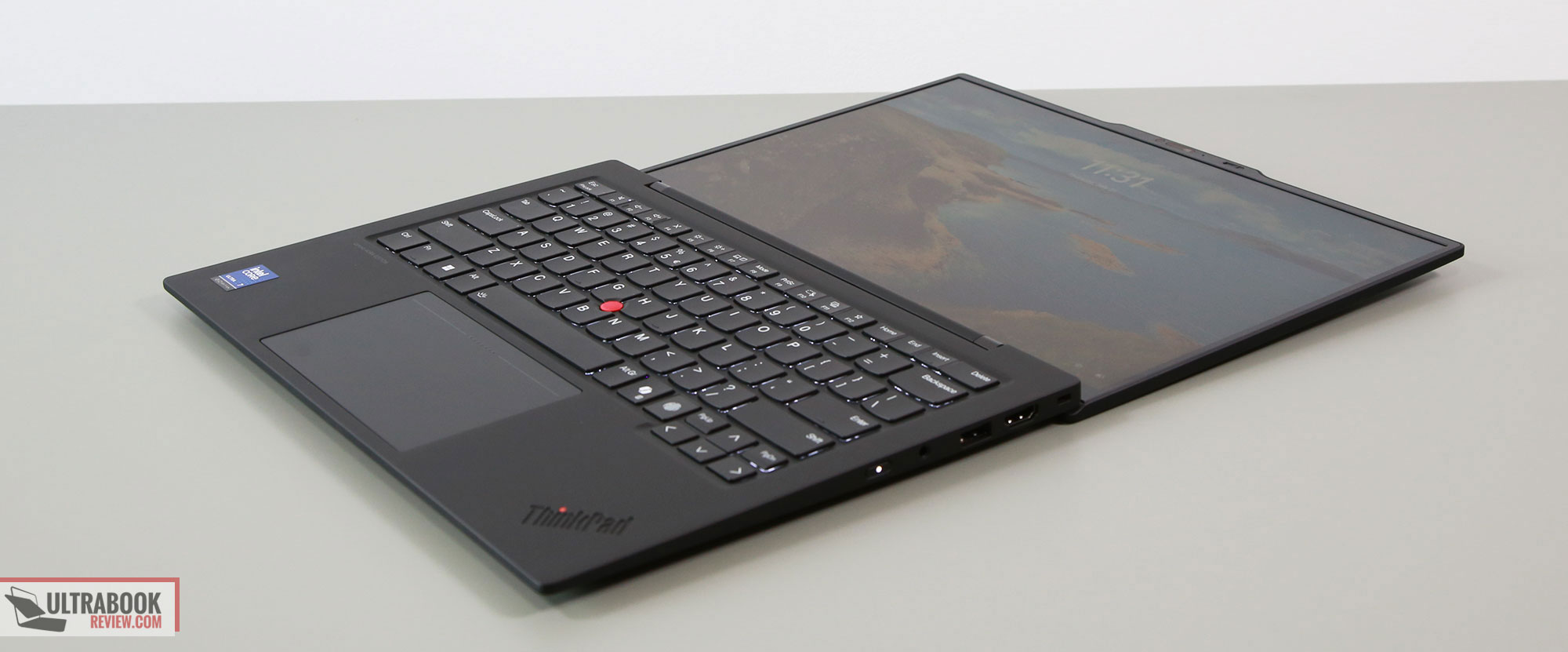
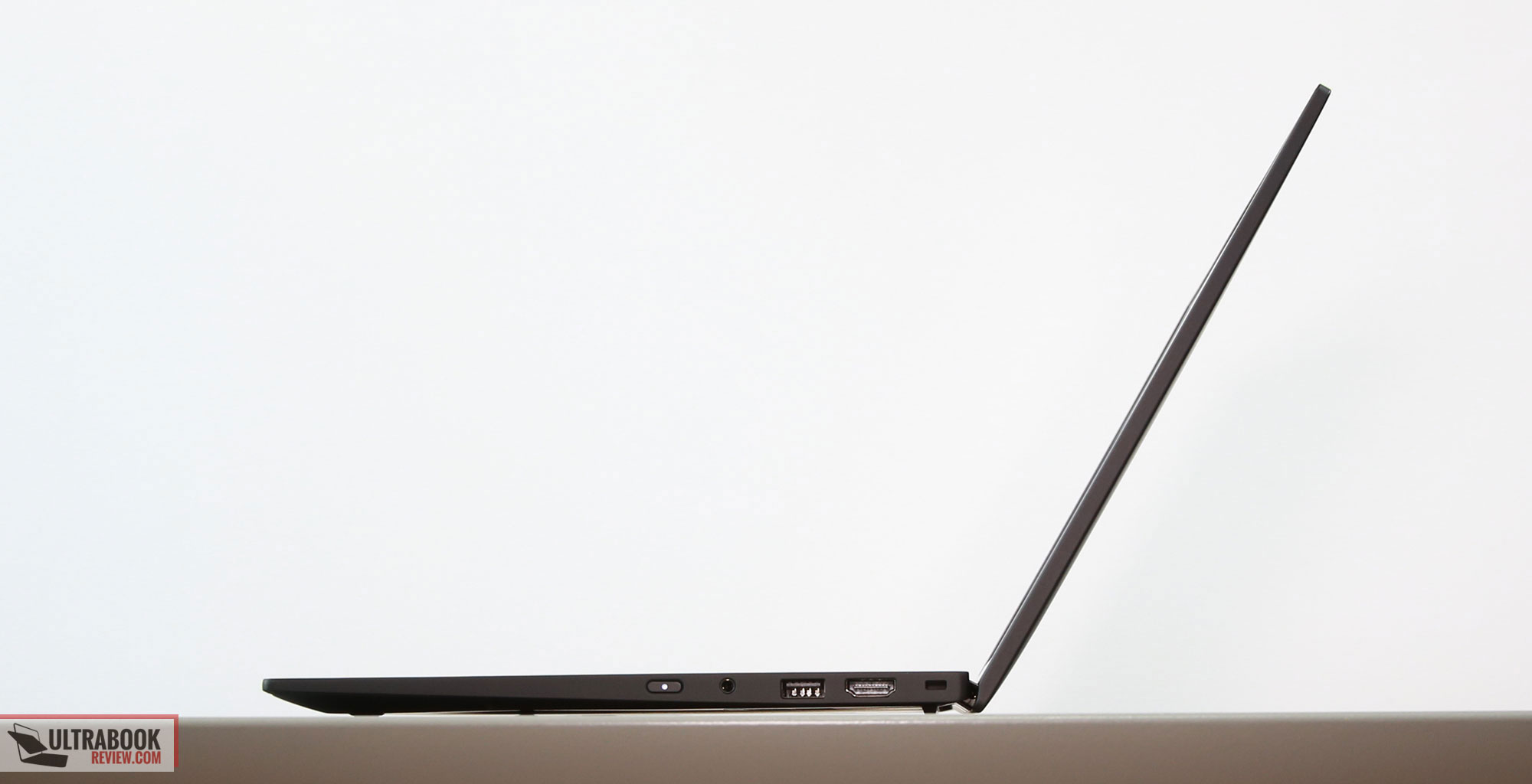
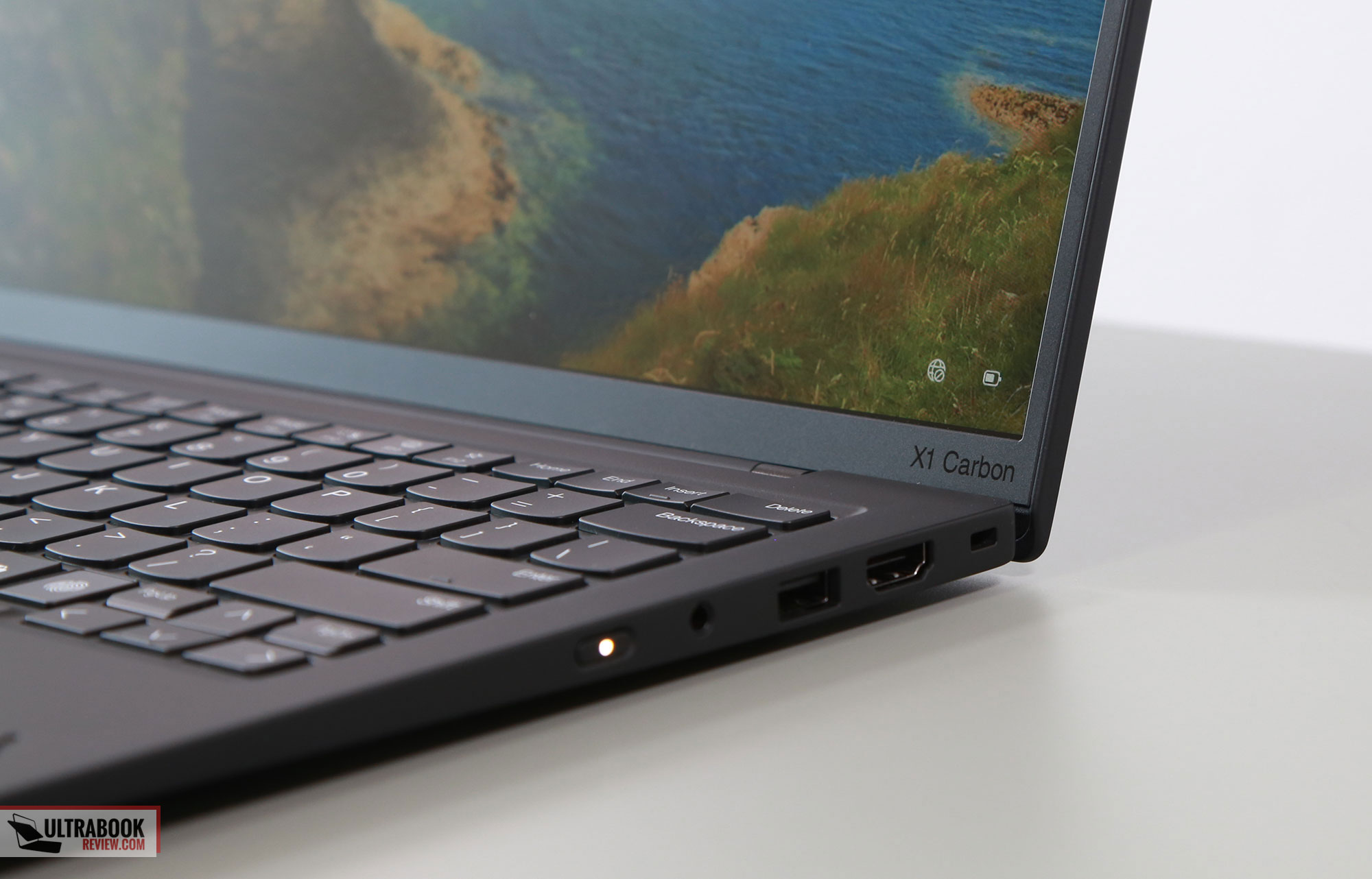
But once you look a little closer, you will notice a few differences for the latest iteration, such as:
- there are USB-C Thunderbolt 4 ports on both sides now;
- they restored the right CTRL key and moved the finger-sensor in the top right corner of the keyboard – that’s also the power button now;
- that however, means Insert and End are combined on the same key, if that’s a specific detail that matters to you;
- the touchpad area is a little larger, and you can either opt for a full haptic touchpad or a touchpad with physical click buttons on top (specifically important for TrackPoint users);
- the main chassis looks a little different, with a visible border around the edges suggesting the keyboard deck can separate from the main chassis – more on that in a bit;
- there’s an updated 10 MPx camera at the top of the display, replacing the 8MPx shooter of the past. It still supports IR and comes with a physical shutter.
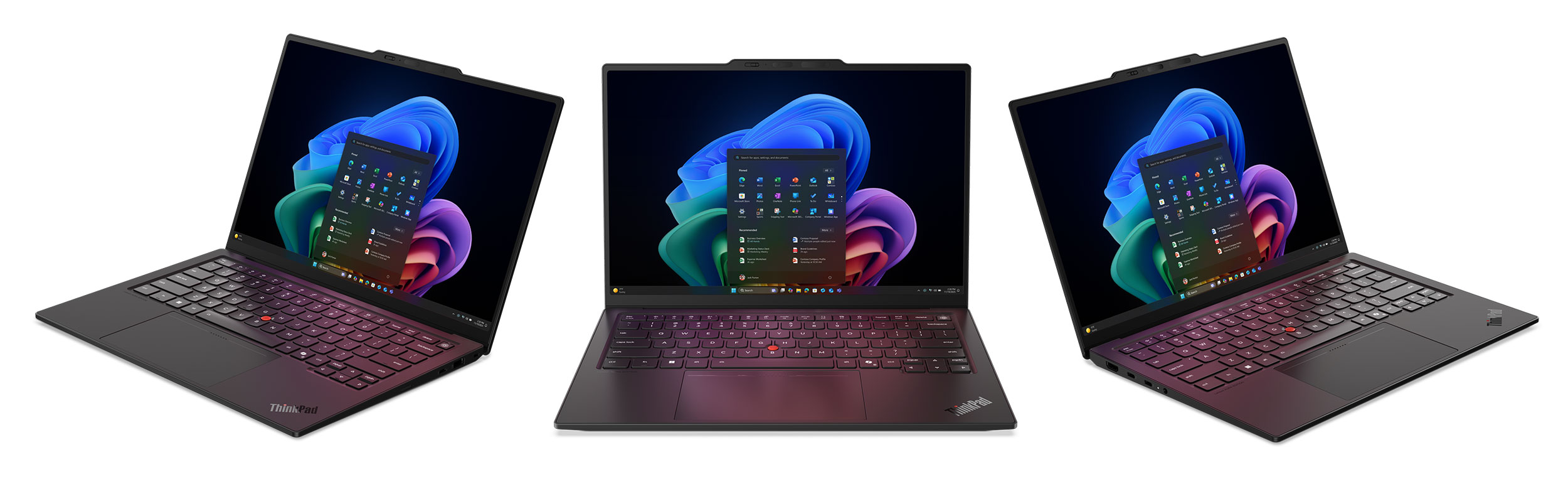
All in all, though, this is still the familiar X1 Carbon chassis with its design perks and particularities. Here are some images of this 2026 refresh.
And here’s a video as well.
Internally, though, this X1 Carbon generation is built on what Lenovo calls a “Space frame design”, ” an approach that allows for components to be placed on both sides of the motherboard, optimizing space and improving cooling by up to 20% according to Lenovo. In addition, this design supports more efficient repairs and allows room for a minimally larger battery and larger haptic touchpad. A touchpad version with physical buttons at the top is offered as well, so those of you TrackPoint die-hard fans will rejoice.
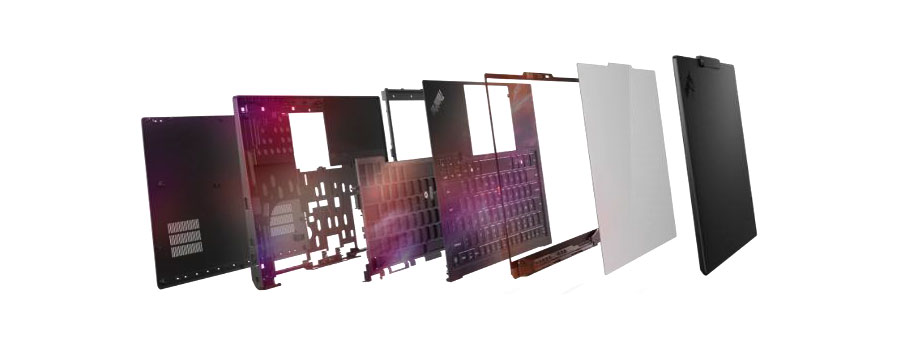
This new frame design allows opening the laptop both from the top and from the bottom. The main deck that includes the keyboard and touchpad is a separate part that can be easily popped out and repaired or swapped out, much like on older ThinkPads. It’s not even screwed in; it stays in place with magnets and clamps – hopefully that doesn’t become an issue longer-term. More recent X1 models integrated the keyboard onto the main chassis, and that hindered repairability. That aside, all the ports are modular, accessible once you remove the keyboard, and serviceable, including the USB-Cs and the card-reader. Ther’es also a daugther motherboard that isolates most of the IO, which can also be swapped easily if needed.
The rest of the components are still accessible from the underside, by removing the base panel held in place by a few screws (self-retaining on the panel). Over here, you can access the thermal module, cellular and WiFi modules, the SSD slot, and the battery. The memory is onboard and non-removable.
Here’s another video that takes a closer look at this chassis and its serviceability.
Of course, we have to look past the marketing hype and test the new chassis in our reviews to better understand where it stands. Stay around for that review later in the year.
What Lenovo promises is the ability for this chassis to support 30W of sustained power on an Intel Panther Lake Core Ultra X7 series 3 platform with Arc 12Xe graphics, up to 64 GB of LPDDR5x-9600 memory, and gen5 SSD storage. So not only is this a more competent hardware platform with faster memory, it’s also supposed to run at 50% higher sustained TDP, which would translate into significant performance gains in sustained loads.
The cooling module has gotten an update as well. It’s still a single-heatpipe and two heatsinks, but the fans are larger and higher-capacity, and the heatsinks are larger as well. I’m curious whether that’s enough to increase the TDP by 50%, or Lenovo plan on updating the fan settings as well to spin faster and louder (Best Performance was pegged at 35 dBA on the Gen13 Carbon, so there’s plenty of room to maneuver towards 40-42 dBA on this profile).
I’m also curious about the efficiency of this Panther Lake platform on battery power, since the battery is still only 58 Wh on this X1 Carbon update, quite small for a 14-incher these days. Lenovo barely updated the battery to keep the weight under 1 kilo, but I would have appreciated seeing a 70+ Wh battery in this laptop, even if that meant a 50-100g increase in weight.
Stay around for a detailed review later in the year.
ThinkPad X1 2-in-1 convertible
Lenovo also offers a convertible ThinkPad X1 2-in-1 iteration of the Carbon (at its 11th generation now), built on the same internals and on a similar servicable frame, but with a few particularities of its own: it offers a 360° display, comes in Thunder Grey and not in Black, and is a little larger, thicker, and heavier, starting at 2.6 lbs (1.182 kg). Furthermore, for this generation, the X1 2-in-1 offers a magnetically docked pen.
However, the X1 2-in-1 is generally more expensive than the Carbon and is just not as popular overall.
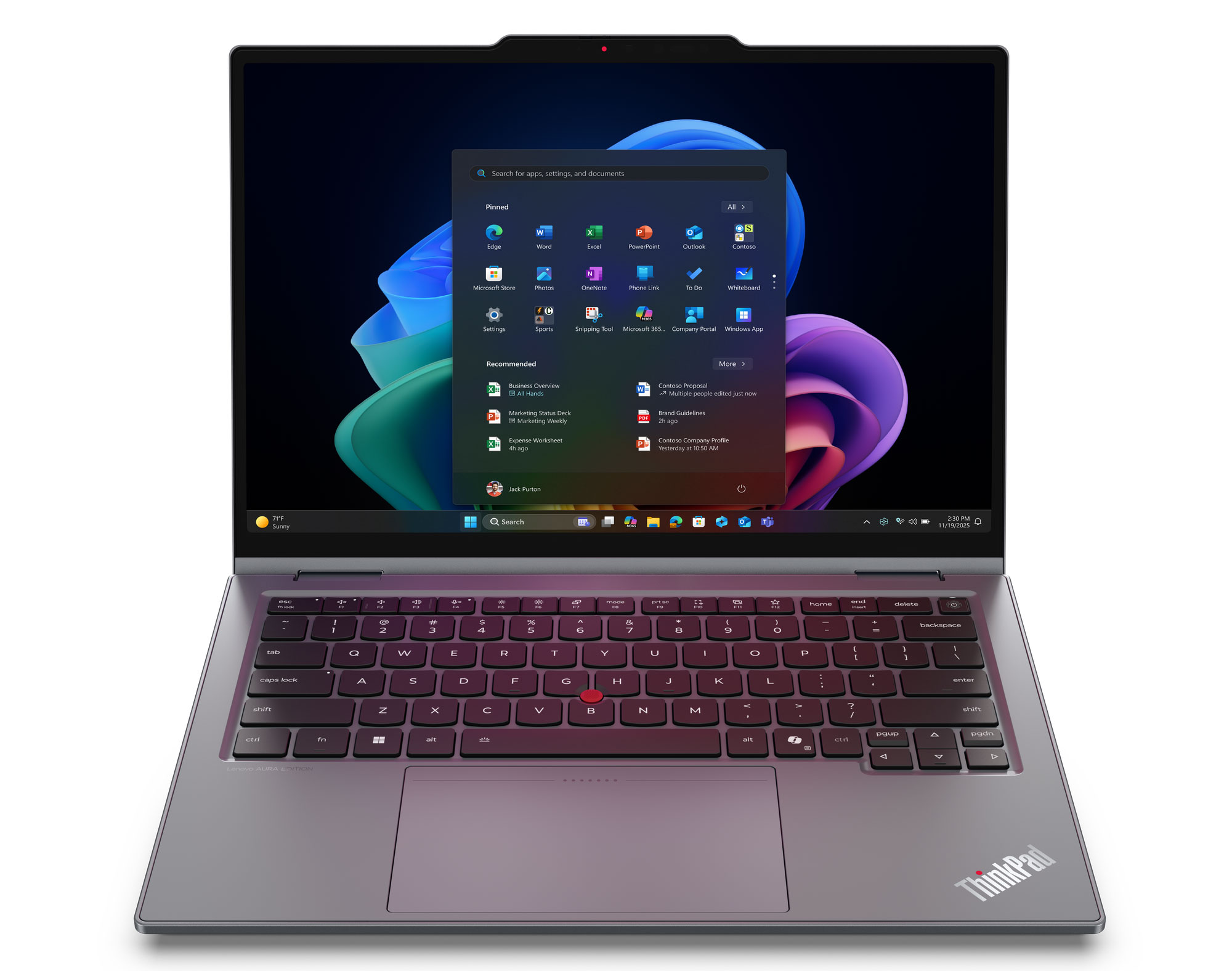
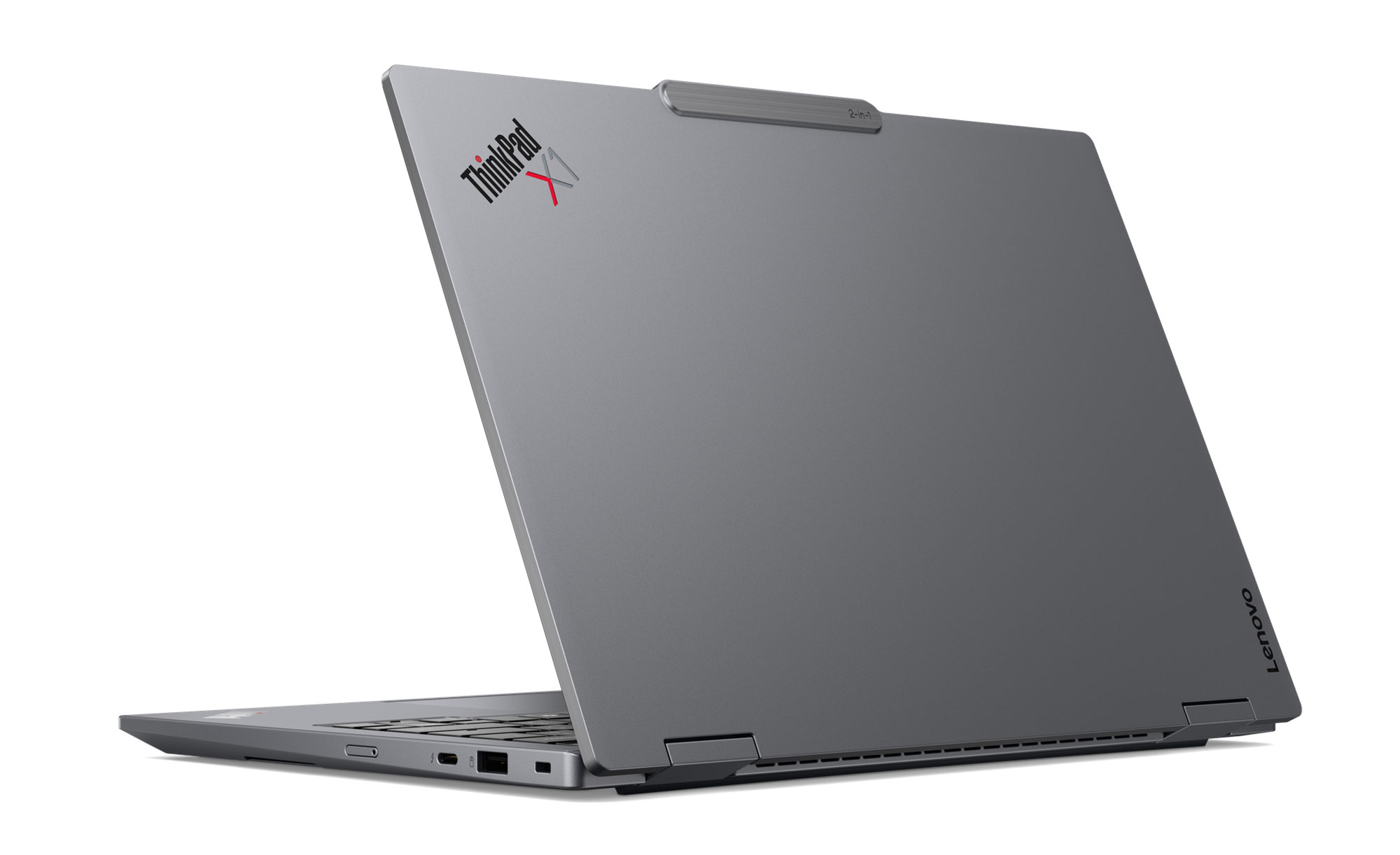
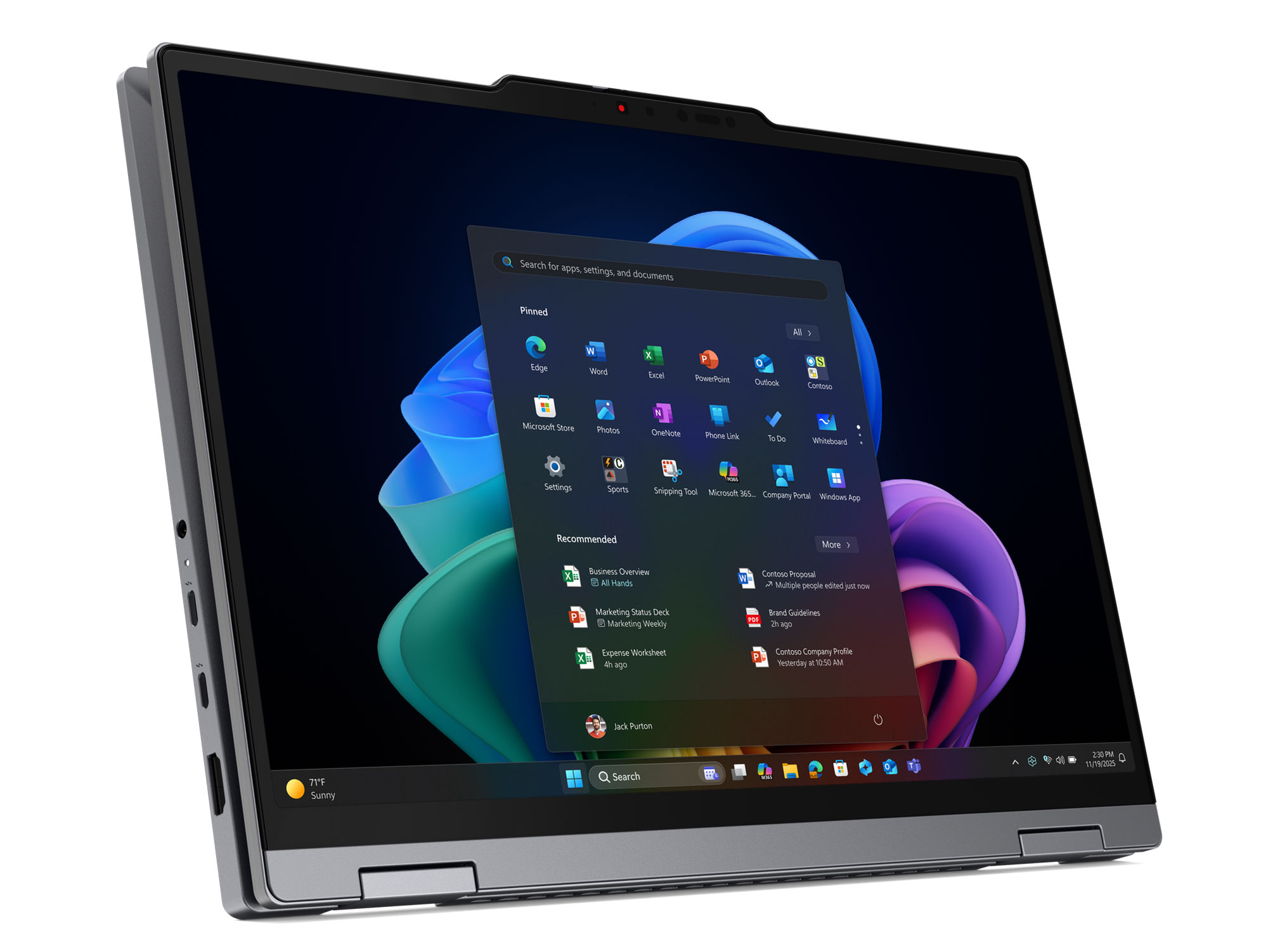
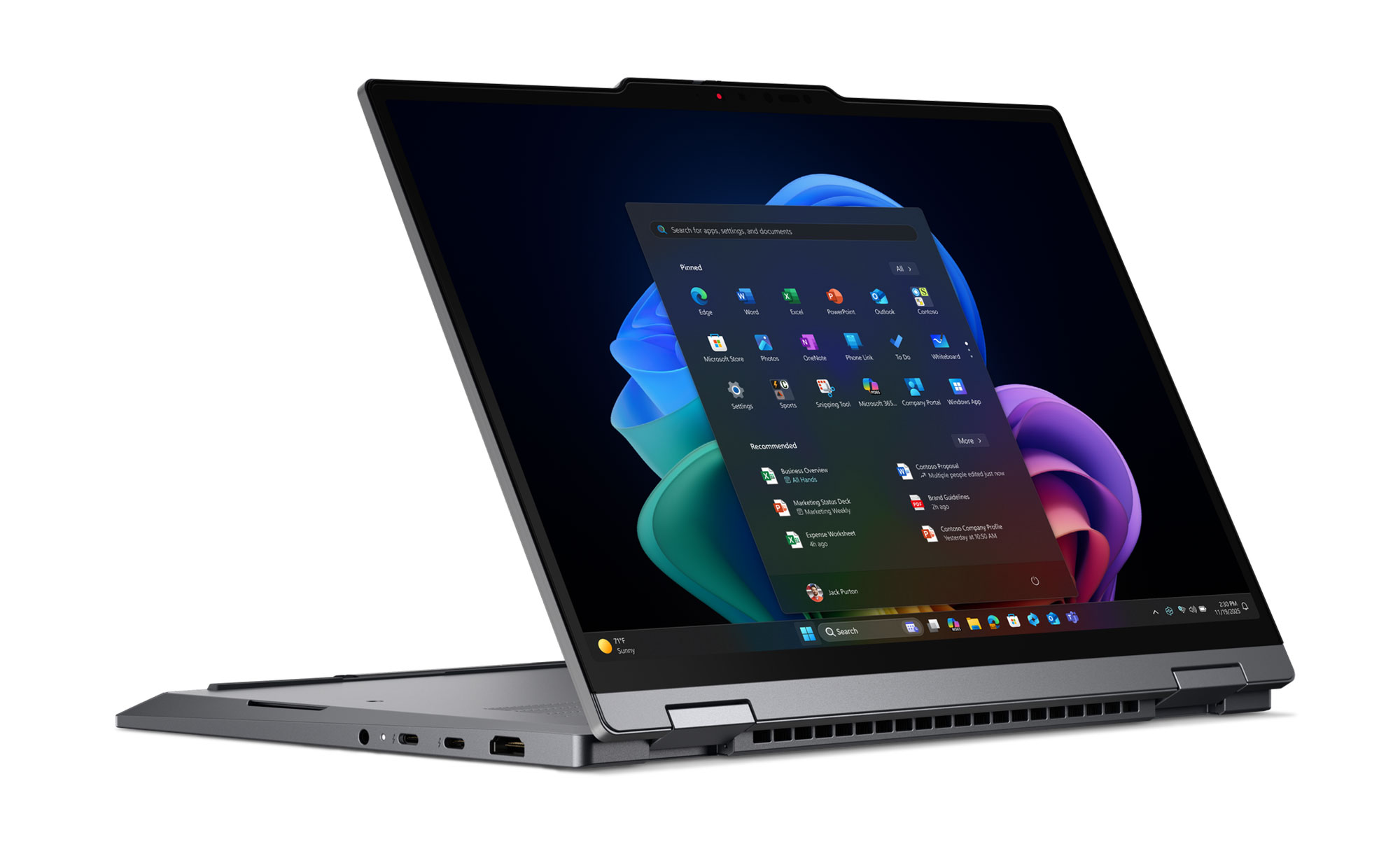
These 2026 ThinkPad models are expected in stores from March 2026, starting at $1999 in the US for the X1 Carbon Aura Edition and $2149 for the X1 2-in-1 Aura Edition.
Lenovo ThinkPad X9 15p, Aura Edition
Here’s the 2026 refreshed X9 15p next to the initial gen1 model from last year.
| Lenovo ThinkPad X9 15p Aura Edition, 2026 model, gen 2 |
Lenovo ThinkPad X9 15 Aura Edition, 2025 model, gen 1 |
|
| Screen | 15.3 inch, 16:10 aspect ratio, touch or non-touch, OLED 2.8K 2880 x 1800 px, 120Hz, 500-nits SDR brightness, 100% DCI-P3 colors |
|
| Processor | Intel Panther Lake up to Core Ultra X9 388H, series 3 processor, 45W sustained TDP |
Intel Lunar Lake Core Ultra V, Core Ultra 7 258V, 4PC+4Ec/8T, up to 4.8 GHz ~25W sustained TDP |
| Video | Intel Arc B390, 12Xe Cores | Intel Arc 140V, up to 1.95 GHz |
| Memory | up to 64 GB LPDDR5-9600 (soldered) | up to 32 GB LPDDR5-8533 (soldered) |
| Storage | single M.2 2280 slot, gen5 support | single M.2 2242 slot, gen4 support |
| Connectivity | Wireless 7 (Intel BE201) 2×2, Bluetooth 5.4 | |
| Ports | left: 2x USB-C with Thunderbolt 4, HDMI 2.1 TMDS, mic/headphone right: 1x USB-C with Thunderbolt 4, 1x USB-A 3.2 gen1, SD card reader |
left: 1x USB-C with Thunderbolt 4, HDMI 2.1 TMDS right: 1x USB-C with Thunderbolt 4, 1x USB-A 3.2 gen1, mic/headphone |
| Battery | 88 Wh, 100W USB-C GaN compact charger | 80 Wh, 65W USB-C GaN compact charger |
| Size | 340 mm or 13.4” (w) x 229 mm or 9” (d) x up to 17.9 mm or 0.7″ (h) | 340 mm or 13.4” (w) x 229 mm or 9” (d) x up to 17.7 mm or 0.7″ (h) |
| Weight | from 1.4 kg (3.1 lbs) + ?? for the USB-C charger and cables | from 1.4 kg (3.1 lbs) + .28 kg (.61 lbs) for the USB-C charger and cables |
| Extras | mostly the same 2025 model, but: higher power sustained TDP at 45W and updated cooling 10 MPx camera with IR and eShutter 6x speakers |
clamshell format with 180-degree hinge, aluminum build, Thunder Grey color, white backlit keyboard, 1.35 mm travel, no Trackpoint, glass haptic touchpad, 4x speakers, 2x microphones, 8 MPx camera with IR and eShutter, fingerprint sensor in the power button, dual-fan dual-radiator dual-heatpipe cooling – 25W sustained TDP |
The 15-inch variant of the ThinkPad X9 is refreshed for 2026, without any mention of the smaller 14-inch version so far.
The 2026 ThinkPad X9 15p builds on the X9 15 released last year, with a similar aluminum unibody build, similar inputs with a short-stroke keyboard and a slightly taller haptic touchpad, and the same 15.3-inch OLED panel available as either non-touch or touch.
However, the IO has been revamped, with the 2026 model offering 3x USB-C ports now and a full-size SD card reader. The speakers and the camera have been updated as well.
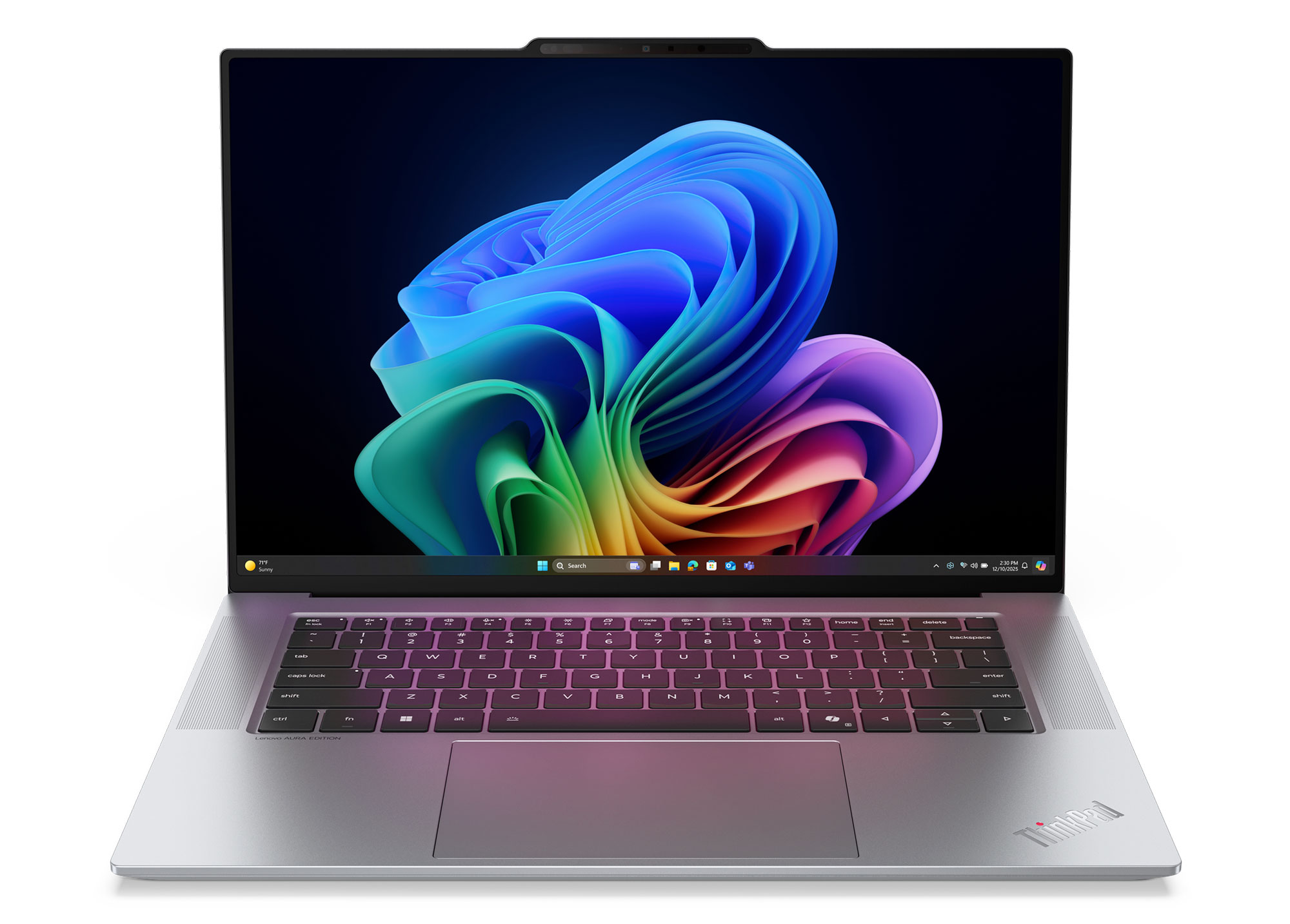
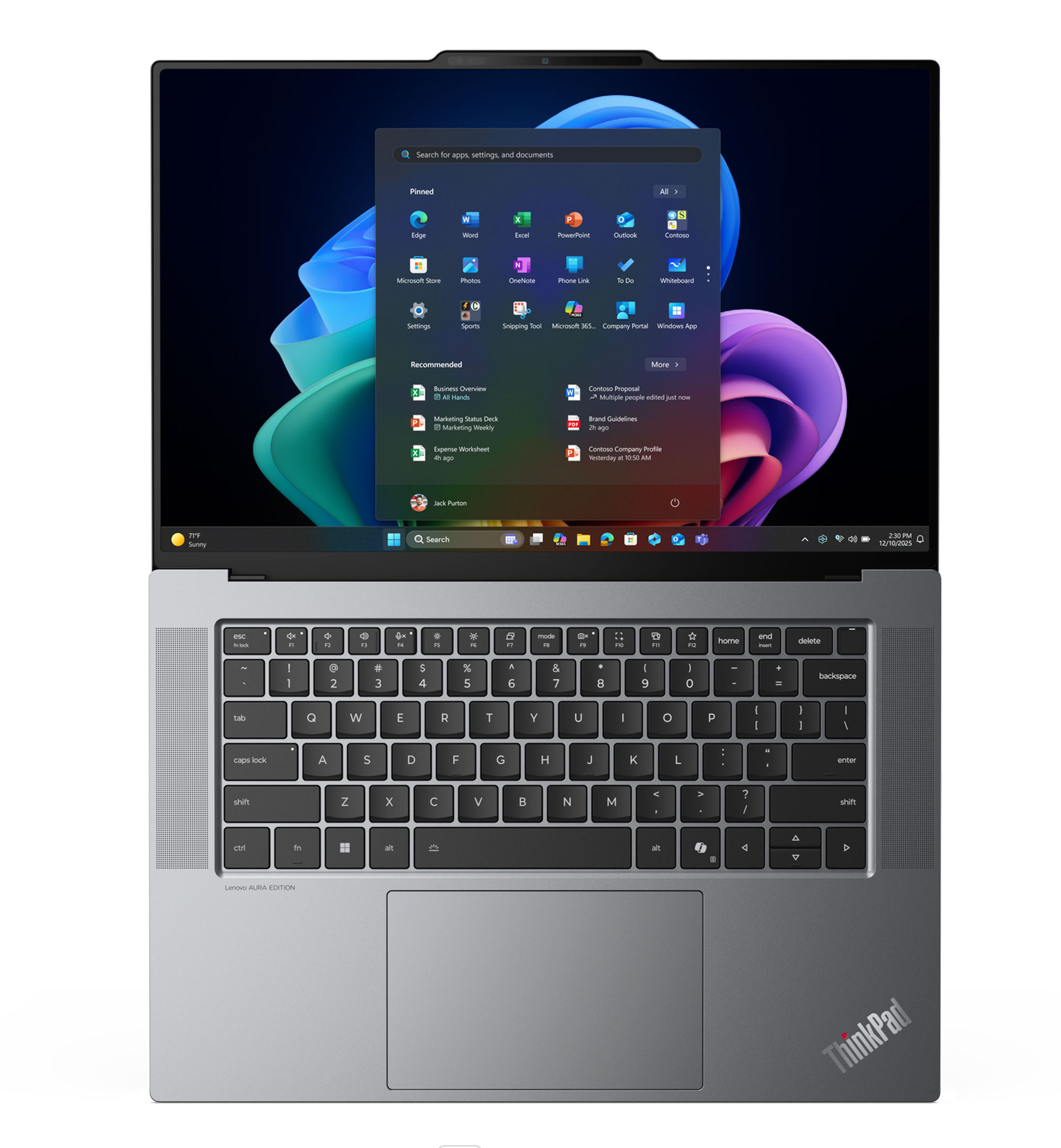
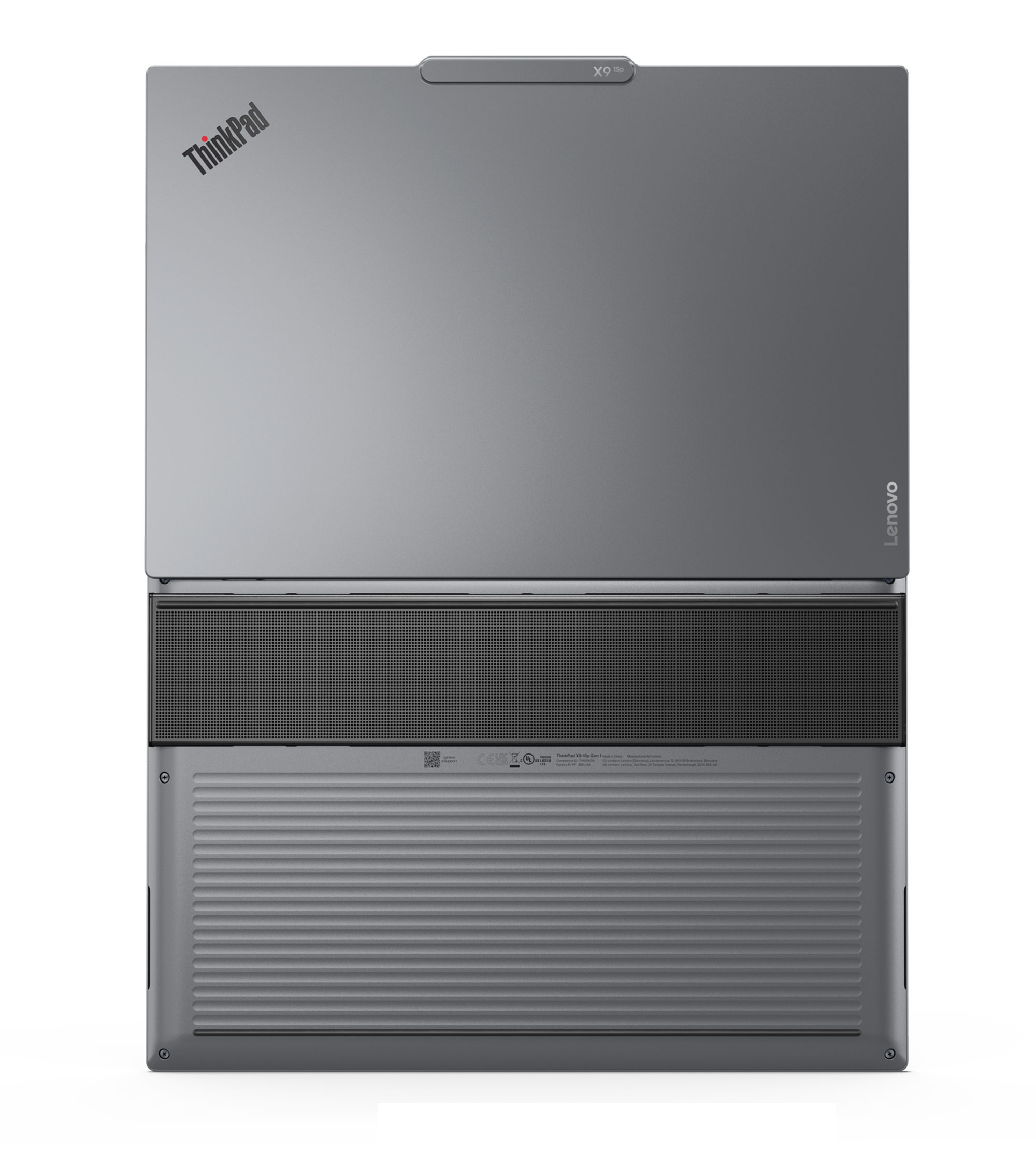
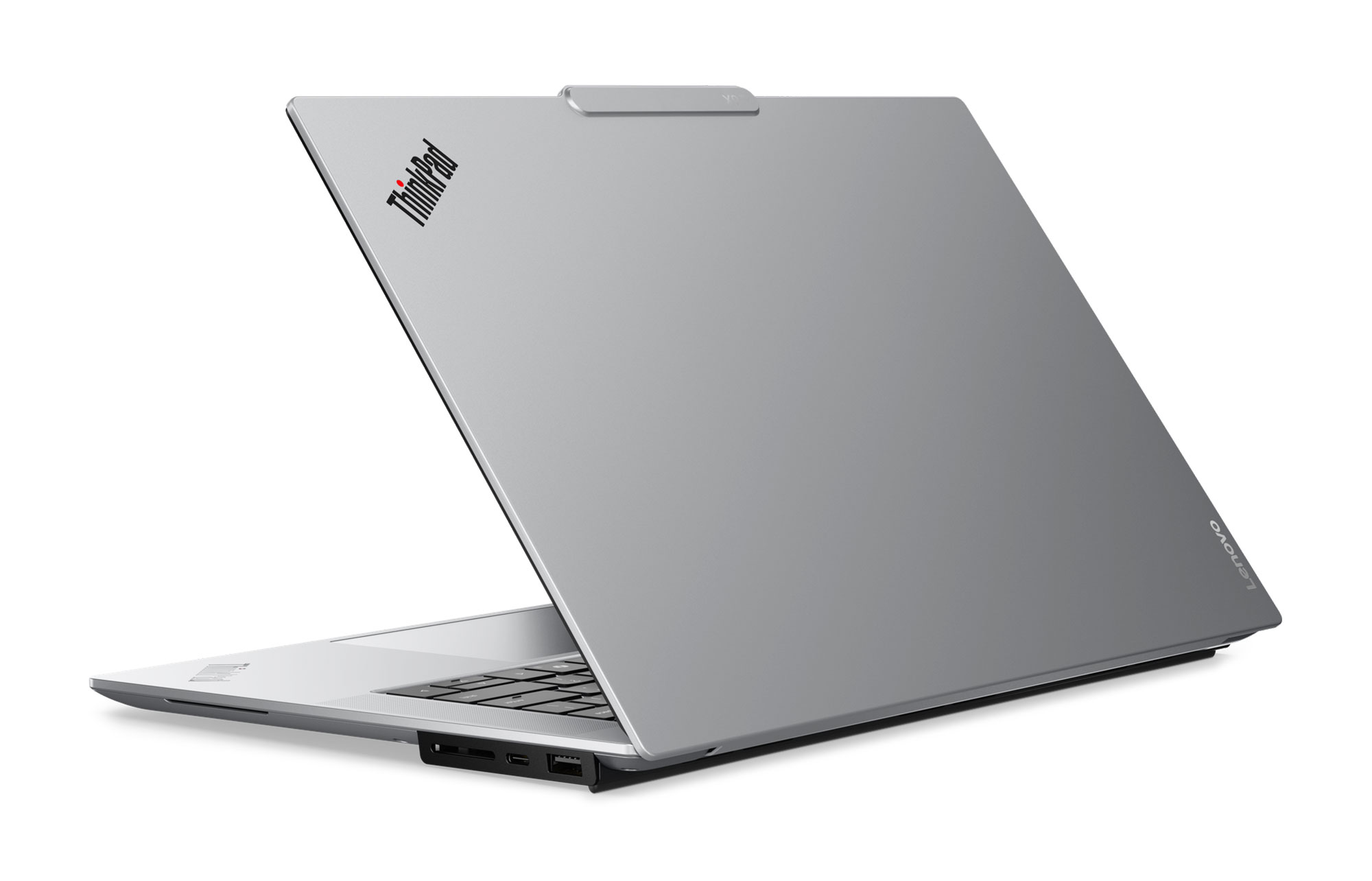
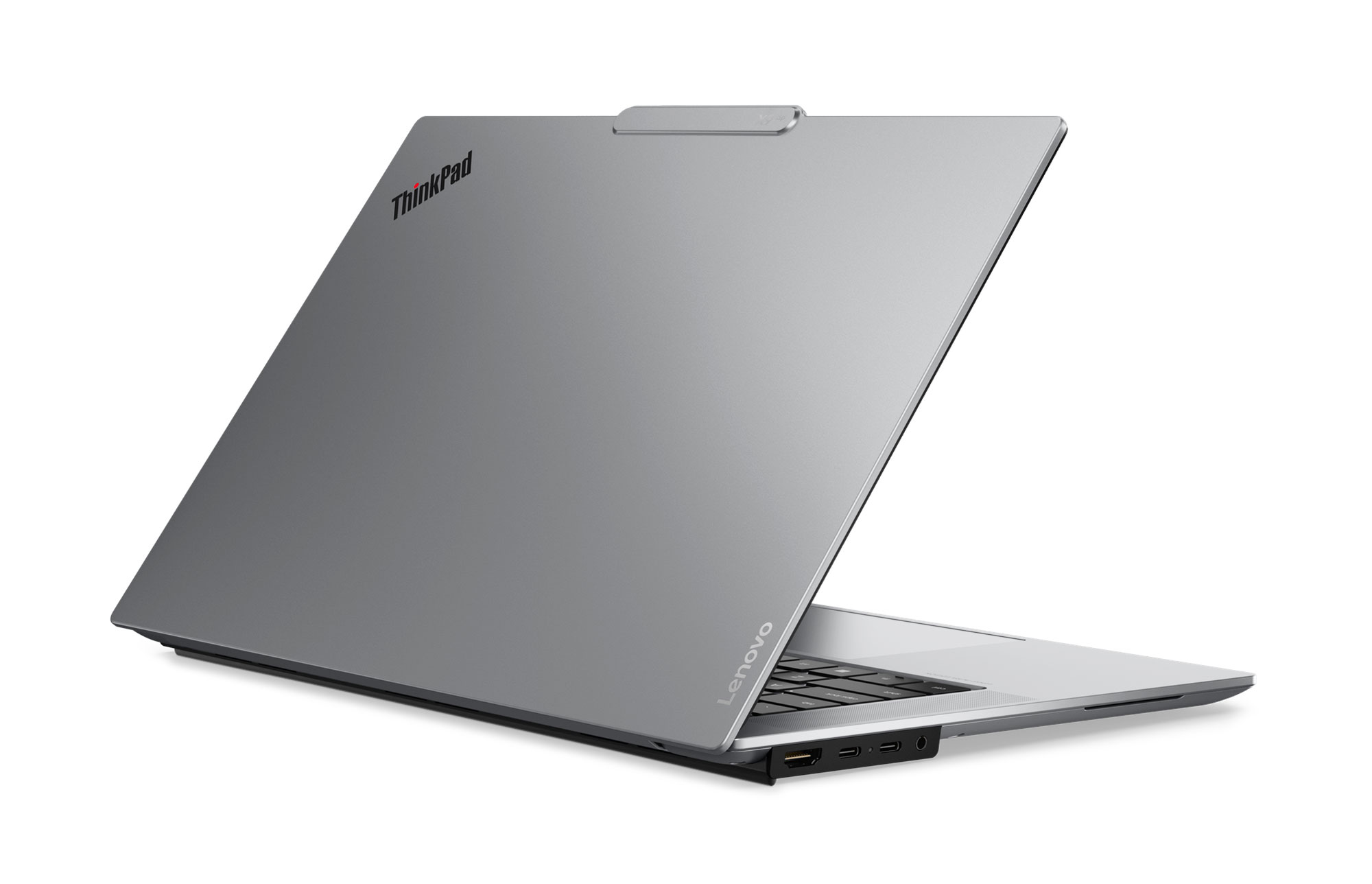
Most of the changes lie inside, though, where I’d reckon the thermal module has also been updated somehow to support what Lenovo claims in the press release: an Intel Panther Lake Core Ultra X9 implementation running at 45W sustained TDP – for comparison, the 2025 model only implemented Lunar Lake V hardware at 25W sustained TDP.
Furthermore, the updated platform allows for more and faster RAM (up to 64 GB LPDDR5x at 9600 MTs), a 2280 M.2 gen5 SSD, and the more capable Panther Lake Arc iGPU with 12 Xe cores.
On top of all these, the battery is a little larger at 88 Wh now. And the bundled charger is higher capacity (and bulkier/heavier as a result), to cope with the updated power requirements.
I’m dying to find out how all these are possible in what looks like a similar format that isn’t thicker or heavier than the initial X9 15 model. Stay around for our detailed review.
The 2026 Lenovo ThinkPad X9 15p is expected in stores around March 2026, starting at $1999 on the US market.






Timberly
January 13, 2026 at 2:24 am
Not click buttons…. Lenovo team leads are so desperate to copy Apple…
Andrei Girbea
January 14, 2026 at 3:39 pm
you can opt for a touchpad variant with buttons, as already mentioned in the article
Thundershoe
January 27, 2026 at 5:05 am
Hi Andrei,
Thanks for your coverage as always! You've helped me make a couple purchase decisions in the past, and now I'm back for more advice. I actually have a Thinkpad X9 15-inch with the Ultra 7 258V. I have really been enjoying this device – it's an amazing all-rounder. My only issue is that I sometimes run into browser lag/performance issues. I have been trying to be more intentional about limiting the number of browser windows I have open at the same time (and trying to only have one browser open at a time – sometimes I run Chrome and Edge simultaneously), which has helped with the lag. But as I have been getting informed about Panther Lake, it seems like the improved multi-core performance might address this problem.
Do you think the X9 15p with a Panther Lake chip, say the 358H or 366H, would be worth the upgrade over my current Lunar Lake 258V?
As an example of the lag/peformance issues, sometimes when I open my laptop from sleep or open my browser fresh, it will hang in limbo for several minutes before everything seems to load and I'm able to start browsing. This does get better when I'm vigilant about the number of tabs I have open, but it still sometimes happens even when I'm being intentional about closing tabs. I've been trying to figure out if there's just some other issue going on – I'm all ears if there are fixes I should try!
Thanks!
Andrei Girbea
January 29, 2026 at 11:30 am
I'd say yes, the updated hardware is going to make the laptop a better multitasker. I've added some performance numbers for the 358H and 386H vs 258V in this article (not for the the ThinkPad, but the results should be more or less similar for the ThinkPad as well) https://www.ultrabookreview.com/74624-intel-panther-lake-laptops/
But, that limbo that you're describing isn't normal for the 258V either. Before buying the new model, I'd investigate what's going on there , what's causing the lag (I'd disable all browser plugins, reinstall the browser, try to use a different browser if possible),. Then I'd reinstall a fresh Windows if anything else doesn't work.
Sidd
February 10, 2026 at 2:07 pm
Hi Andrei,
I am waiting for the X9 15p, I hope they had some reviews already on YouTube and comparisons with the last years model. Do you think it's a crazy upgrade from last year? I could get the 15 for 1250$ right now but if the new one has a starting price of $1999 then i don't know if I'll buy it. Is the screen any different? I thought this years screen was brighter no? I know speakers are 6 now instead of 4. Better battery and CPU and GPU. I just don't know if it's worth the price difference.