Table of Contents
Among others, Asus are updating their premium lineups of Zenbook ultraportables for 2026, the Zenbook S14 and Zenbook S16 models.
Both are compact and lightweight in their segment of 14″ and 16″ premium ultrabooks, and both are getting a design refresh and a handful of updates under the hood: modern hardware, improved cooling, larger batteries, and brighter OLED displays. I’m rather intrigued that these updates kind of flew under the radar, because they’re more significant than I was expecting.
I already reviewed the existing models in the past (Zenbook S14 review, Zenbook S16 review), so I can guide you through what has changed and where things can still be improved. We’ll discuss these aspects further down, and update with links to our reviews of these 2026 Zenbooks S models when available. Please note that this is not a sponsored article; none of our articles are sponsored unless explicitly stated.
Oh, and for what it’s worth, Asus also updated the Zenbook A series of Snapdragon laptops for this year, discussed in this other article.
Specs Sheets – Asus Zenbook S14 , Zenbook S16
But first, the specs sheets of these two Zenbooks.
| Asus Zenbook S14 OLED UX5406AA series, 2026 model | Asus Zenbook S16 OLED UM5606GA series, 2026 model | |
| Screen | 14 inch, OLED, 16:10 aspect ratio, touch or non-touch, glossy, 2.8K 2880 x 1800 px, 120Hz refresh, 500-nits SDR brightness, 1100-nits HDR peak, 100% DCI-P3 colors |
16 inch, OLED, 16:10 aspect ratio, touch or non-touch, glossy, 2.8K 2880 x 1800 px, 120Hz refresh, 500-nits SDR brightness, 1100-nits HDR peak, 100% DCI-P3 colors |
| Processor | Intel Panther Lake Core Ultra series 3, up to Core Ultra 9 386H, 16C/8T |
AMD Gorgon Point Ryzen AI 400, *up to Ryzen AI 9 HX 470 ??, 12C/16T |
| Video | Intel Arc, 4 Xe Cores, up to 2.5 GHz | *Radeon 890M, up to 3.1 GHz |
| Memory | up to 32 GB LPDDR5x-9600 (soldered) | up to 32 GB LPDDR5x- ?? (soldered) |
| Storage | single M.2 2280 gen4 slot | single M.2 2280 gen4 slot |
| Connectivity | Wireless 7 (Intel BE201) 2×2, Bluetooth 5.4 | Wireless 7 (Mediatek) 2×2, Bluetooth 5.4 |
| Ports | left: 2x USB-C with Thunderbolt 4, 1x HDMI 2.1 TMDS, mic/headphone right: 1x USB-A 3.2 gen2, status LED |
left: 2x USB-C 4.0, 1x HDMI 2.1 TMDS, mic/headphone right: 1x USB-A 3.2 gen2, SD card reader, status LED |
| Battery | 77 Wh, 68W USB-C charger | 83Wh, 68W USB-C charger |
| Size | 310 mm or 12.22” (w) x 215 mm or 8.45” (d) x from 11.9-12.9 mm or 0.47”-.51″ (h) | 354 mm or 13.92” (w) x 243 mm or 9.57” (d) x 11.9 – 12.9 mm or 0.47” – 0.51″ (h) |
| Weight | 2.68 lbs (1.2 kg) + .18 (.4 lbs) for the USB-C charger and cables, EU version | 3.3 lbs (1.5 kg) +.18 (.4 lbs) for the USB-C charger and cables, EU version |
| Extras | clamshell format with 130° hinges, dual-fan dual-radiator, updated vapor-chamber cooling, white backlit keyboard, 1.1 mm travel, large glass touchpad, 2MPx FHD webcam with IR, ALS, no privacy shutter, no fingerprint sensor, 4x speakers, 2x mics, Scandinavian White or Antrim Gray colors |
clamshell format with 130° hinges, dual-fan dual-radiator, updated vapor-chamber cooling, white backlit keyboard, 1.1 mm travel, glass touchpad, 2MPx FHD webcam with IR, ALS, no privacy shutter, no fingerprint sensor, 6x speakers, 2x mics, Scandinavian White or Antrim Gray colors |
*specs mention up to a Ryzen AI 9 HX 470 (12C/24T, Radeon 890M), but actual products might top at Ryzen AI 9 465 configurations, with fewer CPU and GPU cores: 12C/20T with Radeon 880M.
Design, ergonomics
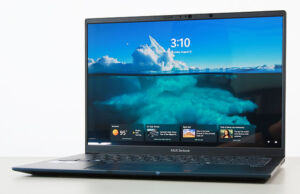
These Zenbooks are Asus’s higher-tier lineup of ultraportables. That means they’re excellently crafted, premium feeling, and slimmer/lighter than the regular Zenbook/Vivobook options, without sacrificing internals or performance.
Asus implement a CNC unibody main chassis for these, with a Ceraluminum lid. This means the interior is entirely a slab of aluminum, which to me feels more exquisite and nicer to the touch than the feel of Ceraluminum, so I prefer this approach. At the same time, the slab of aluminum is a little heavier, thus these S models are 10-15% heavier than their A-series alternatives. Regardless, we’re still looking at 1.2 kilos for the Zenbook S14 and 1.5 kilos for the Zenbook S16, still lighter than competitors like a MacBook Air or an XPS.
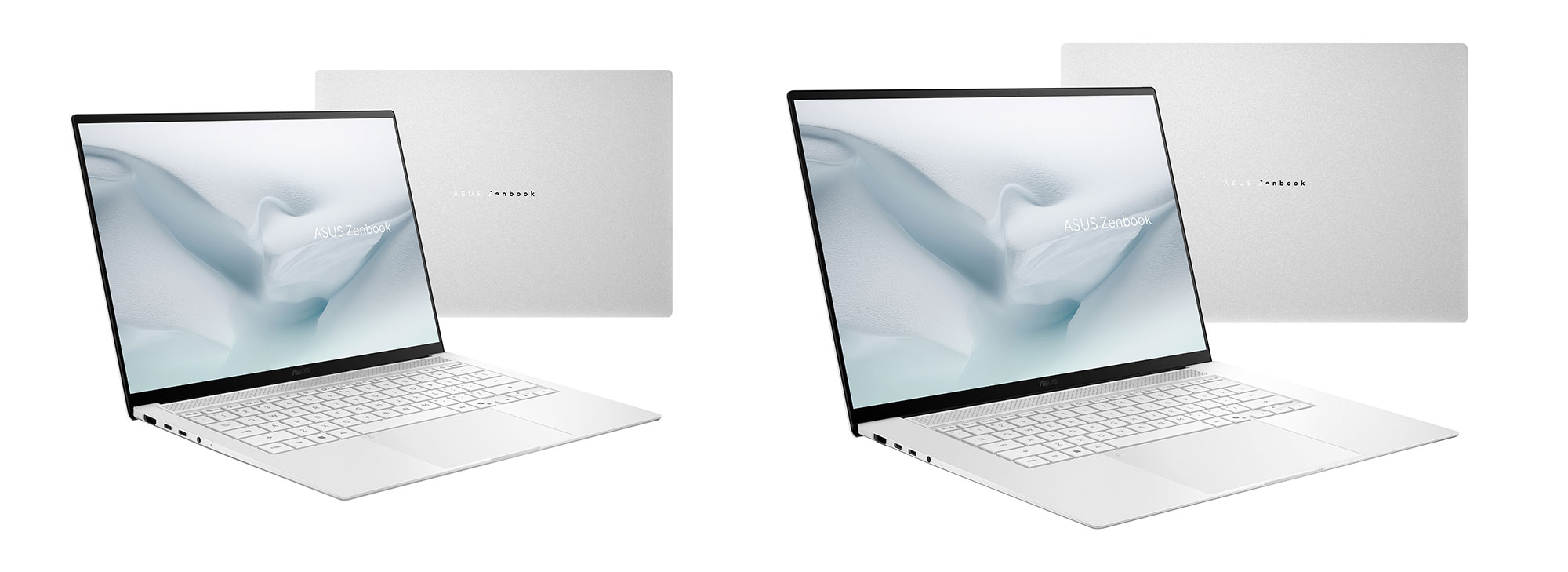
Nonetheless, Asus have updated the lid designs on these generations, with a more minimal approach and a dark-chromed Asus Zenbook branding in the middle – that’s the same design implemented on the Zenbook As as well. I don’t mind this decision.
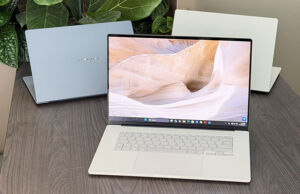
They’ve also slightly updated the color options for these 2026 models, with still light gray and dark gray variants to choose from. I preffer the looks of the Antrim Gray variant, although the lighter option (called Scandinavian White, but actually a light gray finish) is more carefree and doesn’t show smudges as easily.
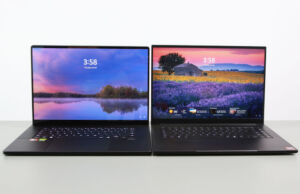
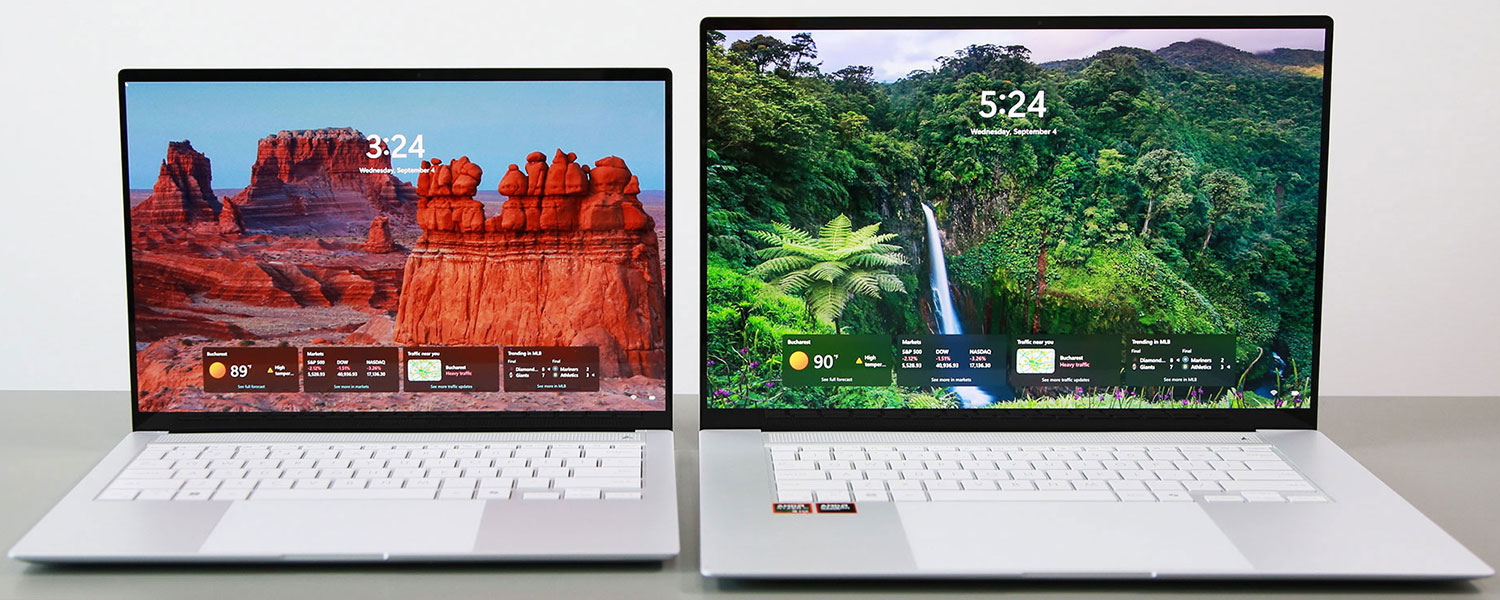
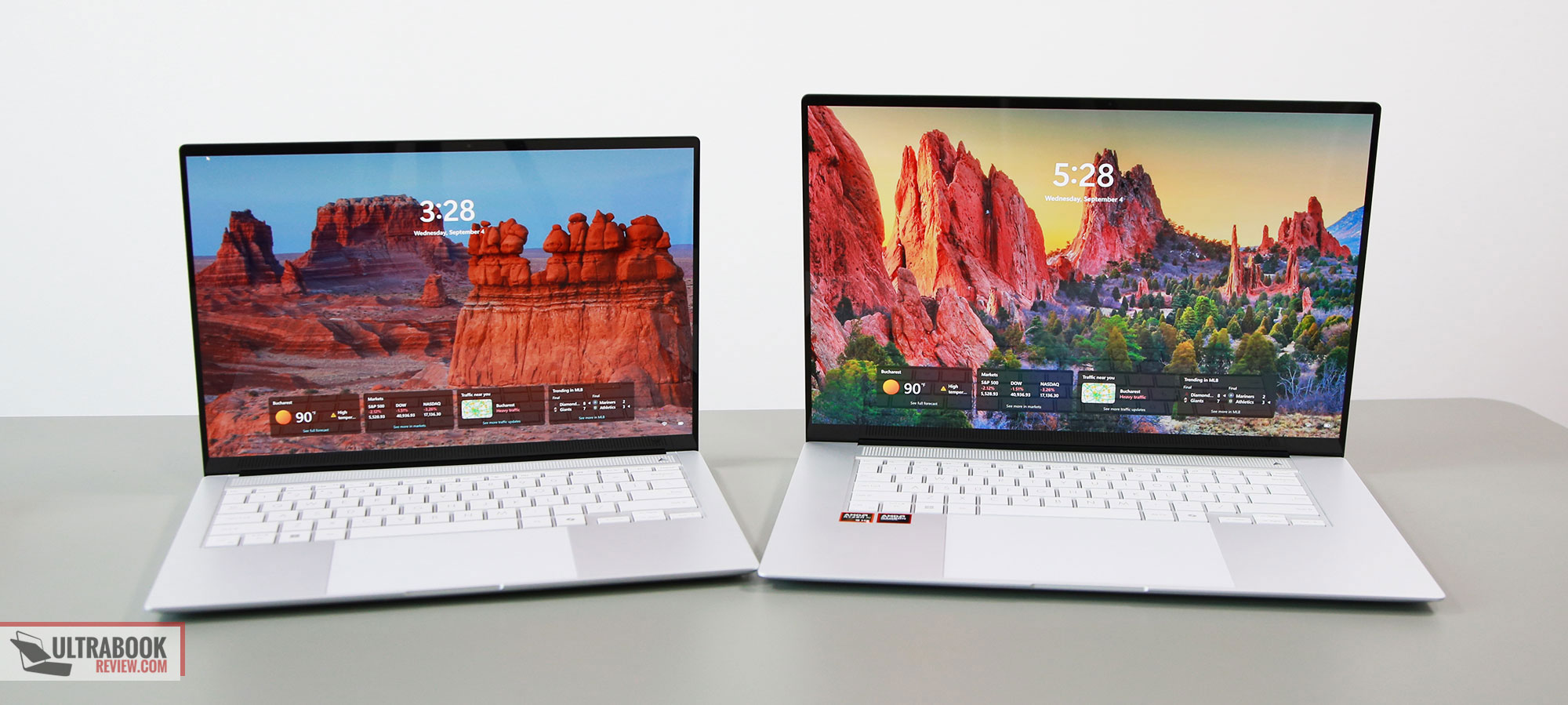
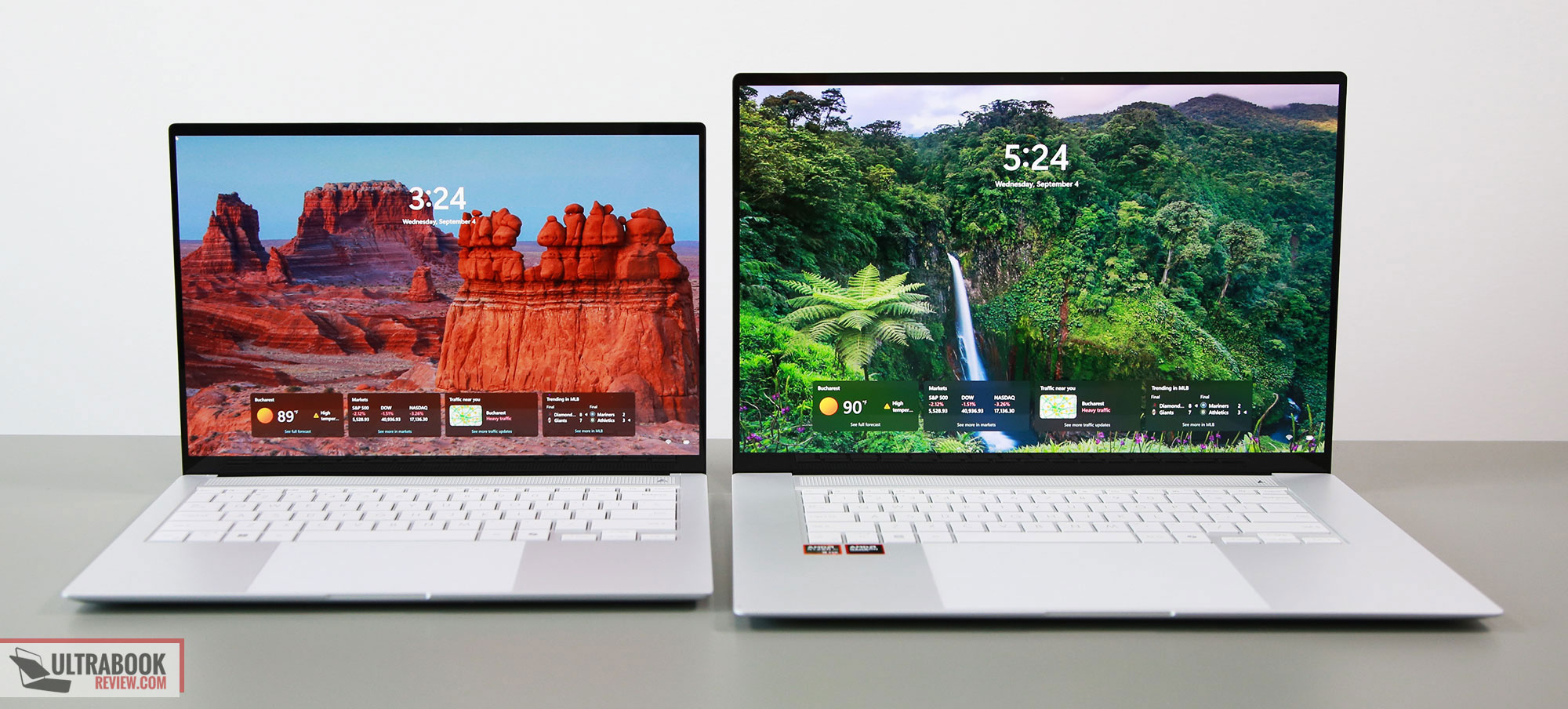
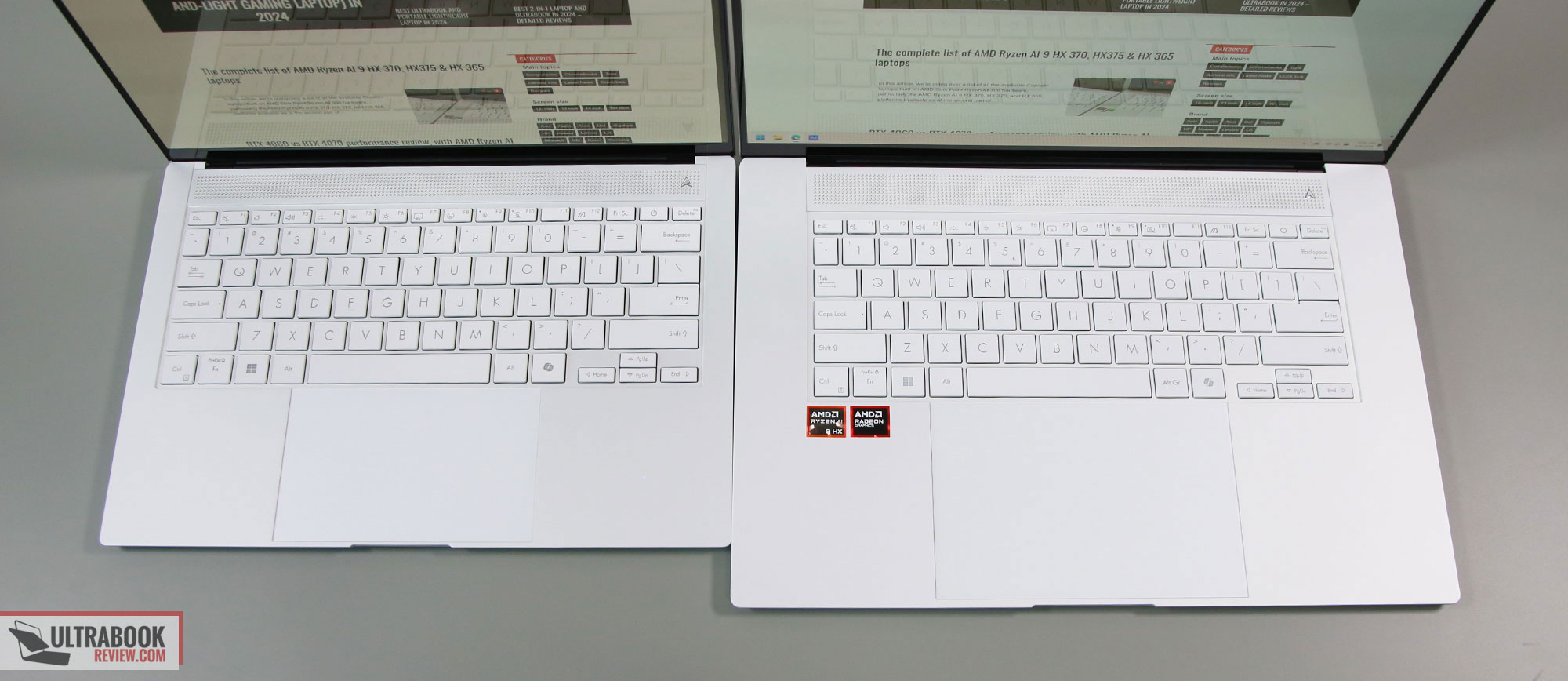
Here are some side-by-side images of the two models, in their lighter-color variants:
Otherwise, the ergonomics of these lineups haven’t changed. You’re still getting ports lined on the edges, with USB-C connectors only on the left side, and with an extra SD card reader on the larger model.
The display angle is still limited to around 130°, something that bothers me greatly on such portable designs. That’s on par with the MacBooks, for what that’s worth – it’s one of my main issues with my MacBook Air.
Here’s a preview video of the Zenbook S14:
And another of the Zenbook S16:
Inputs, Display
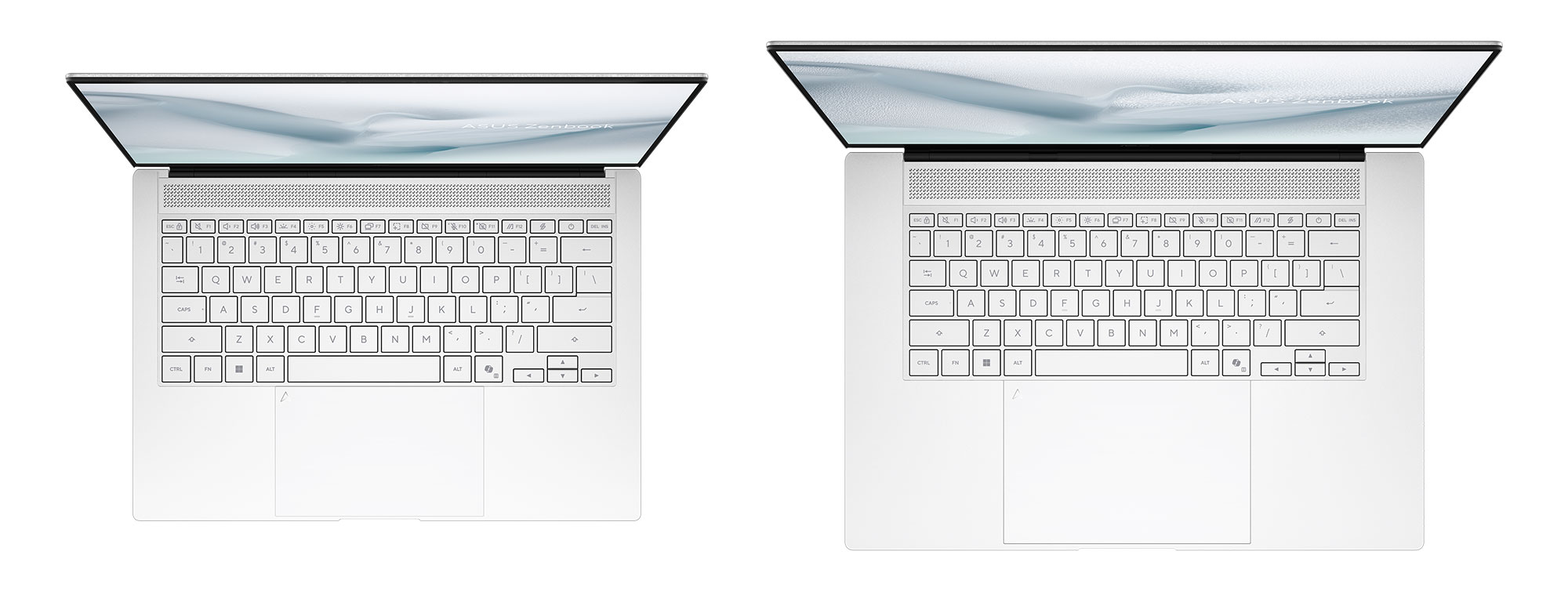
The inputs haven’t changed on these refreshes, with minimalist low-travel keyboards on both sizes and large touchpads (clickpads, not haptic implementations).
The keyboards aren’t flanked by audio grills on any of these, so there’s no up-firing sound. But audio quality is above average on both and especially on the 16-inch model that allocates a lot of internal space to speakers.
The keyboards on these are short-stroke implementations with only 1.1 mm of travel. That’s shorter than the 1.4 mm of the standard Zenbooks, and close to the 1 mm on the MacBook Airs. The typing experience is alright, but the shallower feedback and stroke depth require adjustment time. Asus claims these keyboards are supposed to make typing faster and more effortless, but my experience isn’t quite what’s advertised.
Nonetheless, my main issue with these keyboards in the past was their overbright illumination, too bright for proper use in a dark room, even on the lowest setting – we’ll have to see if that was addressed in any way with these generations.
The touchpads are glass, work fine, and they’re huge. They get very close to the front lip, which can cause ghost swipes and touches from your clothes when using these devices on the lap or on the couch. That’s on top of the frustratingly limited screen angle, and again, on par with MacBooks.
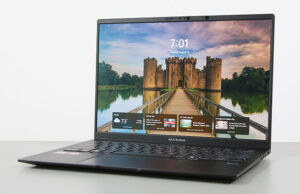
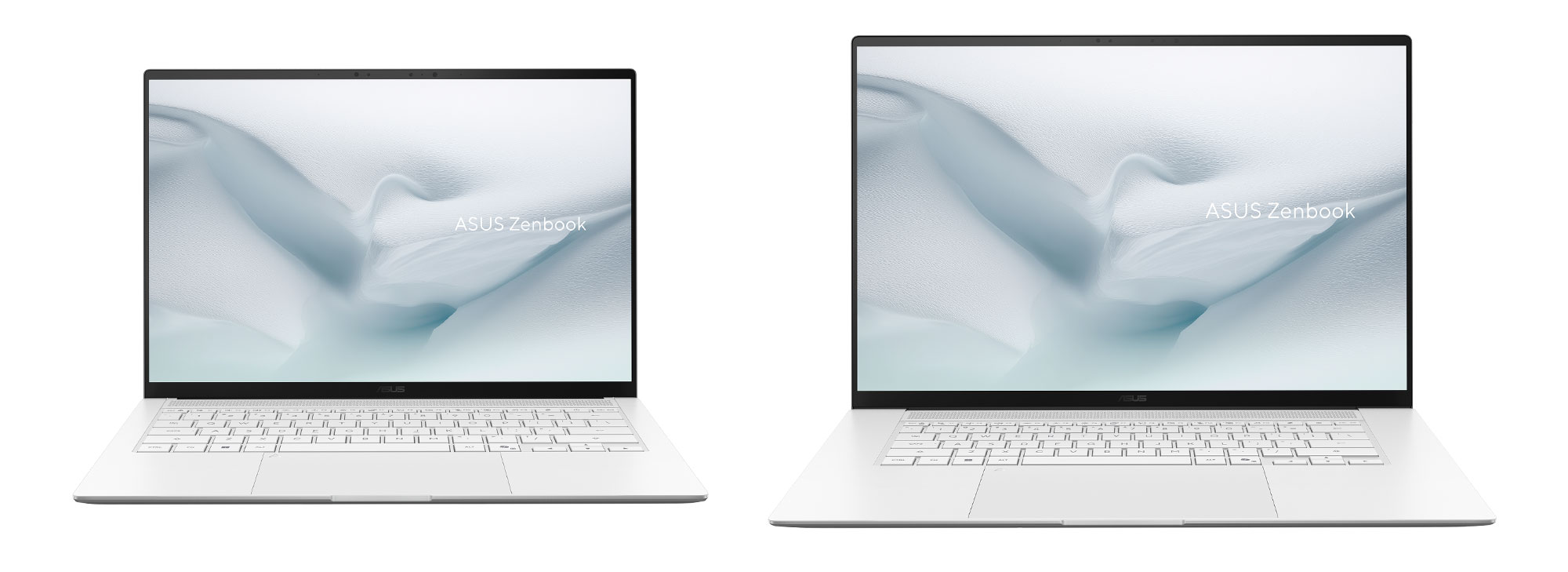
The displays are OLEDs, with tiny bezels around, and the specs mention either touch or non-touch implementations; retail models were mostly all touch in the past, and that’s probably still going to be the case this year. The difference is the lack of a digitizer and less grain on white/light background on the non-touch variant.
What’s new are the updated Samsung panels that are brighter now: 500-nits SDR and up to 1100-nits peak HDR (up from sub 400-nits SDR and 600-nits HDR). But with HDR On in Windows, sustained brightness is noticeably higher than in the past, which will improve usability in brighter environments or outdoors.
This panel update addresses the main issue of past OLED implementations. The other is PWM flickering, but that’s less of a concern as well on Asus laptops, as these offer a flicker-free dimming option in the settings.
Hardware, cooling, battery life and other internal updates
The Zenbook S14 UX5407AA remains an Intel-exclusive design, with Panther Lake Core Ultra Series 3 H hardware inside now (up to a Core Ultra 9 385H), running at higher power than before.
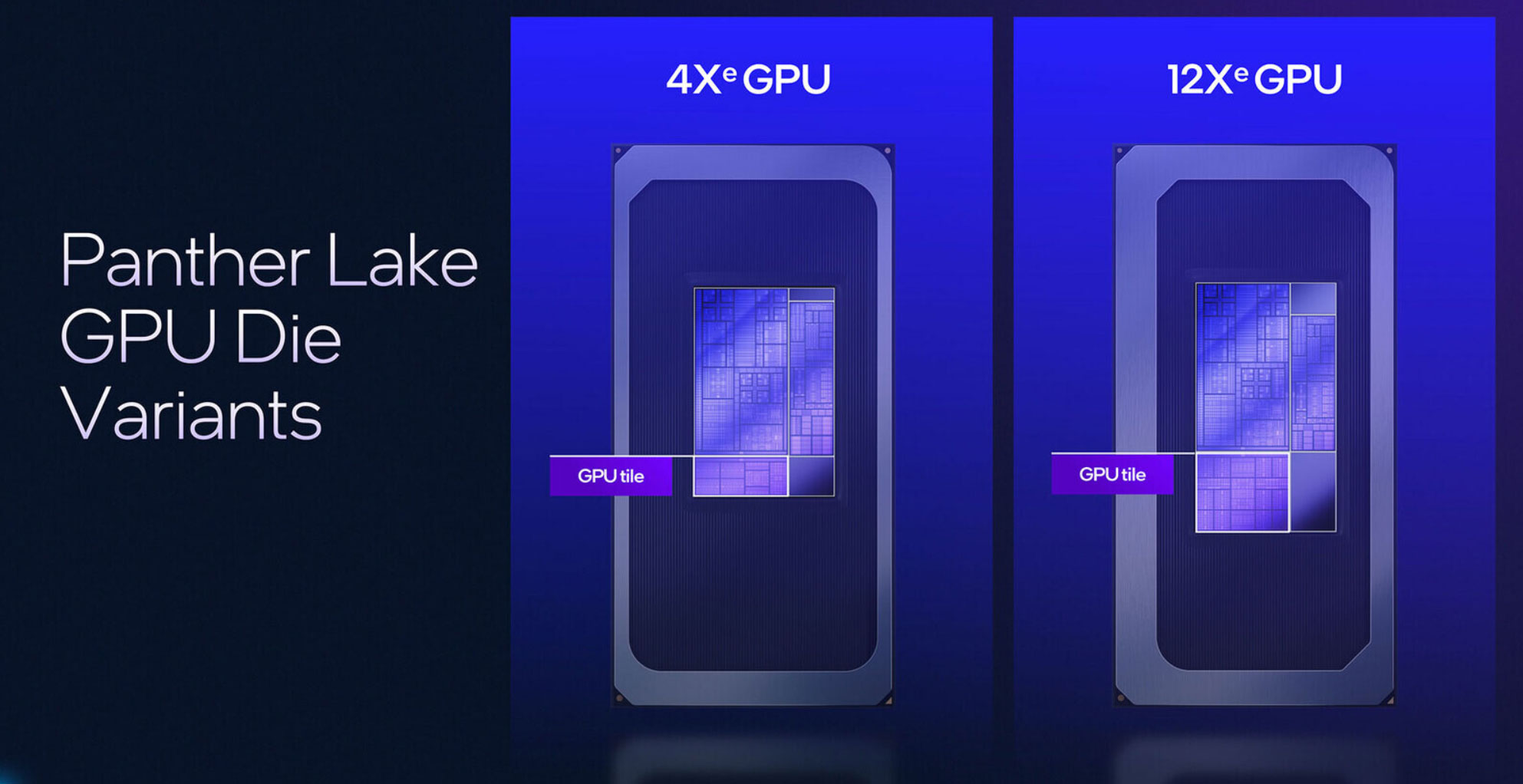
The previous iteration was a Lunar Lake implementation, and the new hardware is going to provide much improved processing performance and improved GPU performance as well. This is not a Panther Lake Core Ultra X implementation with the Arc B390 iGPU with 12 Xe cores, though; it’s only the standard Panther Lake Intel Graphics with 4 Xe Cores.
The Zenbook S16 UM5606GA is an AMD-exclusive platform, with Gorgon Point Ryzen AI 9 400 hardware inside. However, it’s unclear whether Asus plans on actually offering the top AMD Ryzen 9 AI HX 470 specs here or top out at the lower-tier Ryzen AI 9 465 with fewer CPU/GPU cores.
The previous S16s were offered in either AMD Strix Point, AMD Krackan Point, or Intel Lunar Lake variants. Gorgon Point is a minimal Strix Point refresh, with similar CPU and GPU capabilities, just slightly higher clock speeds and minimal other refinements. So don’t expect any notable gains in performance for the 2026 refresh over the Strix Point unit tested here. In fact, expect better sustained performance in demanding loads and games for the 14-inch Zenbook S14, despite it being smaller.
What’s more notable is the fact that both of these lineups get an updated thermal module for the 2026 refreshes, still dual-fan dual-heatsink, but with updated higher-capacity fans and 37% enlarged vapor-chambers (the two vapor-chambers are about the same capacity on both sizes now, and Asus claims 28W sustained TDP on both models – to be confirmed and tested). All these should allow for higher sustained power settings and improved internal and external temperatures. We’ll need to test them in proper reviews before drawing conclusions, though.
Another notable change is the slight increase in battery capacity, with a 77 Wh battery on the S14 and an 83 Wh battery on the S16 now. These are paired with improved hardware efficiency and redesigned ultra-compact chargers.
Here’s an internal scan of the two.
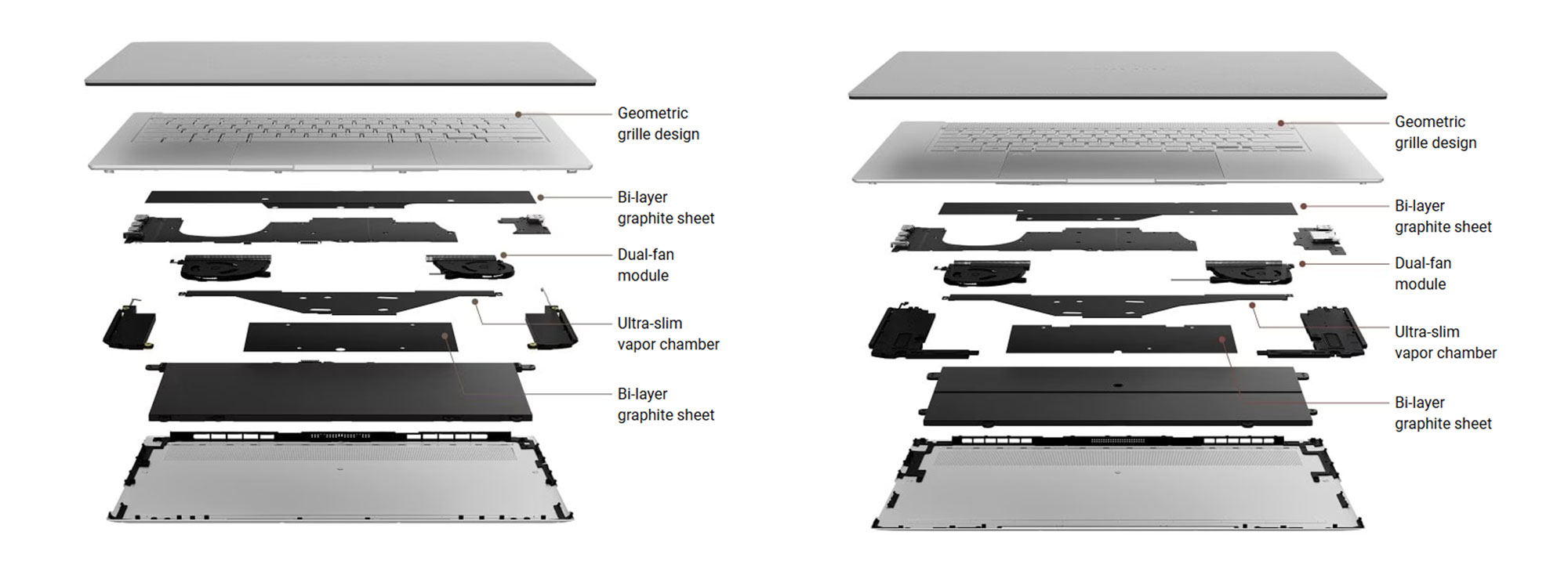
Design and internals – Zenbook S14 (left) and Zenbook S16 (right)
All in all, these aspects combined make the 2026 refreshes of the Zenbook S14 and Zenbook S16 some of the most interesting options in their segments of premium-tier ultrabooks. They’re not cheap lineups, though. In fact, my main nits with these lineups in the past haven’t changed: the limited screen angle, the shallow typing experience and the expensive pricing (even higher now than in the past, for obvious reasons). But the increase in performance and efficiency, paired with the updated OLEDs and batteries, might put these on more desks these days. The smaller S14 in particular has the potential performance/size on its side, while the AMD S16 should hopefully sell for a competitive price for a device of this type.
I do wonder why Asus chose not to implement a Core Ultra 9 X platform with 12Xe graphics on these, though, which would have put them on par in GPU capabilities with other ultraportables built on this hardware. The X9 chips with the extra GPU part aren’t a lot larger physically, but perhaps they felt that they couldn’t drive those at enough power in these slim designs to justify implementing them. Nonetheless, this decision could end up being a potential deal breaker for some potential buyers.
Anyway, that’s about it for this preview. Stay around for our detailed reviews and let me know what you think about these Zenbook S14/S16 refreshes.