
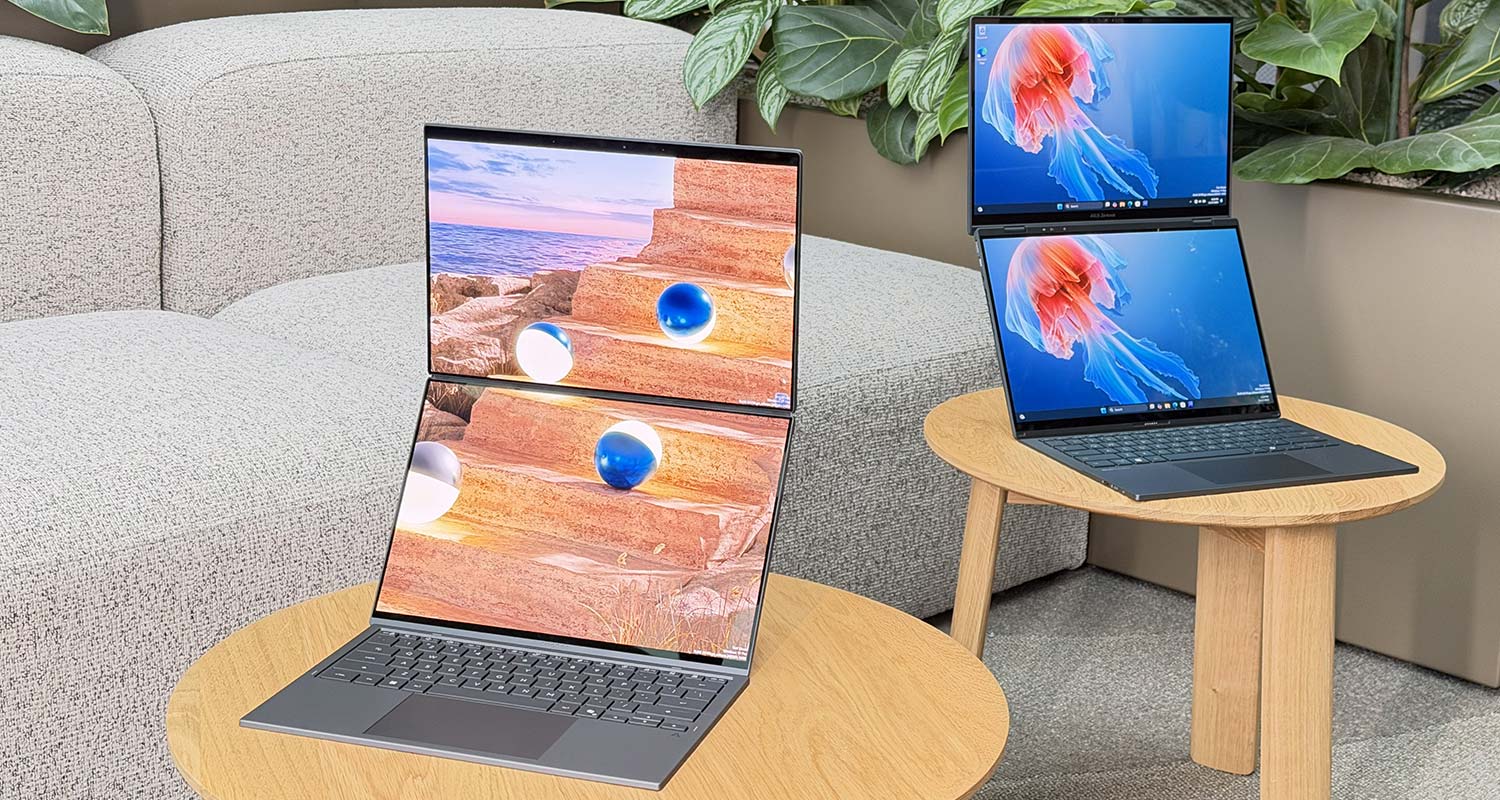
Two years ago Asus launched the Zenbook DUO, a Zenbook series with two full-size 14-inch OLED displays. Last year, they refreshed the existing chassis with slightly faster hardware.
This year, however, they’re completely revamping the Zenbook DUO with a more compact design and updated hinges that bring the two screens much closer together, faster hardware running at higher power, improved cooling, punchier audio, and a larger 99Wh battery, among others.
I got to spend some time with an early sample of this Zenbook DUO UX8407AA series, and gathered my early impressions in this article. A full review will follow over the next weeks.
But first, here’s a specs sheet of the 2026 and 2025 Zenbook DUO models, to better understand how the two have changed.
Specs sheet – Asus Zenbook Duo 2026 and 2025
| Asus Zenbook DUO UX8407AA, 2026 model |
Asus Zenbook DUO UX8406CA, 2025 model |
|
| Screen | dual 14 inch, OLED, 16:10 aspect ratio, touch, glossy with Gorilla Glass, with an anti-reflection layer, Lumina Pro OLED 3K 2880 x 1800 px, 48-144Hz VRR, 500-nits SDR, 1000-nits peak HDR, 100% DCI-P3 colors |
dual 14 inch, OLED, 16:10 aspect ratio, touch, glossy with Gorilla Glass, OLED 2.8K 2880 x 1800 px, 120Hz, 400-nits SDR, 100% DCI-P3 colors or OLED FHD 1920 x 1200 px, 60Hz, 400-nits SDR, 100% DCI-P3 colors |
| Processor | Intel Panther Lake Core Ultra, up to Core Ultra X9 388H, 4PC+8Ec+4LPEc/16T |
Intel Arrow Lake H Core Ultra, Core Ultra 9 285H, 6PC+8Ec+2LPEc/16T, up to 5.4 GHz |
| Video | Intel Arc B390 Panther Lake iGPU, 12Xe Cores | Intel Arc 140T, up to 2.35 GHz |
| Memory | up to 32 GB LPDDR5-9600 (soldered) | up to 32 GB LPDDR5-7467 (soldered) |
| Storage | 2x M.2 2280 gen4 slot | single M.2 2280 gen4 slot |
| Connectivity | Wireless 7 (Intel BE201) 2×2, Bluetooth 5.4 | Wireless 7 (Intel BE201) 2×2, Bluetooth 5.4 |
| Ports | left: HDMI 2.1 TMDS, 1x USB-C with Thunderbolt 4, mic/headphone right: 1x USB-A 3.2 gen2, 1x USB-C with Thunderbolt 4 |
left: 1x USB-C with Thunderbolt 4, 1x USB-A 3.2 gen1, mic/headphone right: HDMI 2.1 TMDS, 1x USB-C with Thunderbolt 4 |
| Battery | 99 Wh, 100W USB-C charger | 75 Wh, 65W USB-C compact charger |
| Size | 310 mm or 12.1” (w) x 209 mm or 8.23” (d) x from 19.6 mm or 0.77” (h), with keyboard folio | 313 mm or 12.3” (w) x 217 mm or 8.6” (d) x from 19.9 mm or 0.78” (h), with keyboard folio |
| Weight | ~3.0 lbs (1.35 kg) without keyboard, ~3.65 lbs (1.65 kg) with keyboard, ?? for the USB-C charger and cables, EU version |
~3 lbs (1.35 kg) without keyboard, ~3.65 lbs (1.65 kg) with keyboard, .18 (.4 lbs) for the USB-C charger and cables, EU version |
| Extras | clamshell dual-display format with seamless gap 180-degree hinges, detachable keyboard folio – Bluetooth and physical pins, updated dual-fan dual-radiator cooling, white backlit keyboard, 1.4 mm travel, plastic touchpad, 2MPx FHD webcam with IR, ALS, no fingerprint sensor, 6x speakers, including 2x front-firing, Gray color |
clamshell dual-display format with a 180-degree hinge, detachable keyboard folio, dual-fan dual-radiator cooling, white backlit keyboard, 1.4 mm travel, plastic touchpad, 2MPx FHD webcam with IR, ALS, no fingerprint sensor, stereo bottom firing speakers, Inkwell Gray color |
This 2nd-generation Zenbook Duo chassis refines the previous iteration in several ways.
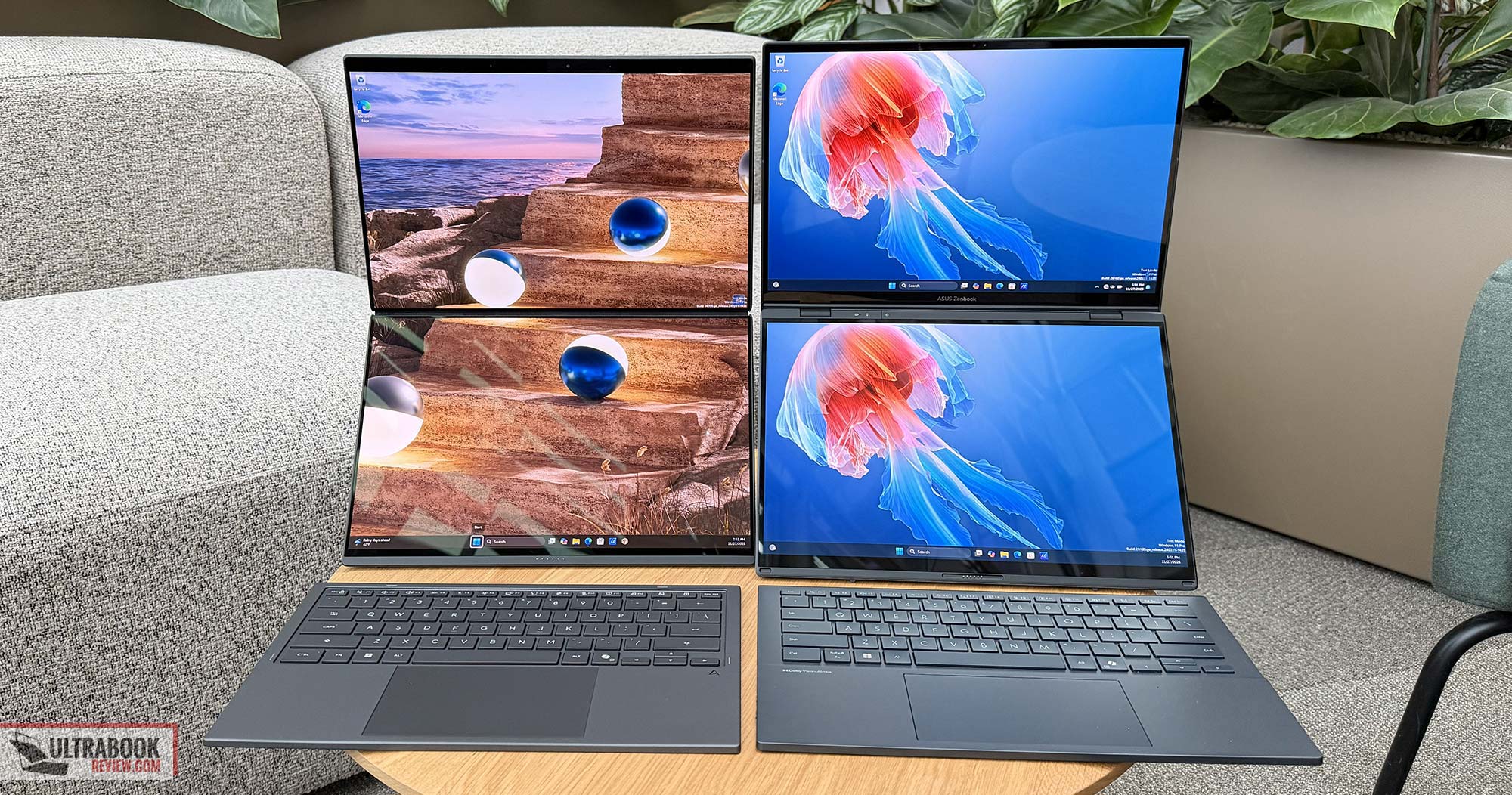
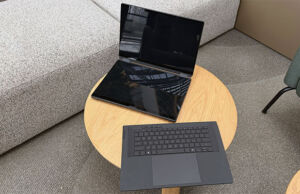
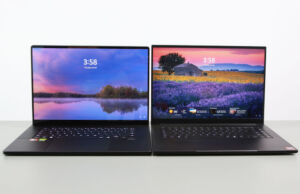
Here are some side-by-side pictures of the two, with the 2026 generation on the left.
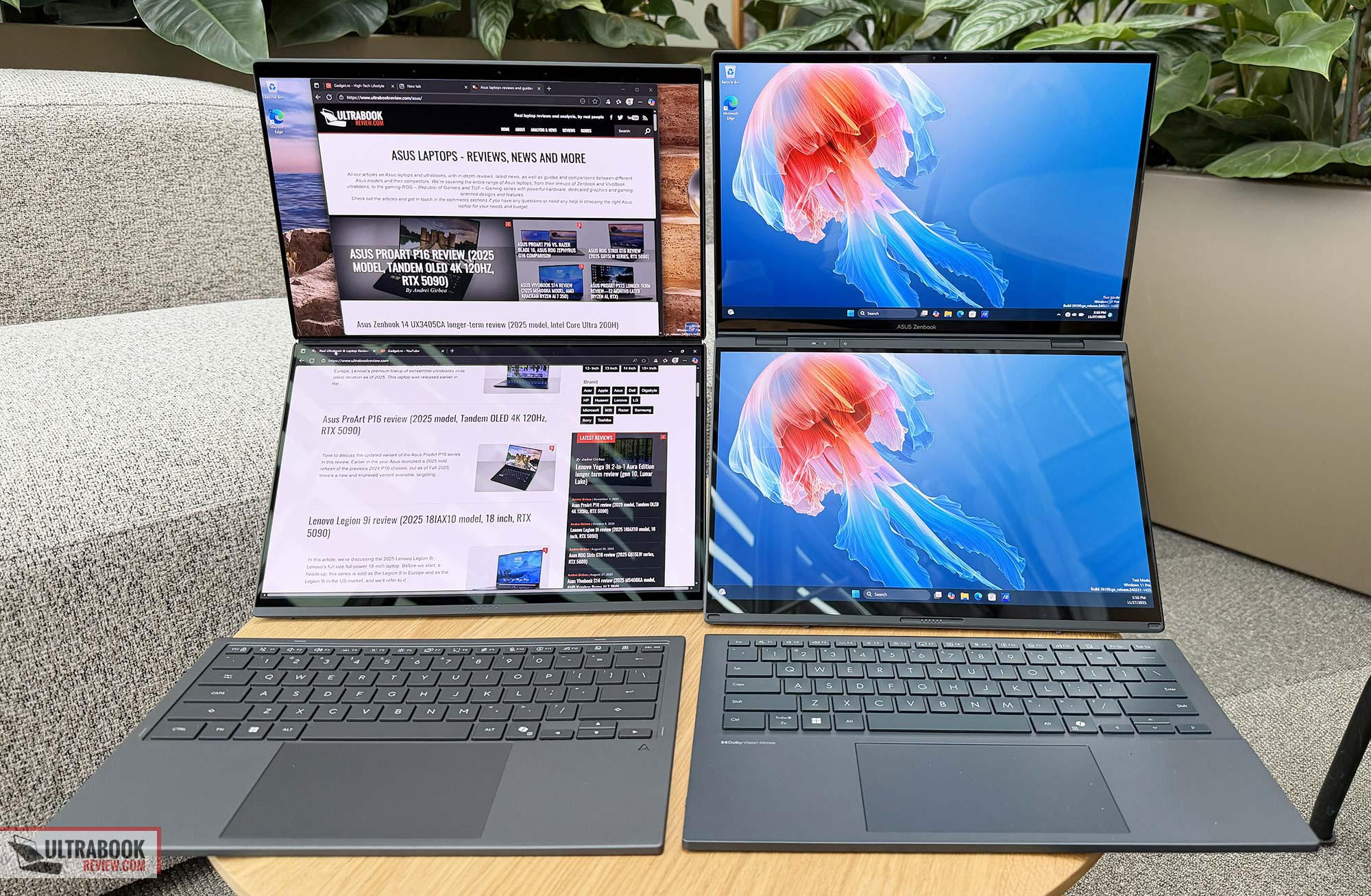
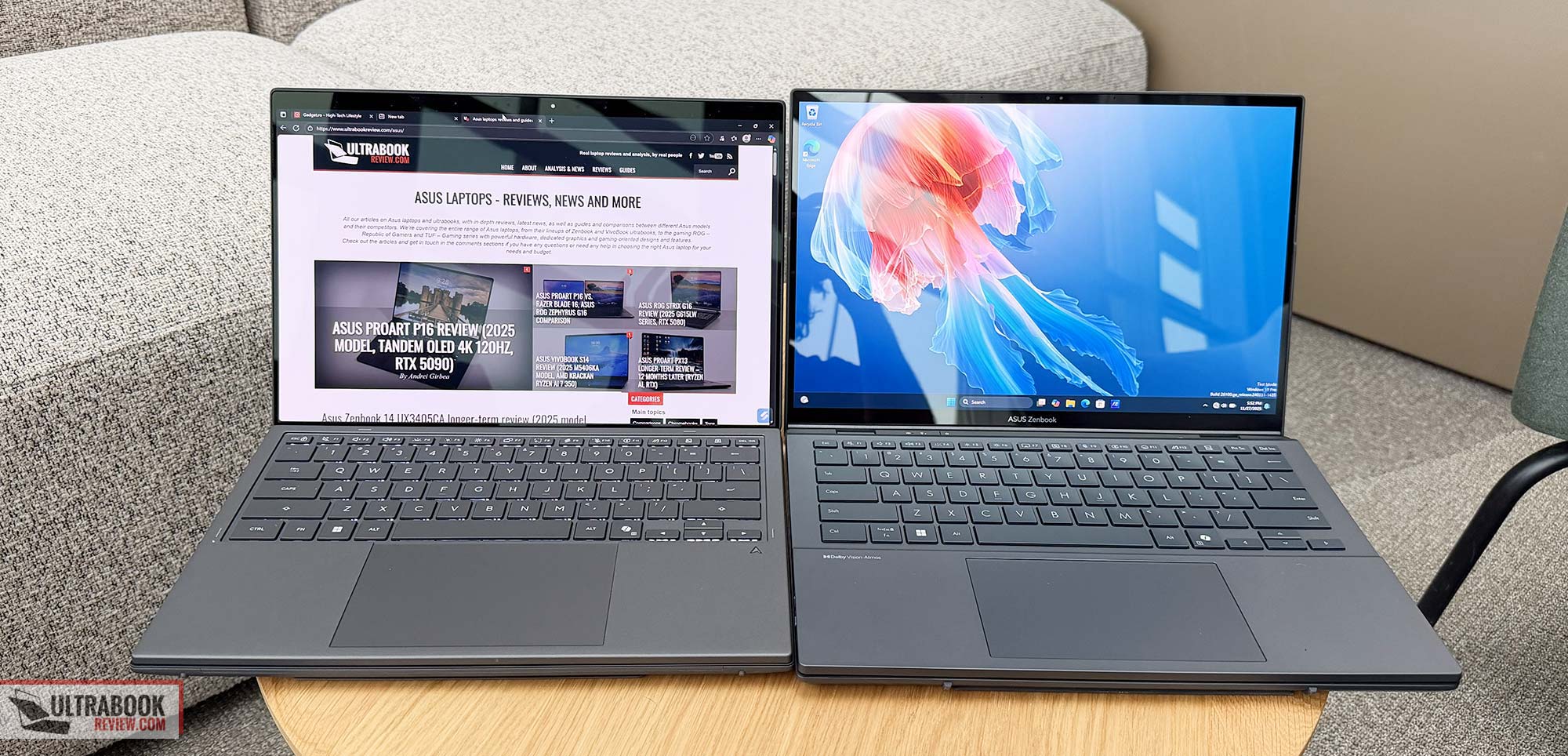
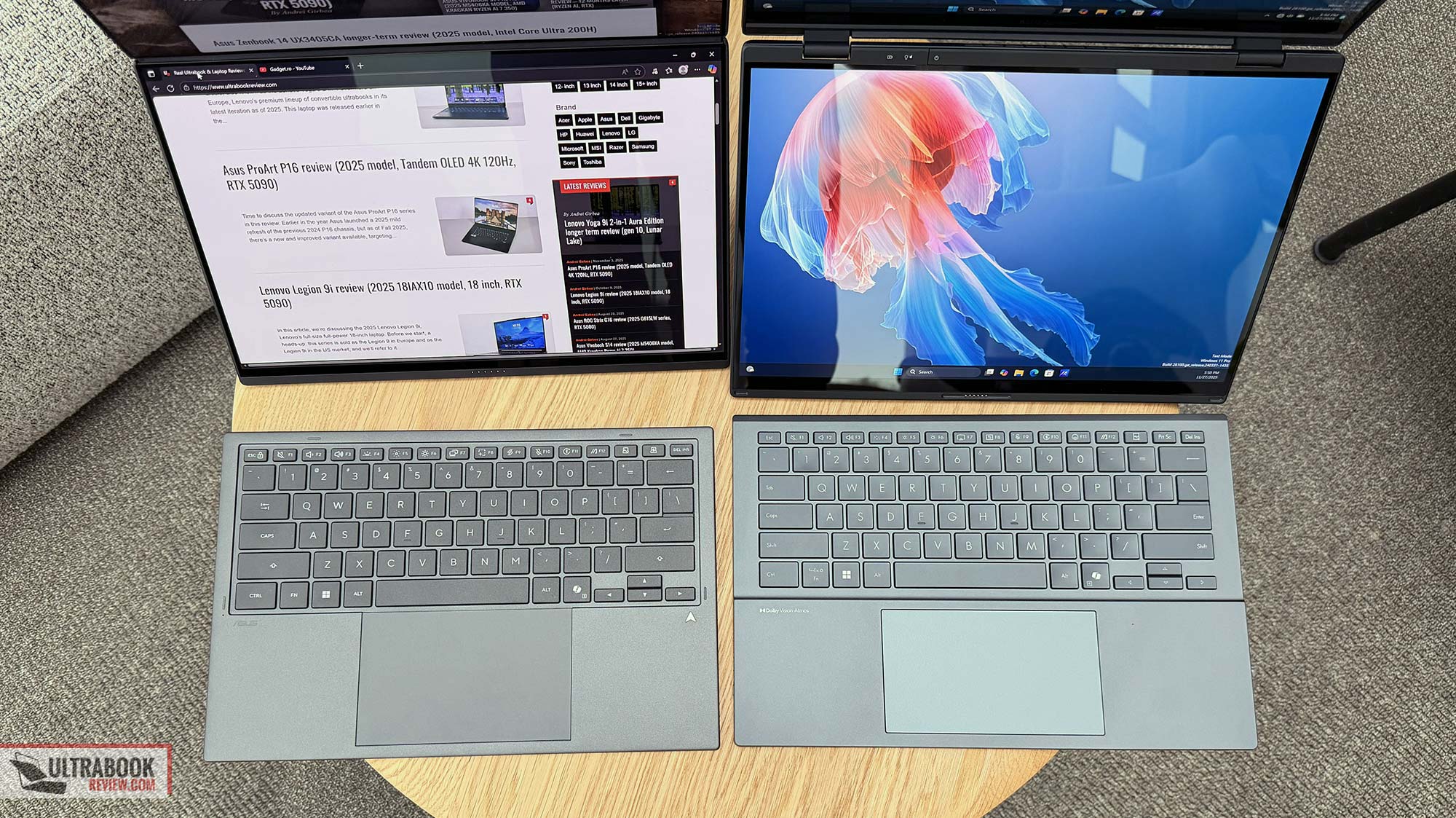
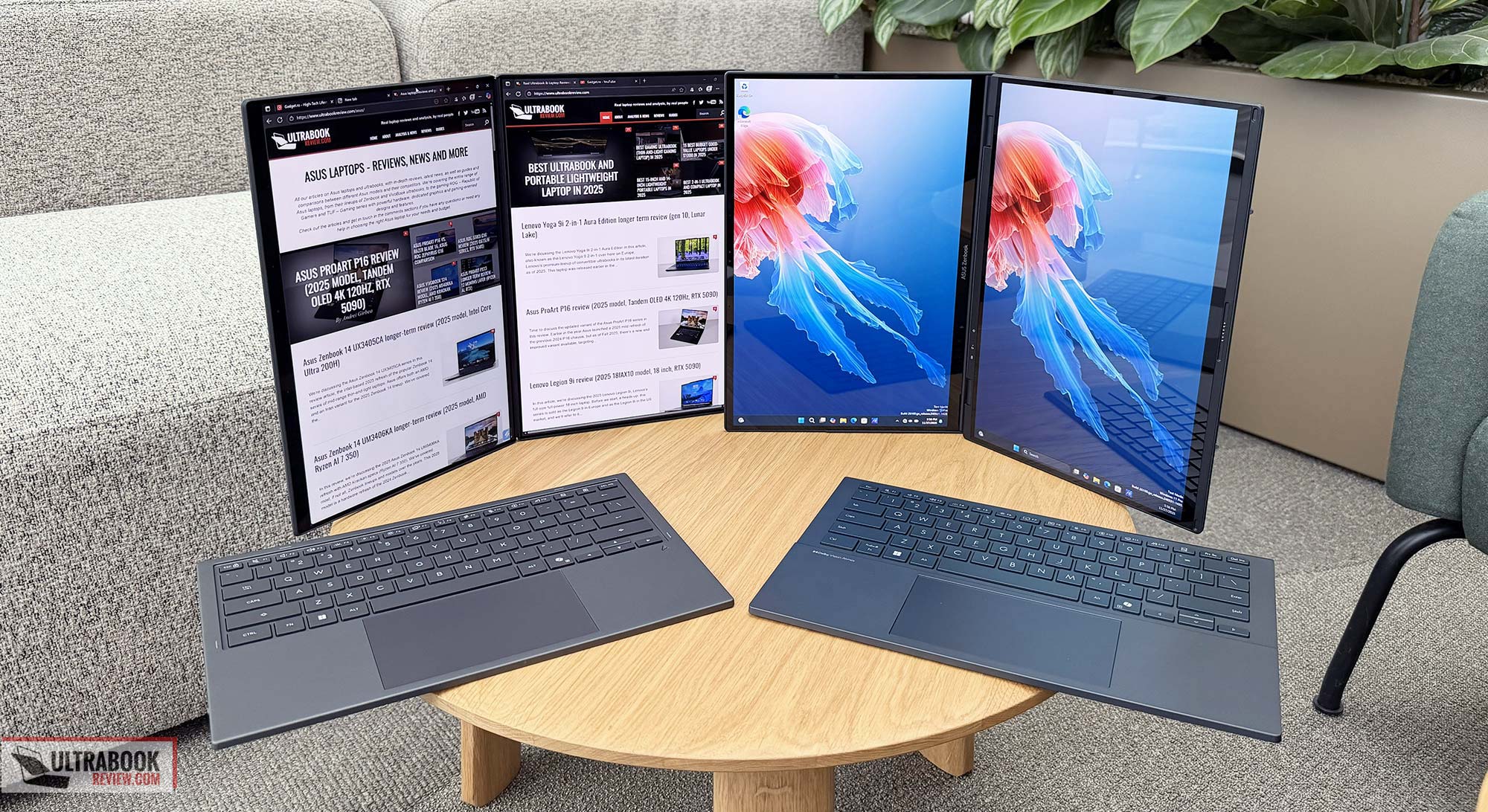
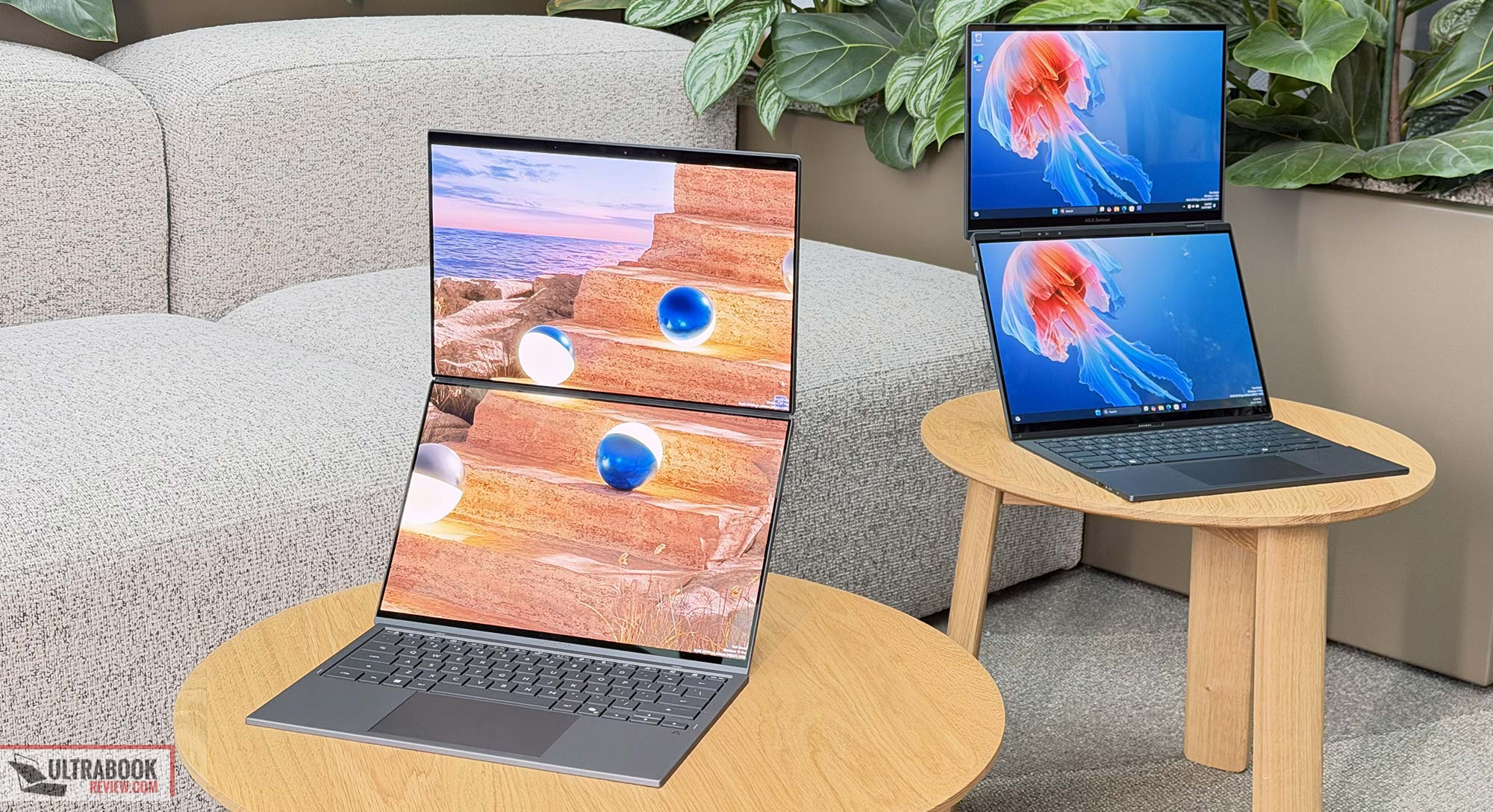
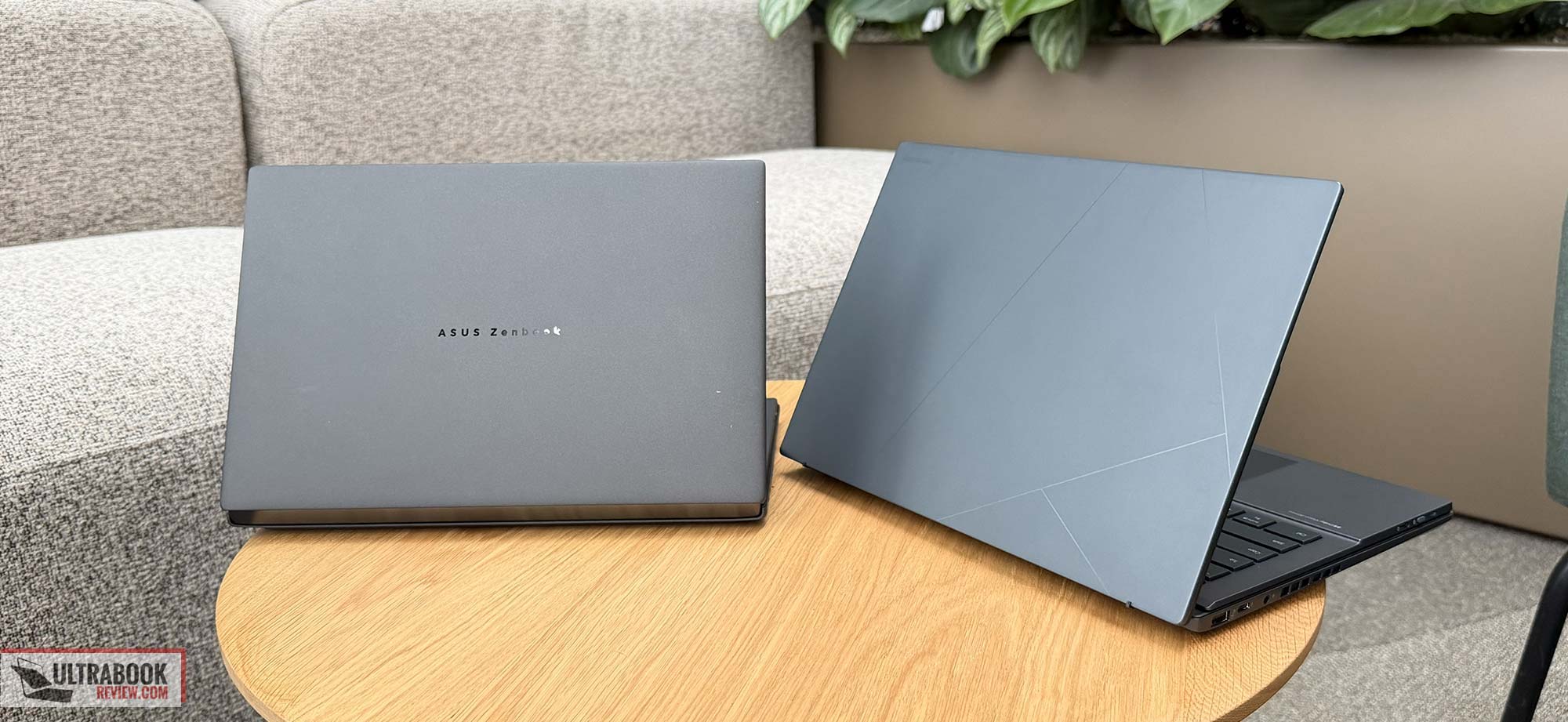
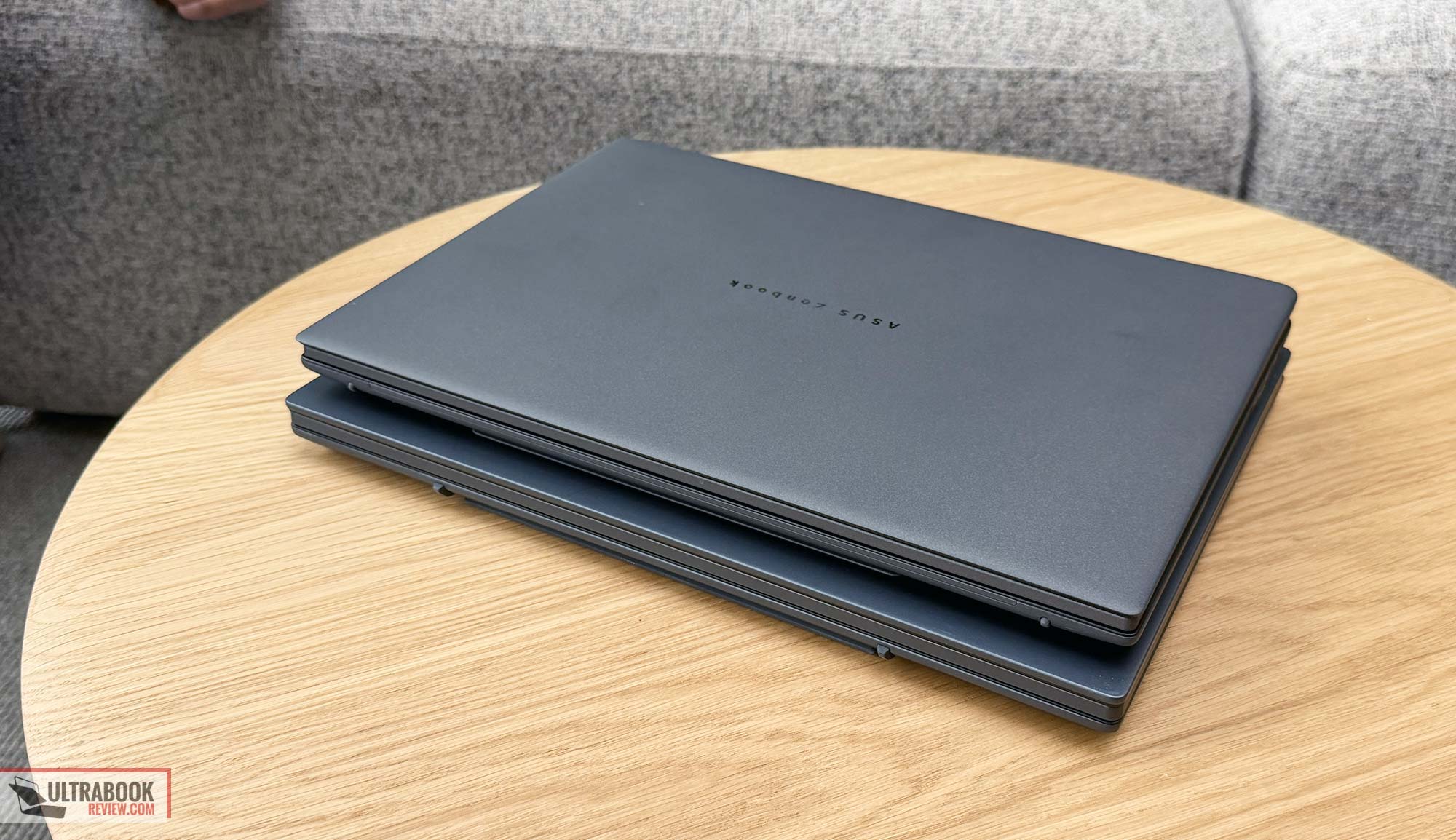
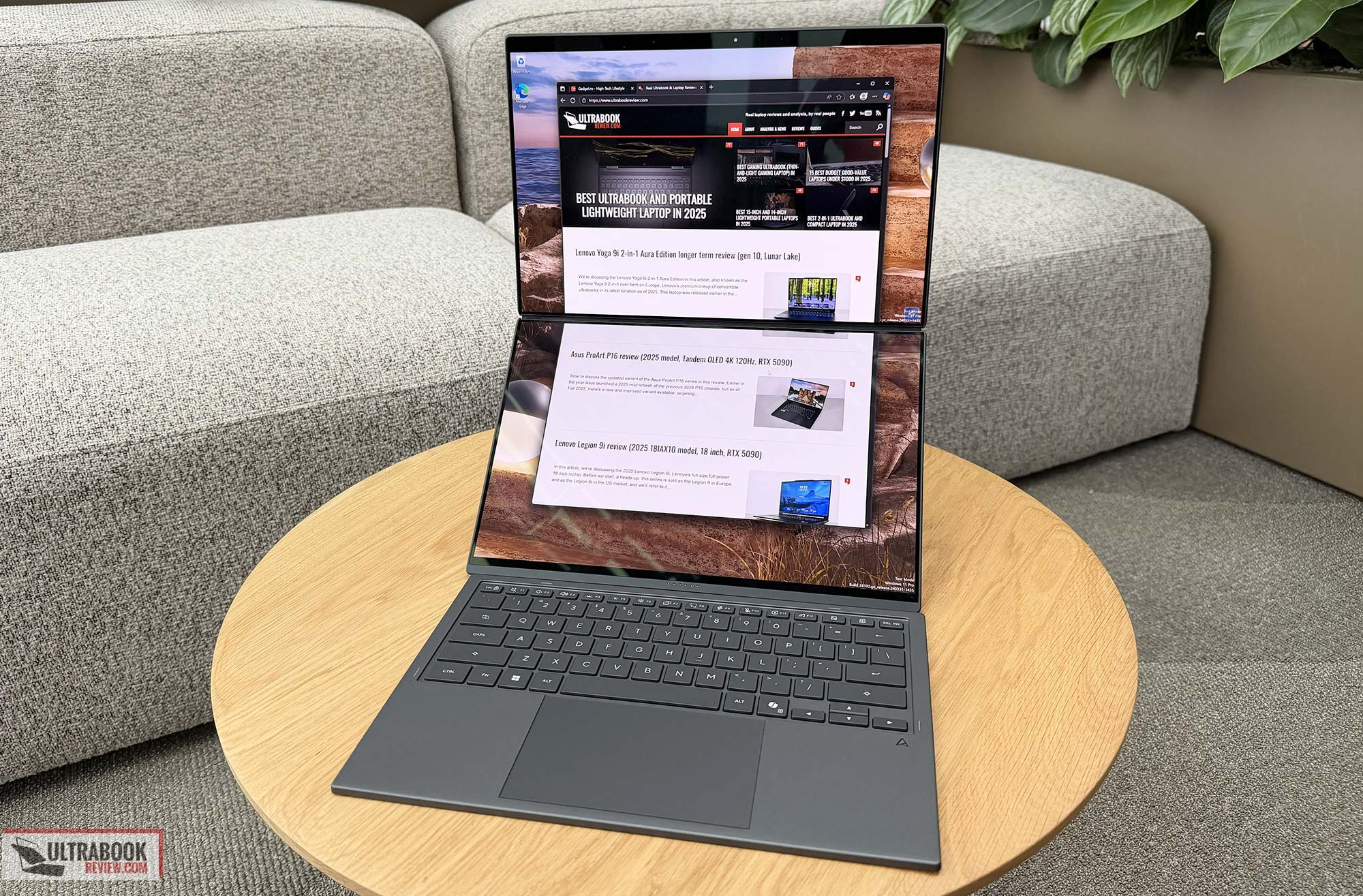
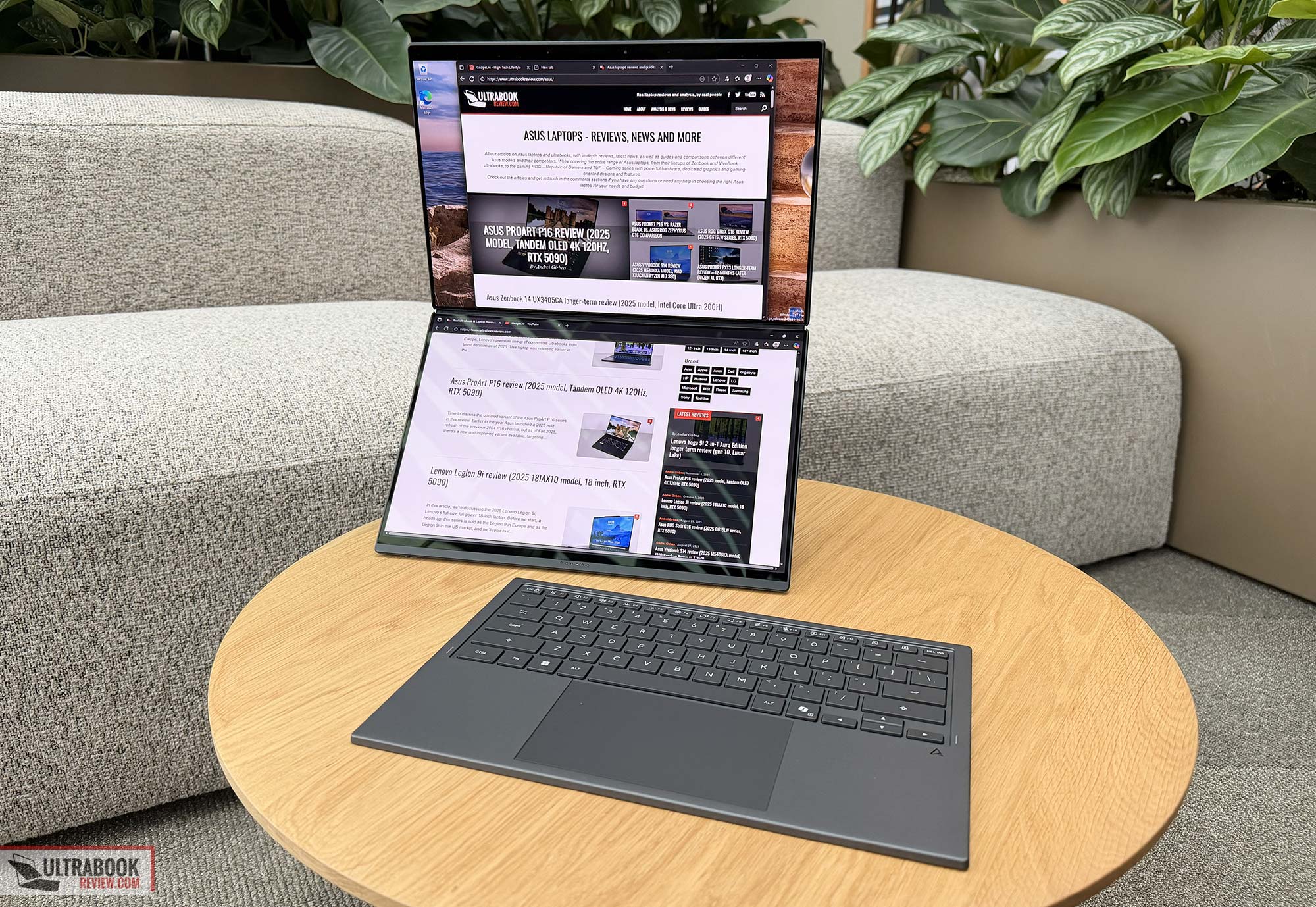
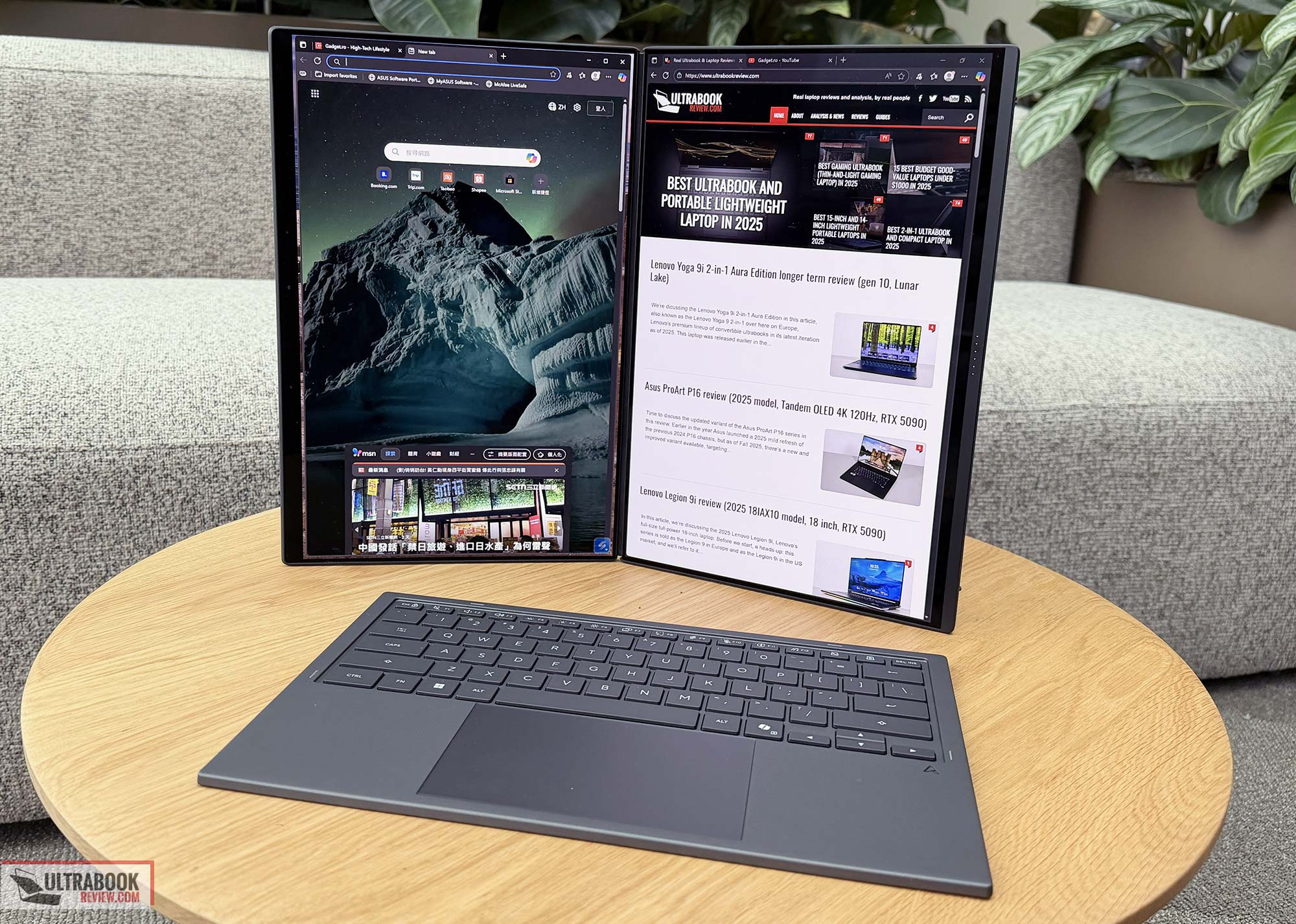
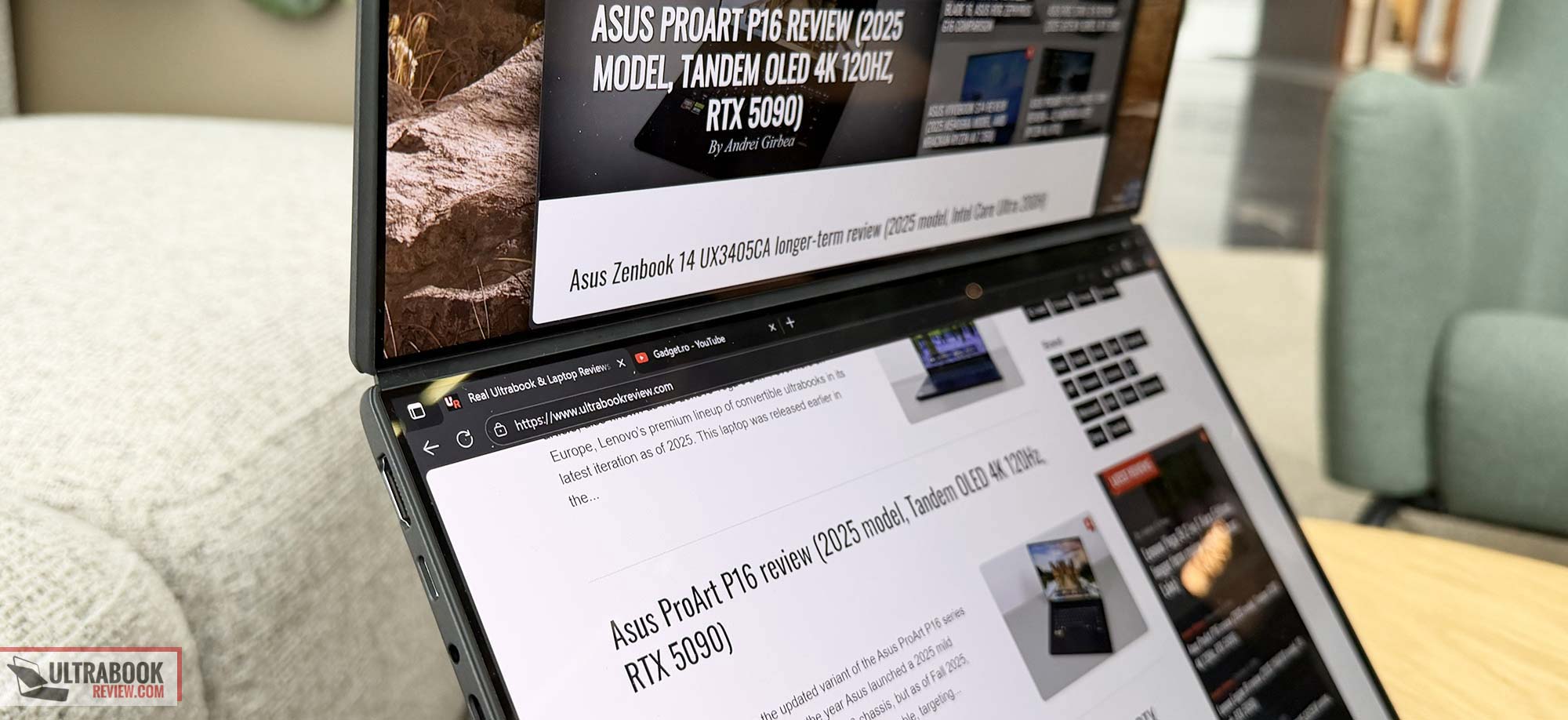
The new variant is more compact by about 5%, due to the new hinges that bring the two displays much closer together and allow them to open without the gap of the previous generation. That means the two displays now sit in the same plane when having the laptop open up, and the bezel part between the screens is smaller, about 9 mm in total.
On the other hand, the new Zenbook is about the same weight as the previous one, and that’s because it incorporates updated cooling and a bigger 99Wh battery split partially on the main chassis and partially behind the display.
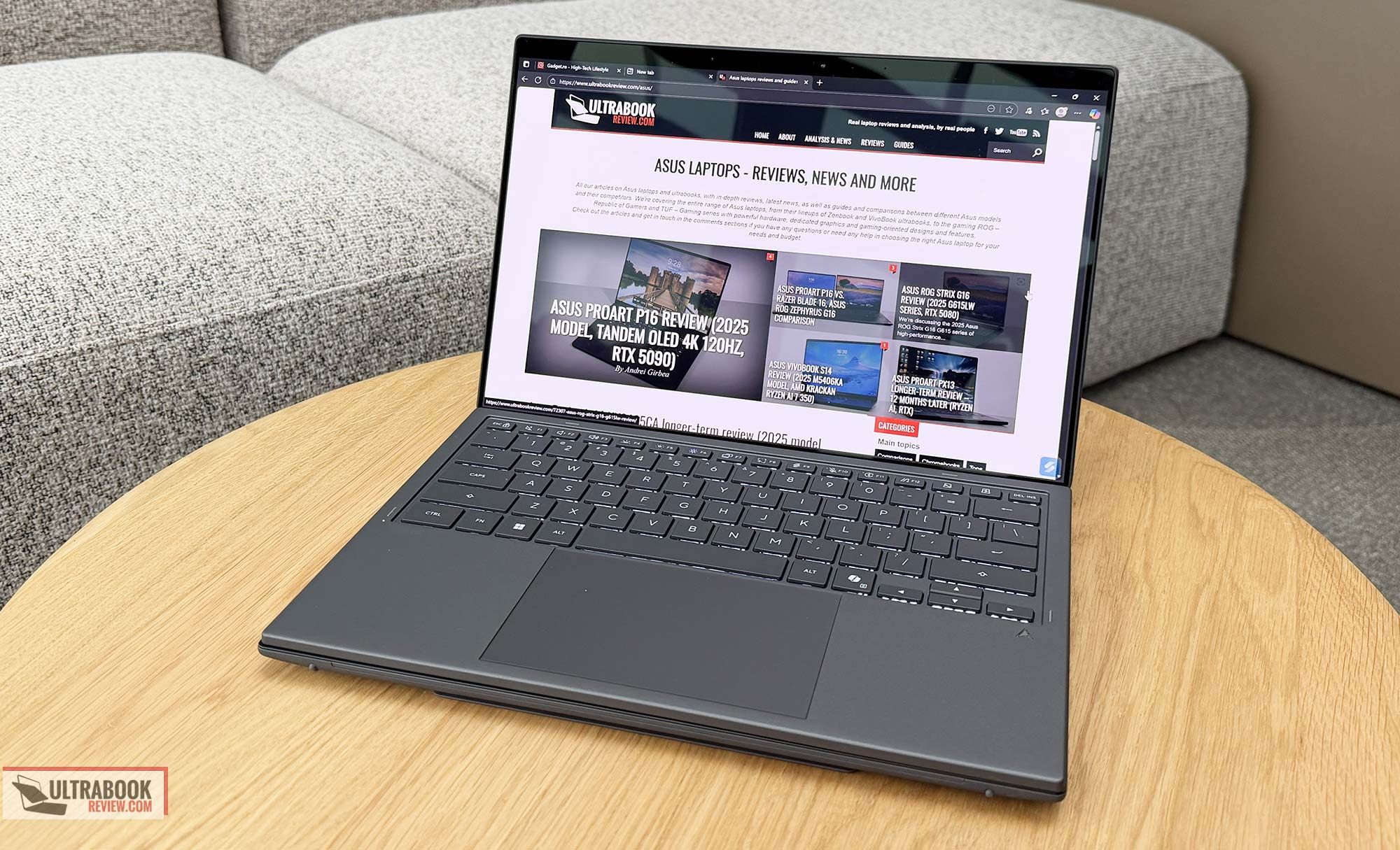
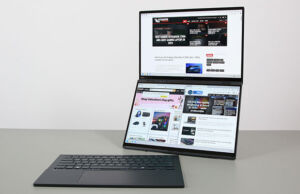
The overall functionality of this series remains more or less the same. You get the two displays with a keyboard folio sandwiched in between. With the keyboard physically attached, this feels like a regular laptop, just thicker than a standard Zenbook.
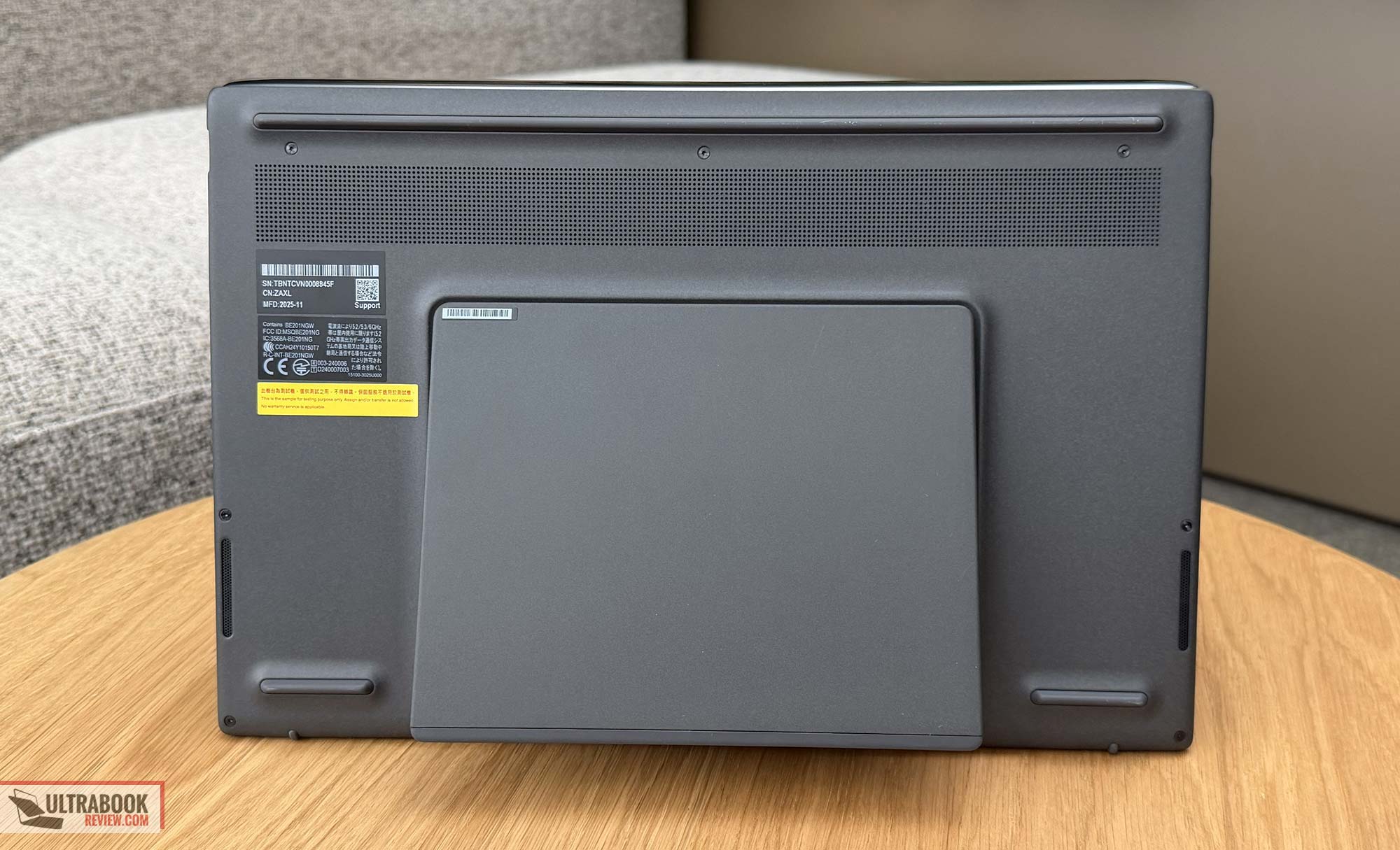
But then you get to detach the keyboard and use it on Bluetooth, and you can utilize the kickstand on the back of the laptop to position the two displays vertically or horizontally for dual-display use. I still find it more practical with the two displays stacked one over the other, as otherwise you’re getting two 14-inch displays in Portrait mode, and that’s hardly as useful in everyday life. But side-by-side mode is more comfortable now with the updated hinge mechanism.
That aside, I’ll also mention that the exterior case of this generation is made out of Ceraluminum, in a dark gray color, with limited branding elements and rounded corners all around, much like on the Zenbook A14/A16 models. This finish should age well and resist smudges and scratches better than the regular aluminum case of the previous generation. However, you might not quite like the feel of Ceraluminum in comparison; it feels somehow not as nice as actual aluminum pieces, the kind offered on past Zenbooks or on a Zephyrus or a MacBook. You’ll have to experience it in real life to understand what I mean.
The displays on this newer Zenbook DUO UX8407 series are still 14-inch 16:10, but updated Lumina Pro OLED panels with higher brightness and an anti-reflection layer that cuts out some of the glare and reflections. This coating actually makes a difference in bright-light environments, but this is still not a matte implementation by any means.
The beautiful displays are complemented by updated audio, with two main dual-side speakers and two extra front-firing tweeters hidden near the hinge. The audio quality and volume are much improved over the previous Zenbook DUO generation.
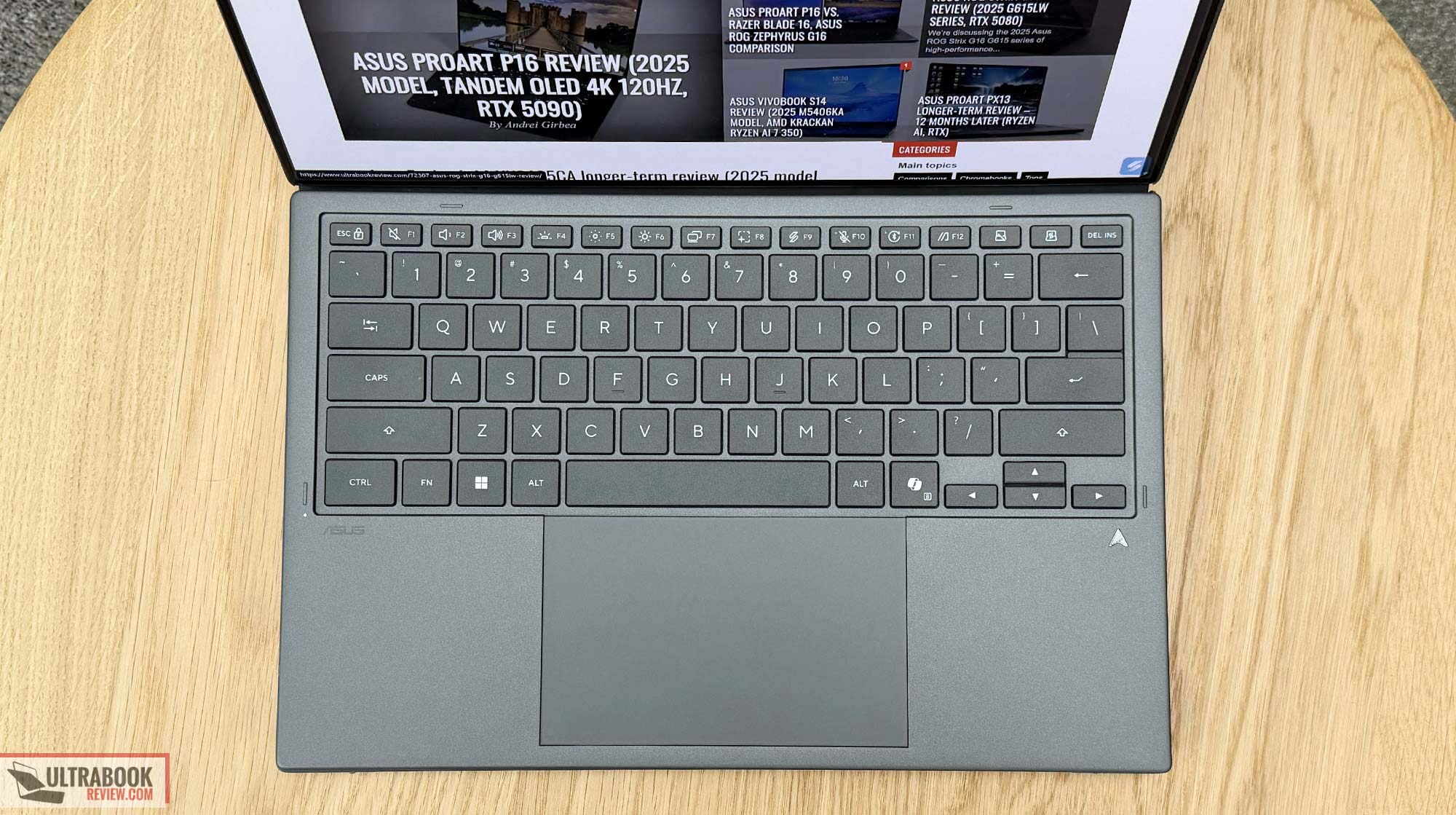
As for that keyboard folio, it incorporates a proper 14-inch Zenbook keyboard and a larger touchpad than in the past. Asus also smoothed the edges, an aspect your wrists will notice on a thicker laptop such as this one.
It still works on either Bluetooth or hooks up directly to the laptop through a set of pogo pins, pogo pins that were redesigned and are now magnetic. The keycaps on this updated folio have a rougher feel to them, though, as opposed to the smoother feel of most Zenbook keyboards. That should help fend off smudges, but I’m not yet sure whether it impacts the typing experience in any way or not. I’ll know more when I get the review unit.
BTW, here are a few more pics of the 2026 Duo UX8407 refresh.
The hardware is the extra piece of this puzzle, with an Intel Panther Lake implementation. Asus will offer the series with Core Ultra 7 355H, Ultra 9 386H, or Ultra X9 388H specs, with up to 32 GB of LPDDR5x-9600 memory and gen4 SSD storage. The X9 bundles Arc B390 graphics with 12 Xe Cores, while the other bundle Arc graphics with only 4 Xe Cores.
The hardware runs at up to 45W TDP in the 2026 Zenbook Duo models, though. In comparison, the 2025 Arrow Lake platform ran at up to 35-38W sustained. The new hardware and higher power settings should translate to 10-25% performance gains in sustained loads. For a multitasker meant to handle more than just casual use, that’s significant.
Of course, the 45W setting is most likely on the noisy Full Speed mode, and I’m looking forward to testing the capabilities of this implementation on the quieter mid-level profiles as well.
I’m also curious of the thermal capabilities of this smaller chassis – the previous version did a good job keeping temperatures at bay, but the new model is a little smaller and runs at higher sustained power. I didn’t get to open the preview unit, but Asus mentions increased intake cutouts on the back panel and larger fans. Given the format with the display over the components, they surely made some tweaks to the cooling to comfortably promote the higher power design.
While going over the internals, I must also mention the updated battery in this DUO, with a total capacity of 99 Wh. That’s impressive for a 14-incher, and Asus increased the battery without increasing the overall weight, which is still around 1.65 kilos including the keyboard folio. The battery is part inside the main chassis and part behind the display, but the two sides are still well balanced, and the laptop doesn’t feel top-heavy in any way.
Of course, having two displays requires extra energy, so your expectation of battery life while using both displays should be realistic. In Laptop mode, though, this could be one of the longer-lasting 14-inch laptops out there.
All in all, this is a notable refinement of a proven concept, the most popular dual-display laptop available in stores today. You’re paying a pretty premium for the format and the display, though, and I’d expect that premium to be higher than on the 2025 model (which retailed at $1999 at launch). Stay around for our detailed review, and let me know what you think of this refresh in the meantime.




Eee
February 3, 2026 at 9:35 pm
Hey Andrei, according to tech spec sheet for the 2026 Duo, the HDMI port is true 2.1 (FRL), which is a good improvement. Thanks!