
Table of Contents
Asus are bringing AMD Strix Halo hardware on two of their most interesting portable notebooks this year, on the ProArt PX13 13-inch premium convertible and on the excellently valued TUF Gaming A14 series.
We’ll discuss what to expect from these two further down, and follow up with detailed reviews as soon as possible.
Both of these are refreshes of existing products. The ProArt PX13 is one of the very few powerful 13-inch laptops still available today, offered until now in an AMD Strix Point configuration with up to an RTX 4070 95W dGPU. With Strix Halo, the series gets notably faster in CPU performance, receives more and faster memory, but isn’t quite as competitive on the GPU side.
The TUF Gaming A14 is a value 14-inch notebook, available so far in a very interesting AMD Krackan Point + RTX 5050/5060 configuration (and a few others). Asus will mostly offer this one with the newer Strix Halo SKUs that bundle a mid-level Zen5 CPU with up to an Radeon 8060S GPU, so these configurations offer a potential bump in performance all across the board. I also expect this TUF A14 to be one of the more affordable Strix Halo options available this year.
We’ll get indepth down below.
Specs sheet – Asus ProArt PX13
| 2026 ASUS ProArt PX13 HN7306 | |
| Display | 13.3 inch, 16:10, touch, glossy, OLED, 3K 60Hz 0.2ms, 500-nits, 100% DCI-P3 |
| Processor | AMD Strix Halo Zen5, up to Ryzen AI MAX+ 395, 16C/32T |
| Video | up to Radeon 8060S with 40 CUs |
| Memory | up to 64 GB LPDDR5x-8000 (onboard) |
| Storage | 1x PCIe 4.0, M.2 2230 slot |
| Connectivity | WiFi 7 2×2 with Bluetooth 5.4 (Mediatek) |
| Ports | left: DC-in, HDMI 2.1 FRL, 1x USB-C 4.0, audio jack right: 1x USB-A 3.2, 1x USB-C gen2 with data&DP, microSD card reader |
| Battery | 73 Wh, 200 W power adapter, USB-C charging up to 100W |
| Size | 298 mm or 11.74” (w) x 201 mm or 7.91 (d) x 15.7 – 17.7 mm or .63” – 0.7″ (h) |
| Weight | 1.39 kg (3.1 lbs) + .58 kg (1.25 lbs) for the charger and cables, EU version |
| Extras | 2-in-1 format with 360-degree hinges, minimalist black chassis, GoPro special edition bundle available, glossy OLED touch display, single-zone RGB keyboard with large matte glass touchpad, DialPad zone, 2MPx webcam with IR, no fingerprint sensor, 2x speakers, dual-fan quad-radiator cooling module |
I’ve discussed the existing ProArt PX13 over here, after using it for a few months. I greatly appreciated the versatility of this chassis that offers solid ergonomics, nice aesthetics, good inputs and IO, and a beautiful OLED display in a premium and compact 13-inch format. There’s no other such option out there in the high-performance ultrabook space.
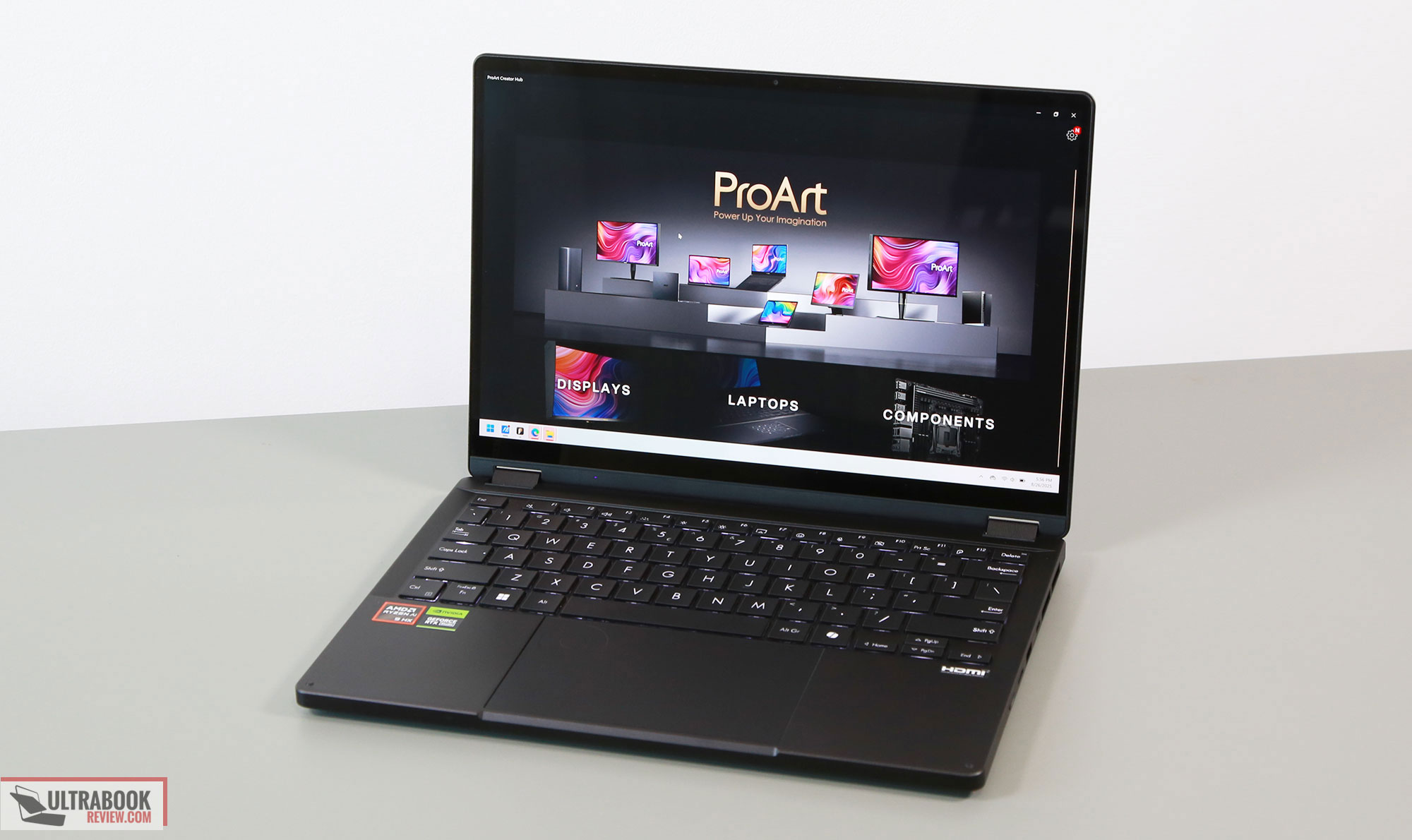
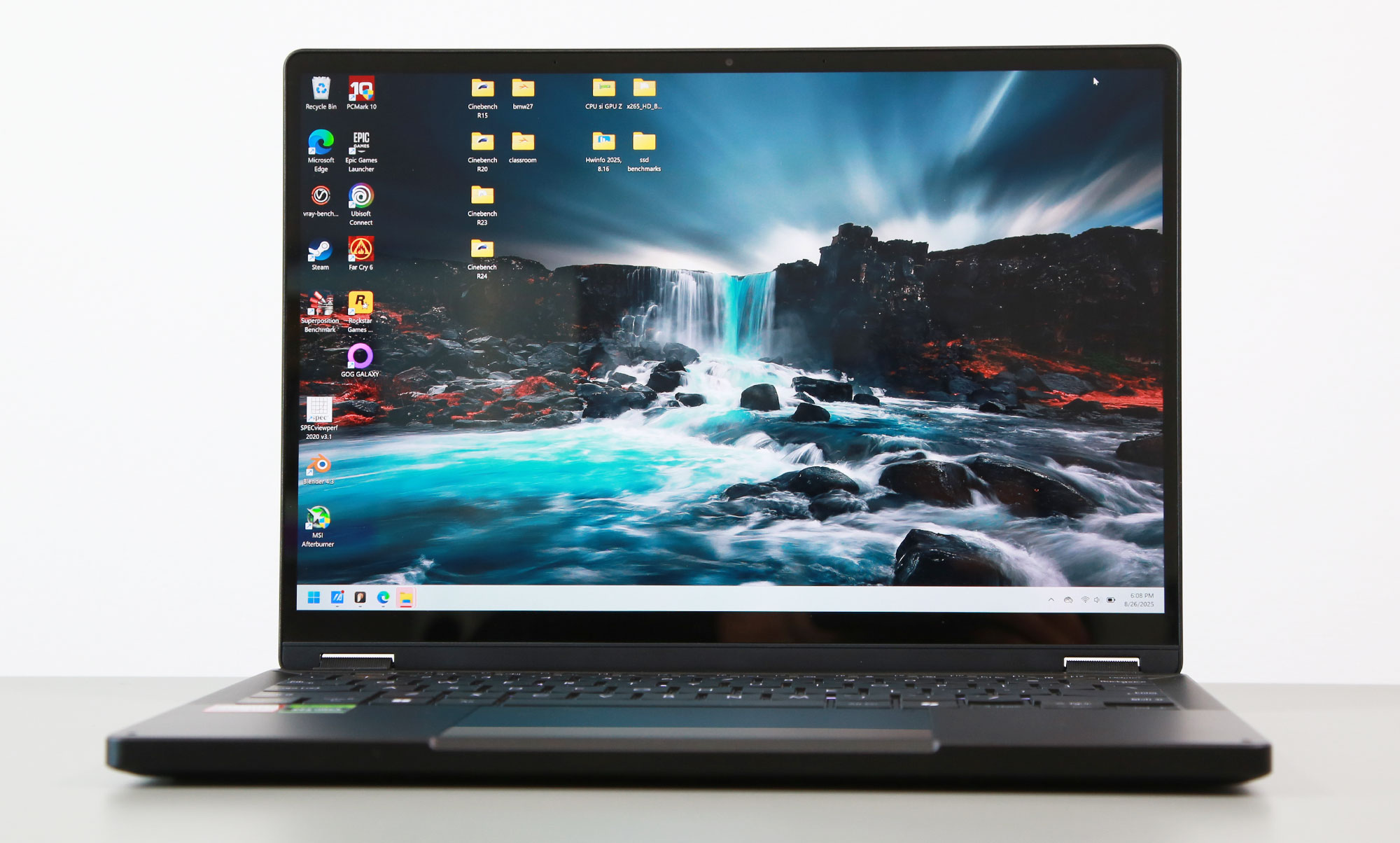
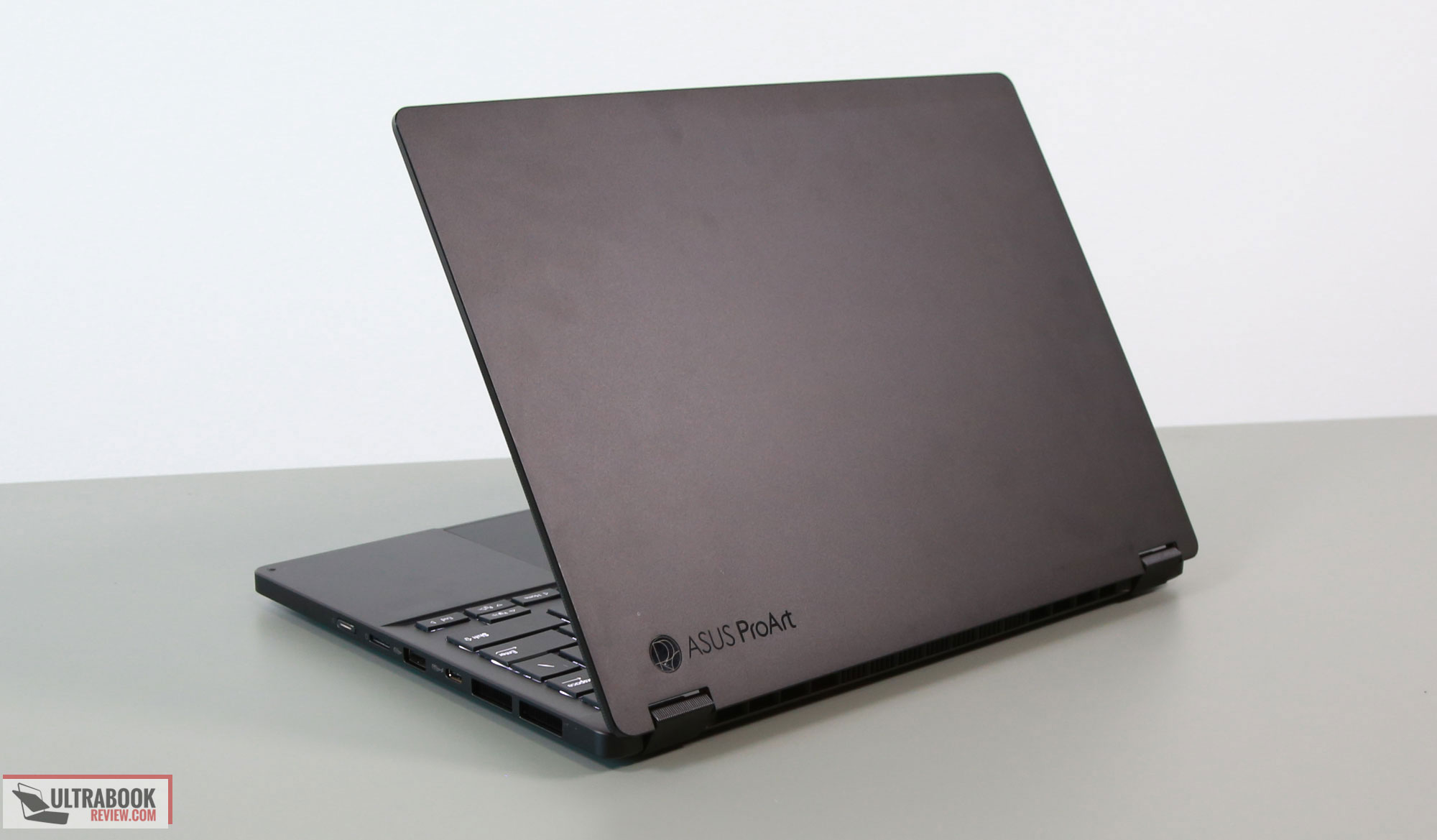

At the same time, the existing ProArt PX13 is quite a performer. Sure, it runs at more limited power than the larger options in the 14-to-16 inch segments, but it can still tackle the majority of potential loads, including work applications and games.
With Strix Halo on the refreshed 2026 generation, and we’re discussing the Ryzen AI Max+ 395 variant here, expect a 40% gain in multi-threaded CPU performance and about 90% of the GPU performance offered by the existing Ryzen AI 9 HX 370 + RTX 4070 configuration. Furthermore, you can also spec this with 32 to 128 GB of RAM, and up to 96 GB an be allocated to the Radeon GPU, with potential benefits in specific workloads and AI loads that can benefit from this amount of video memory. The Ryzen AI Max+ 395 platform has been around for a year now, so you most likely know its strengths and quirks (here’s how it performs in the Asus ROG Flow Z13 13-inch tablet).
I do expect Asus to offer the PX13 is some mid-level configurations as well, which should perhaps cater to a wider potential audience. The AI Max+ 395 hardware is not cheap, so don’t be surprised if that variant goes for 2000+ USD / 2500+ EUR. Hopefully, they’ll also offer the new Ryzen AI Max+ 392 and AI Max + 388 SKUs in this series, with 8C/12C CPUs and the same Radeon 8060S 40 CUs iGPU.
As far as my nits with the existing series go, this refreshed variant doesn’t change at least two of them: the panel is still a 60 Hz OLED, albeit a slightly brighter variant now, and the audio doesn’t seem to have been updated in any way.
However, I wonder how the Strix Halo hardware changes the high thermals under load and the fact that the fans rarely idled with regular use on the older PX13. I wouldn’t expect wonders, though, given my experience from the ROG Zephyrus Z13 with Strix Halo hardware. Asus aren’t mentioning the max TDP of this implementation, but I’d reckon it should still be around 95W, much like on the preexisting series. So this variant most likely won’t run cooler or quieter at full load. We’ll find out when we get this for review.
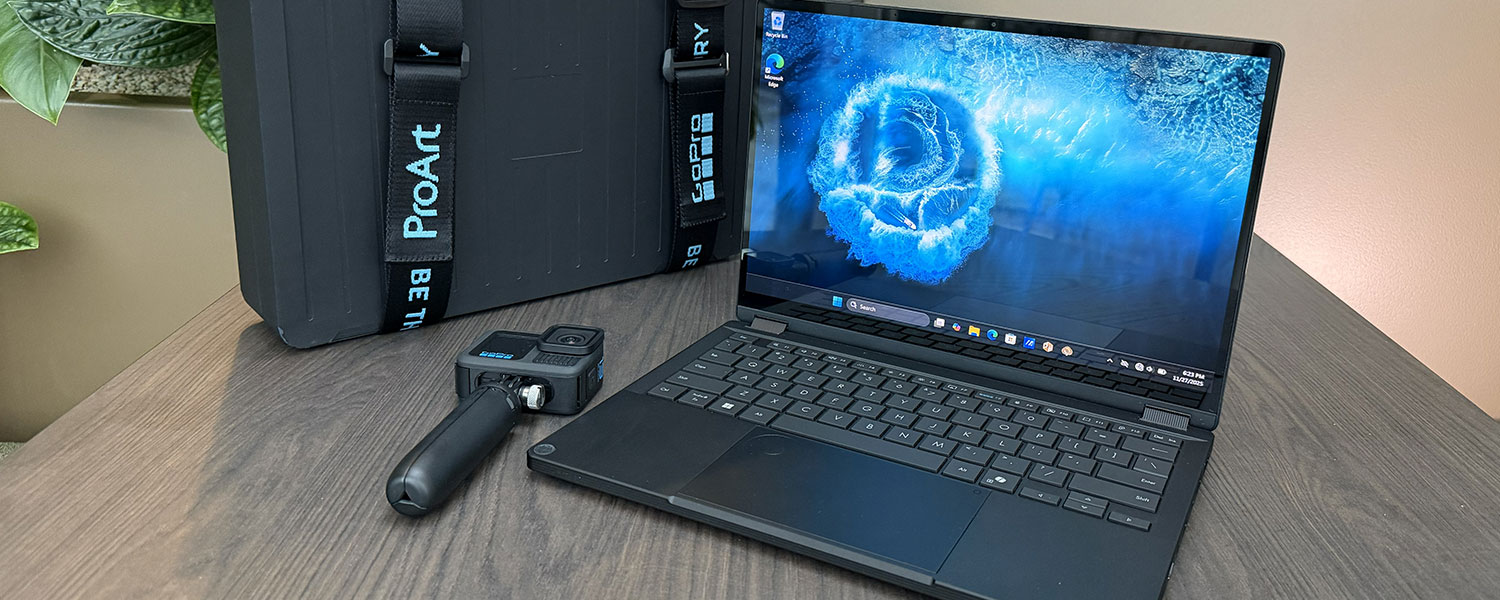
Oh, and btw there’s a GoPro edition of this ProArt PX13, called the GoProArt PX13. It offers a slightly redesigned chassis with some lines on the lid and a small GoPro logo, a more rugged interior texture, a keyboard that lights up in blue, and a case that fits the laptop and can be customized to integrate accessories such as a GoPro camera, microphones, earbuds, etc – it comes with some precut foam inserts that can be taken out to make space for your stuff. This GoPro edition comes at an extra cost, but includes a 12-month subscription to GoPro’s service and a 15% discount coupon for cameras as well. So perhaps it can be an interesting option if you’re a GoPro user.
Here are some images of this GoProArt PX13 edition that I got to handle for a little bit.
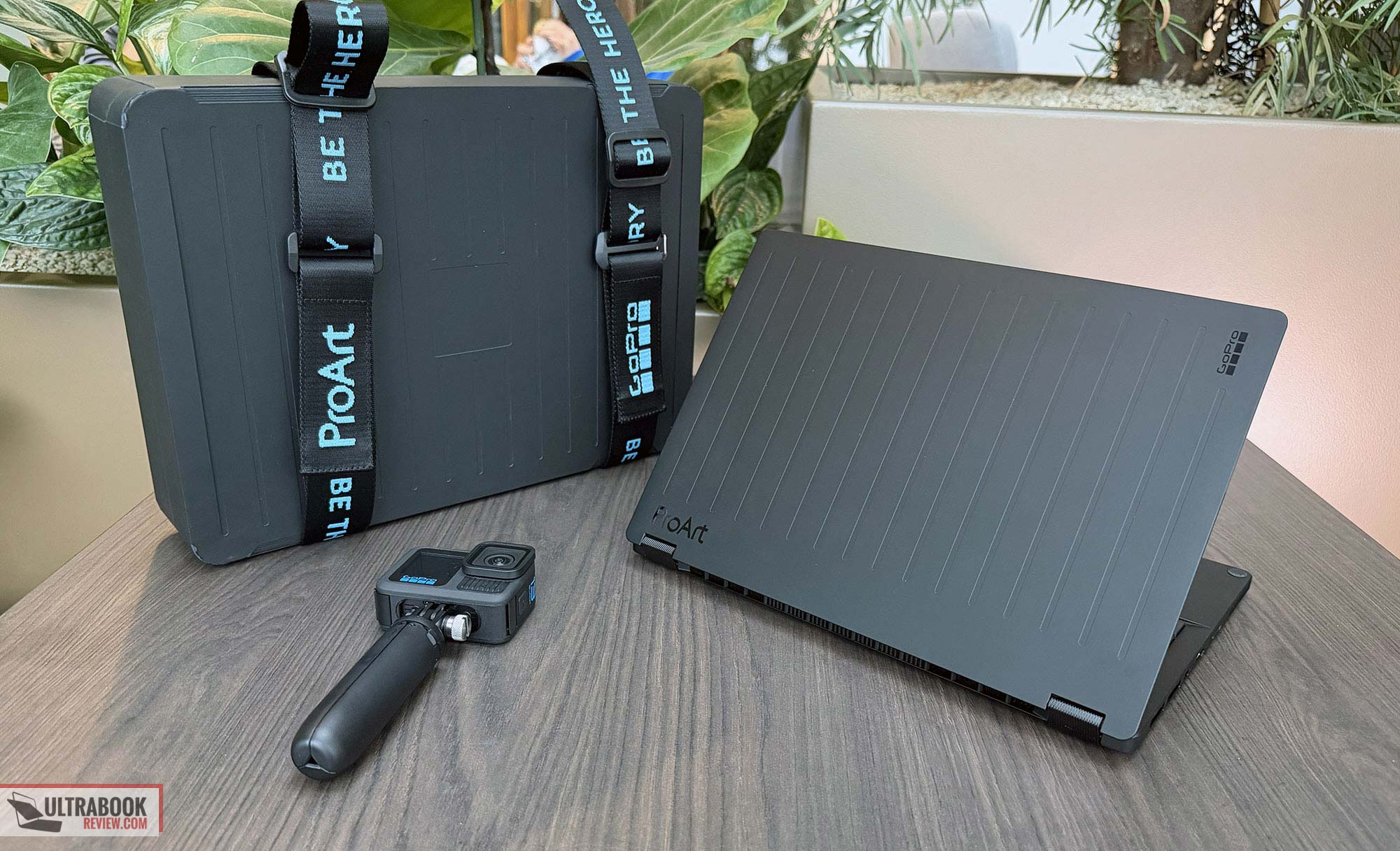
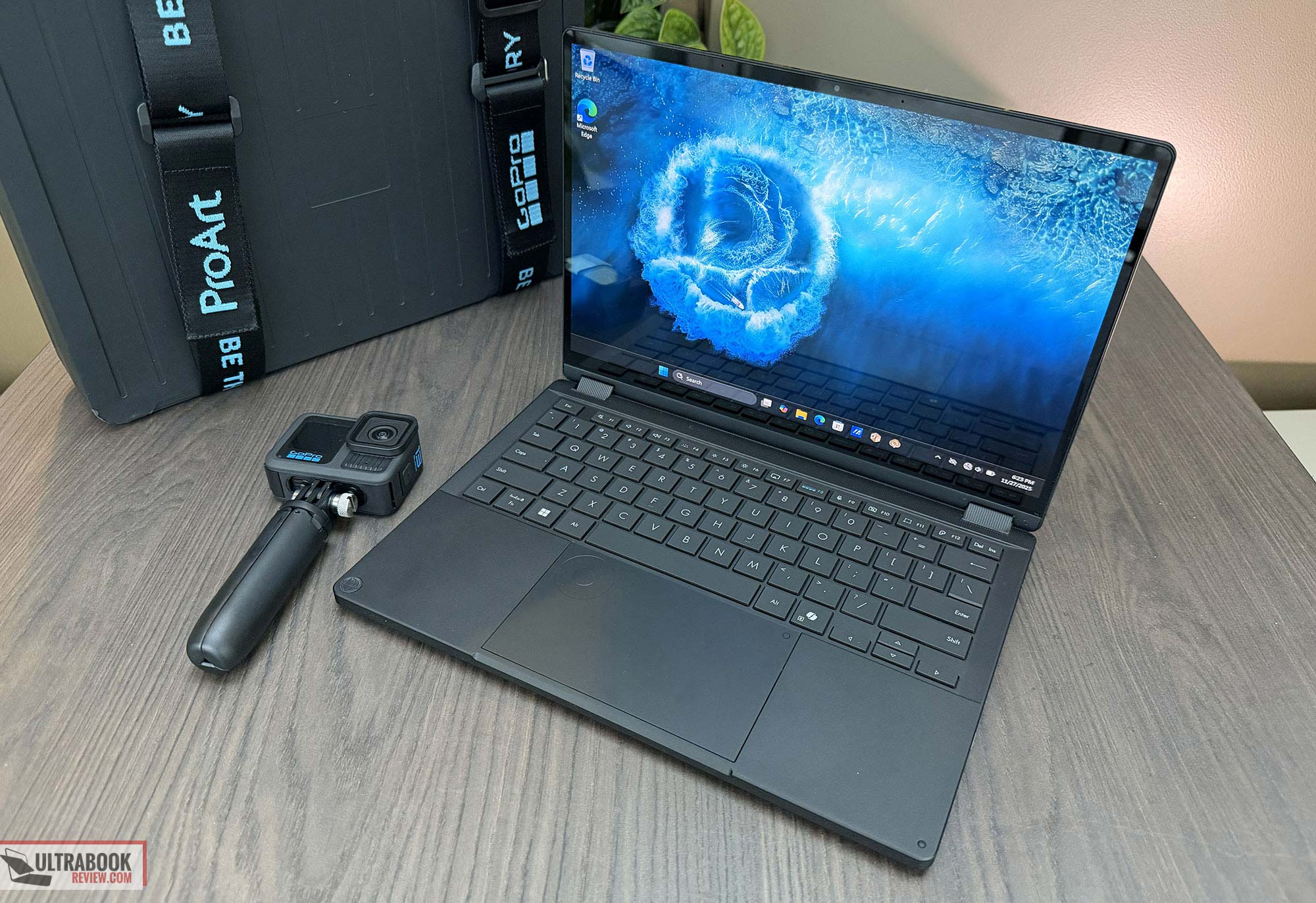
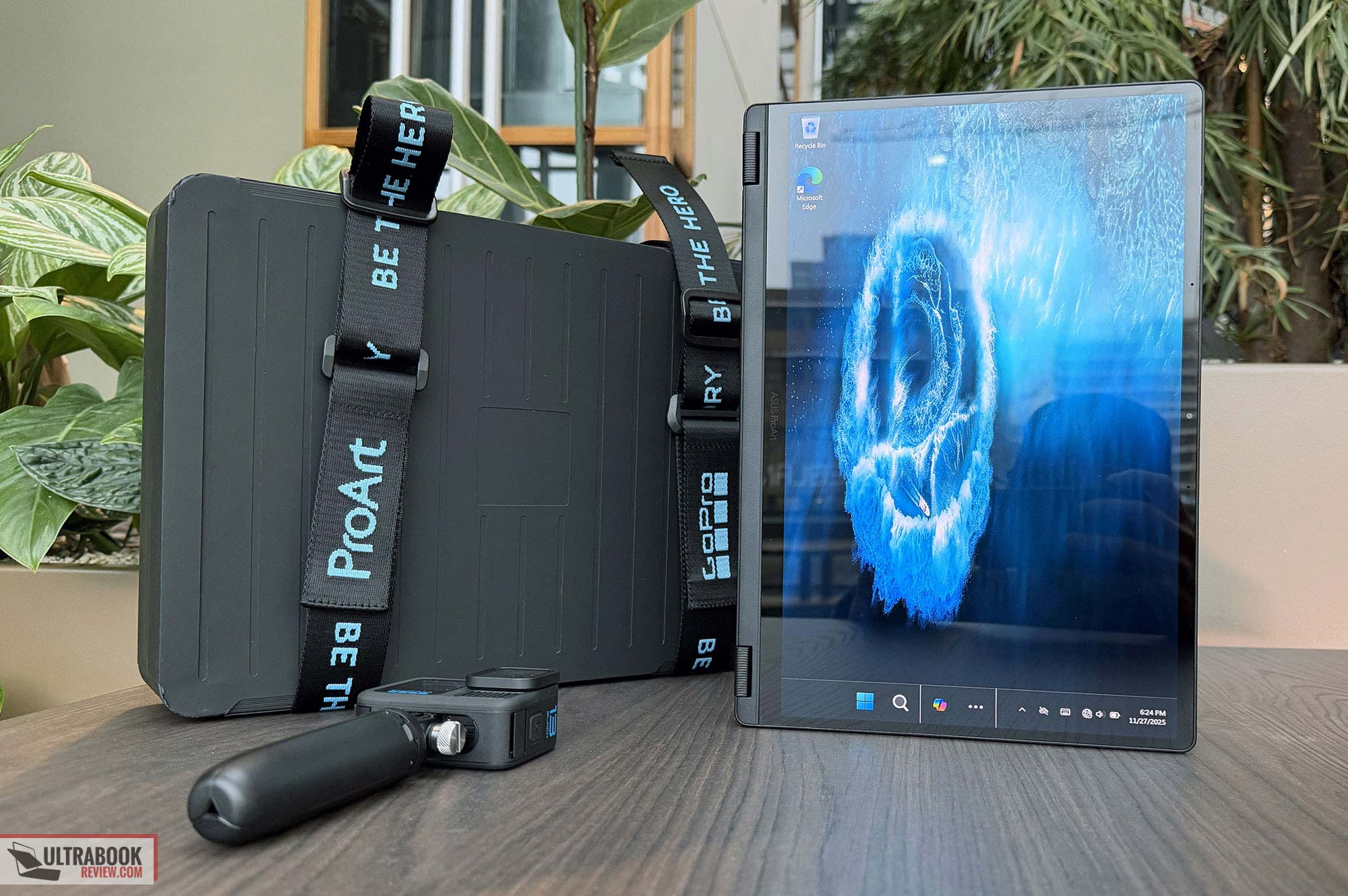
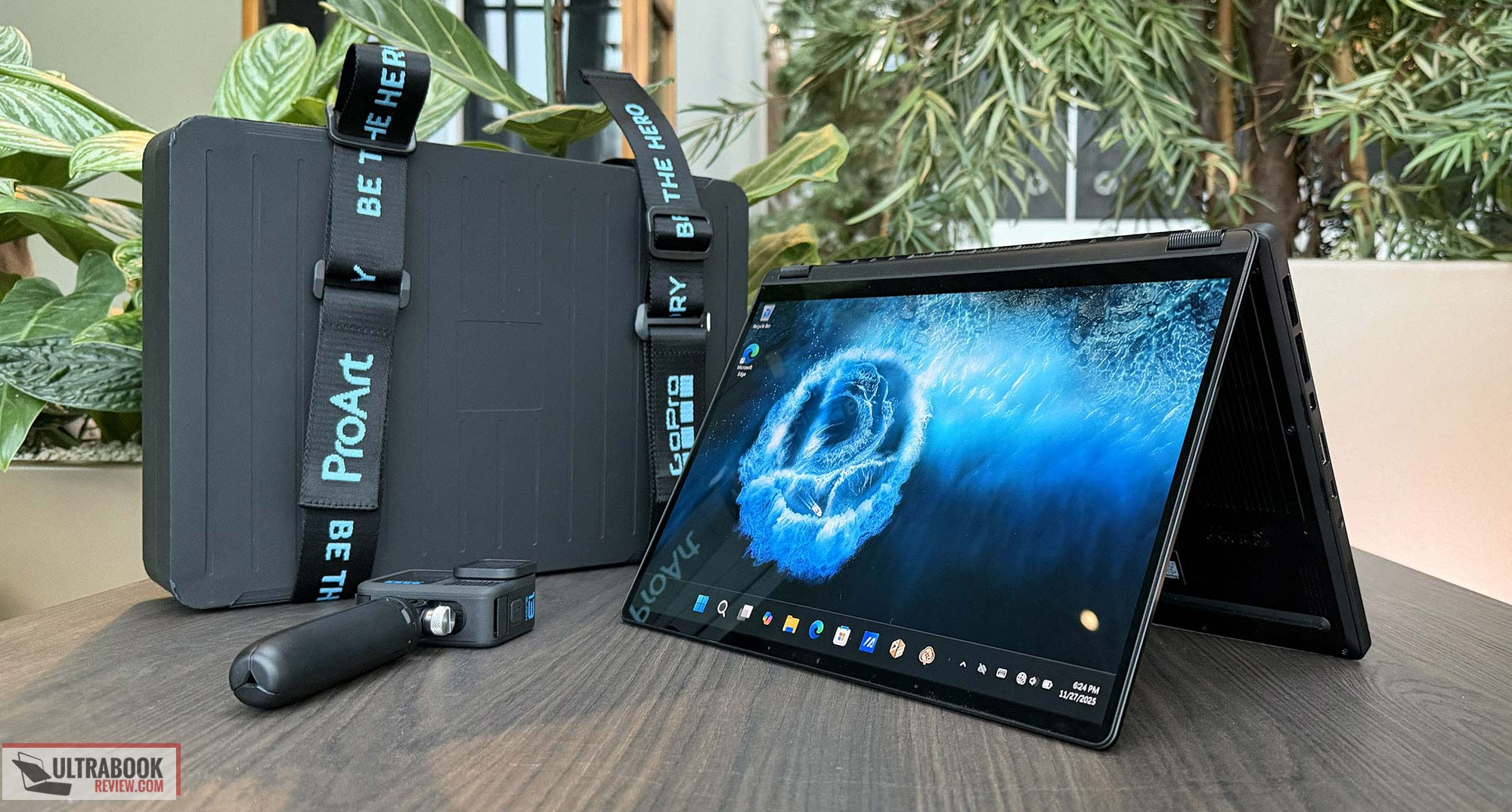
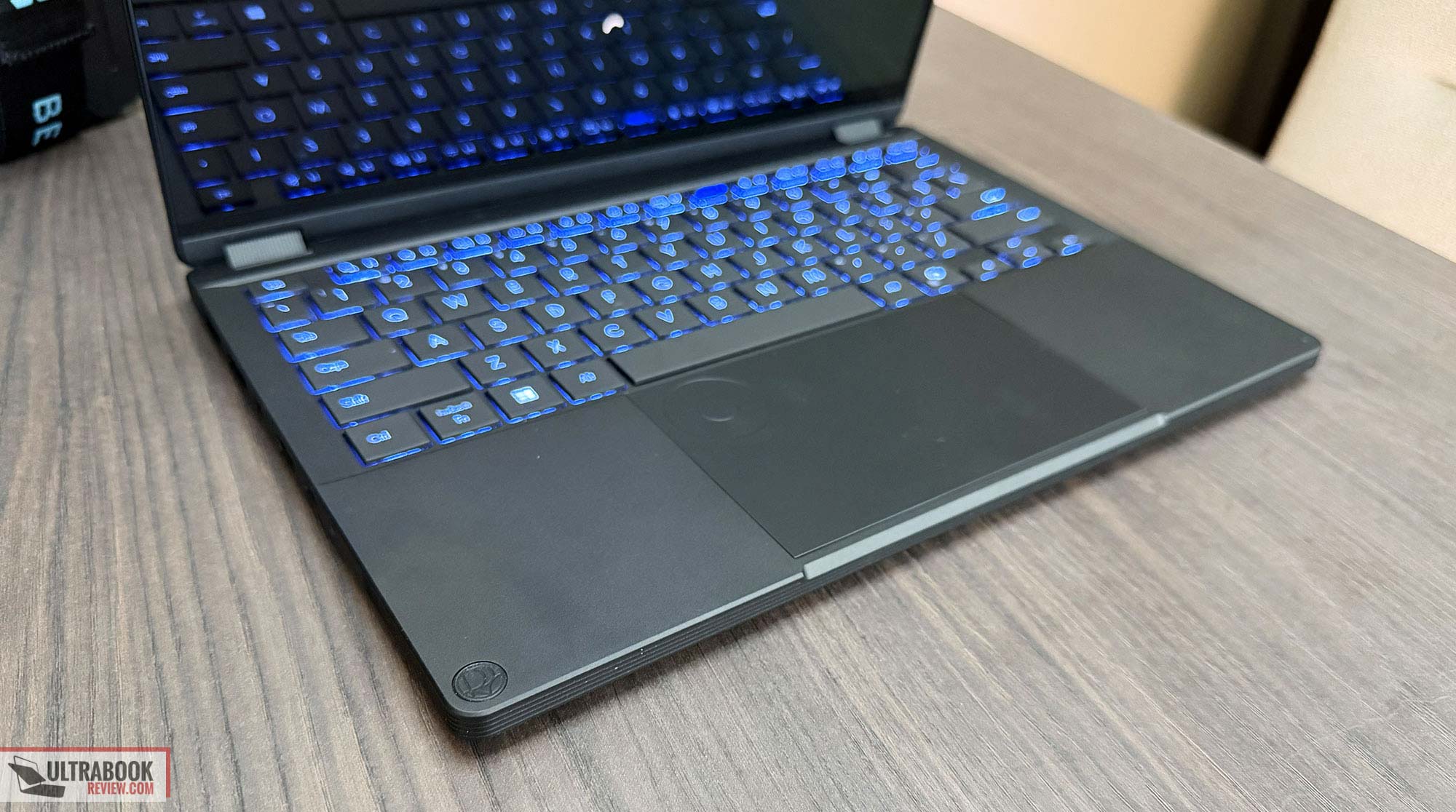
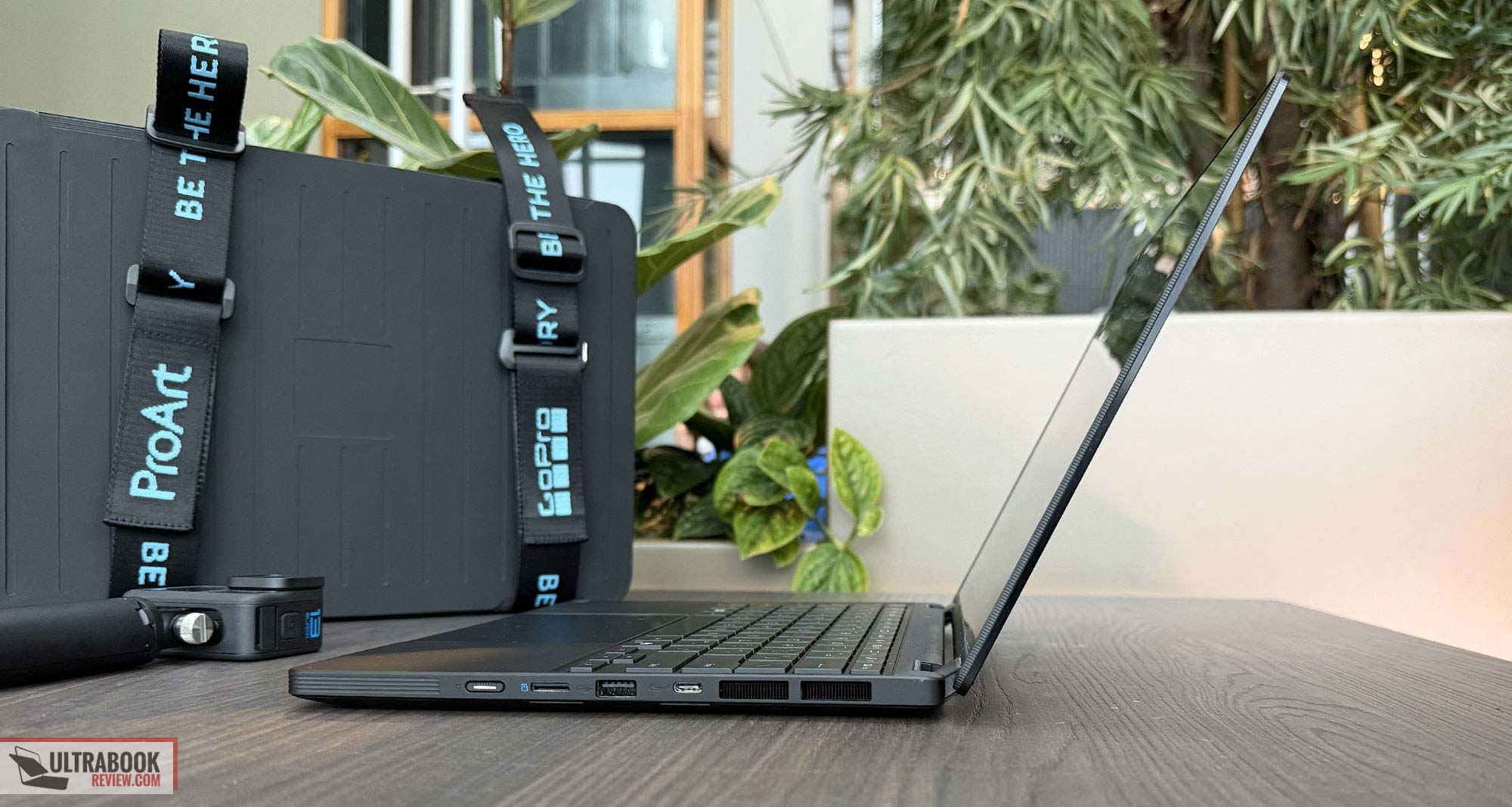
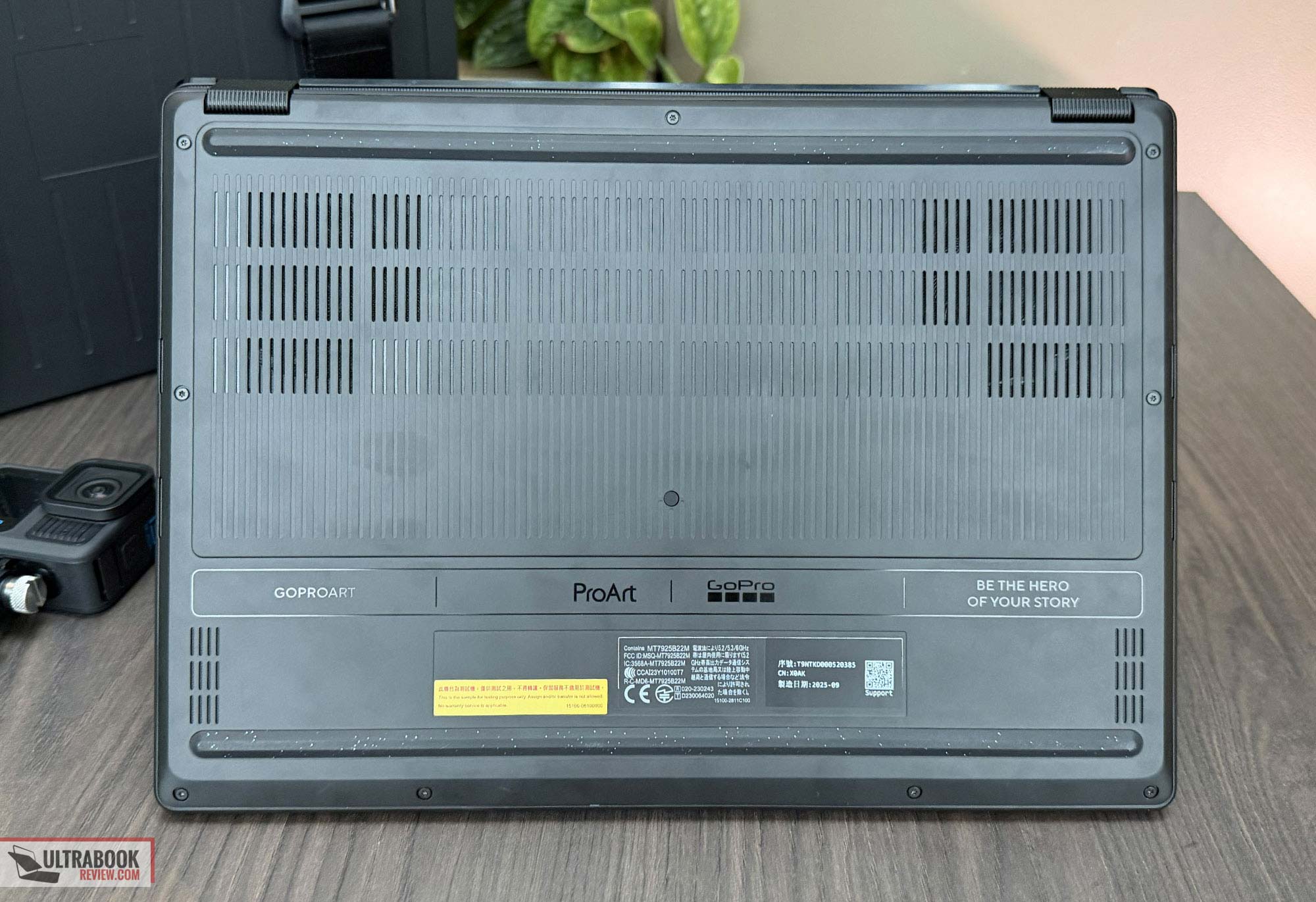
Asus also claims in their press release that the laptop can withstand harsher climates that include high humidity, low/high temperatures, dust, and so on. You should take those with a grain of salt and treat your device well, regardless.
I look forward to getting my hands on this ProArt PX13 update for a proper review.
Specs sheet – Asus TUF Gaming A14
| 2026 ASUS TUF Gaming A14 FA401EA | |
| Display | 14 inch, 16:10, non-touch, matte, IPS, 2.5K 165Hz, 450-nits SDR, 100% sRGB, 70% DCI-P3 |
| Processor | AMD Strix Halo Zen5, AMD Ryzen AI Max+ 392+, up to 95W TDP |
| Video | up to Radeon 8060S with 40 CU |
| Memory | up to 64 GB LPDDR5x-8533 (onboard) |
| Storage | 2x PCIe 4.0 M.2 2280 slots |
| Connectivity | WiFi 7 2×2 with Bluetooth 5.4 (Mediatek) |
| Ports | left: DC-in, HDMI 2.1 FRL, 1x USB-C 4.0, 1x USB-A 3.2, audio jack right: 1x USB-A 3.2, 1x USB-C gen2 with data&DP, microSD UHS-II card reader |
| Battery | 73 Wh, 200 W power adapter, USB-C charging up to 100W |
| Size | 311 mm or 12.24” (w) x 227 mm or 8.94 (d) x 16.9 – 19.9 mm or .67” – 0.78″ (h) |
| Weight | 1.48 kg (3.3 lbs) + .57 kg (1.25 lbs) for the charger and cables, EU version |
| Extras | clamshell format with 180-degree hinges, matte display, single-zone white keyboard with large glass touchpad, 1.7 mm key travel, 2 MPx webcam with IR, no fingerprint sensor, 2x speakers, dual-fan cooling with several heatpipes, rear heatsinks |
The Asus TUF Gaming A14 is a versatile mid-level 14-inch notebook. In the past, it’s been a good value fairly portable and lightweight daily driver, and I expect the Strix Halo updates to target a similar segment.
These images below are of the 2025 TUF A14, but the 2026 updates are identical, with only some minimal internal changes for the Strix Halo variant.
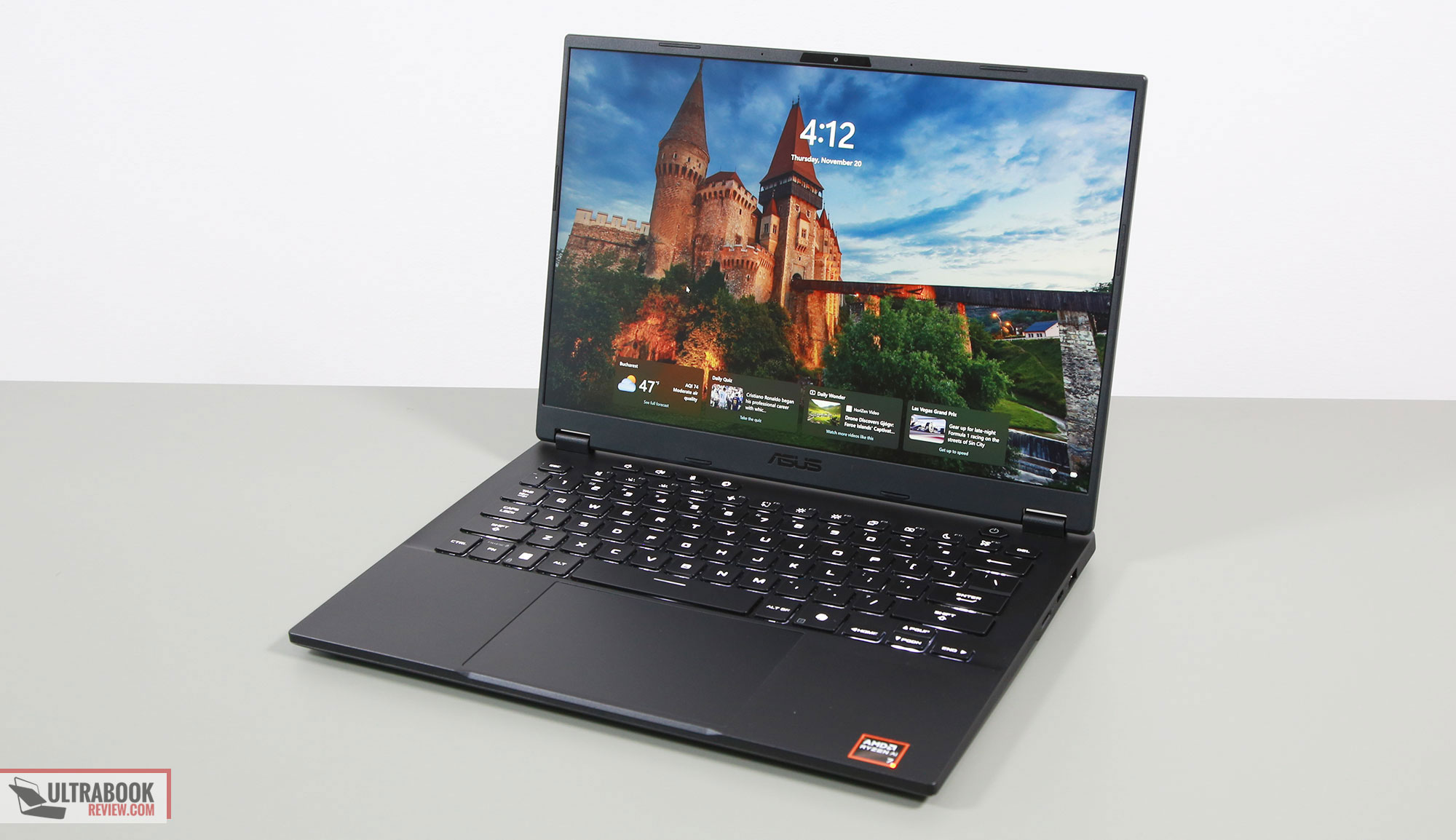
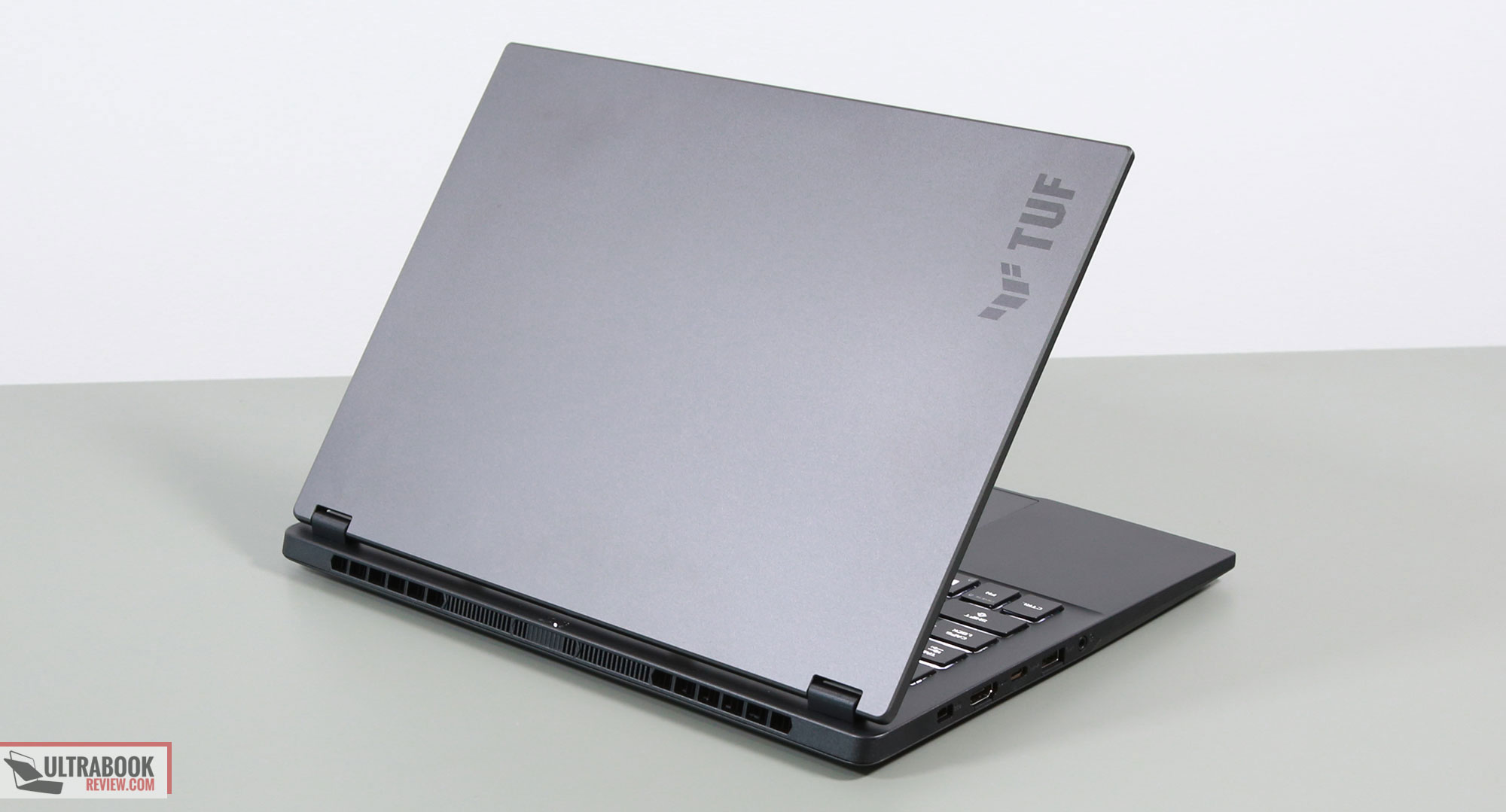
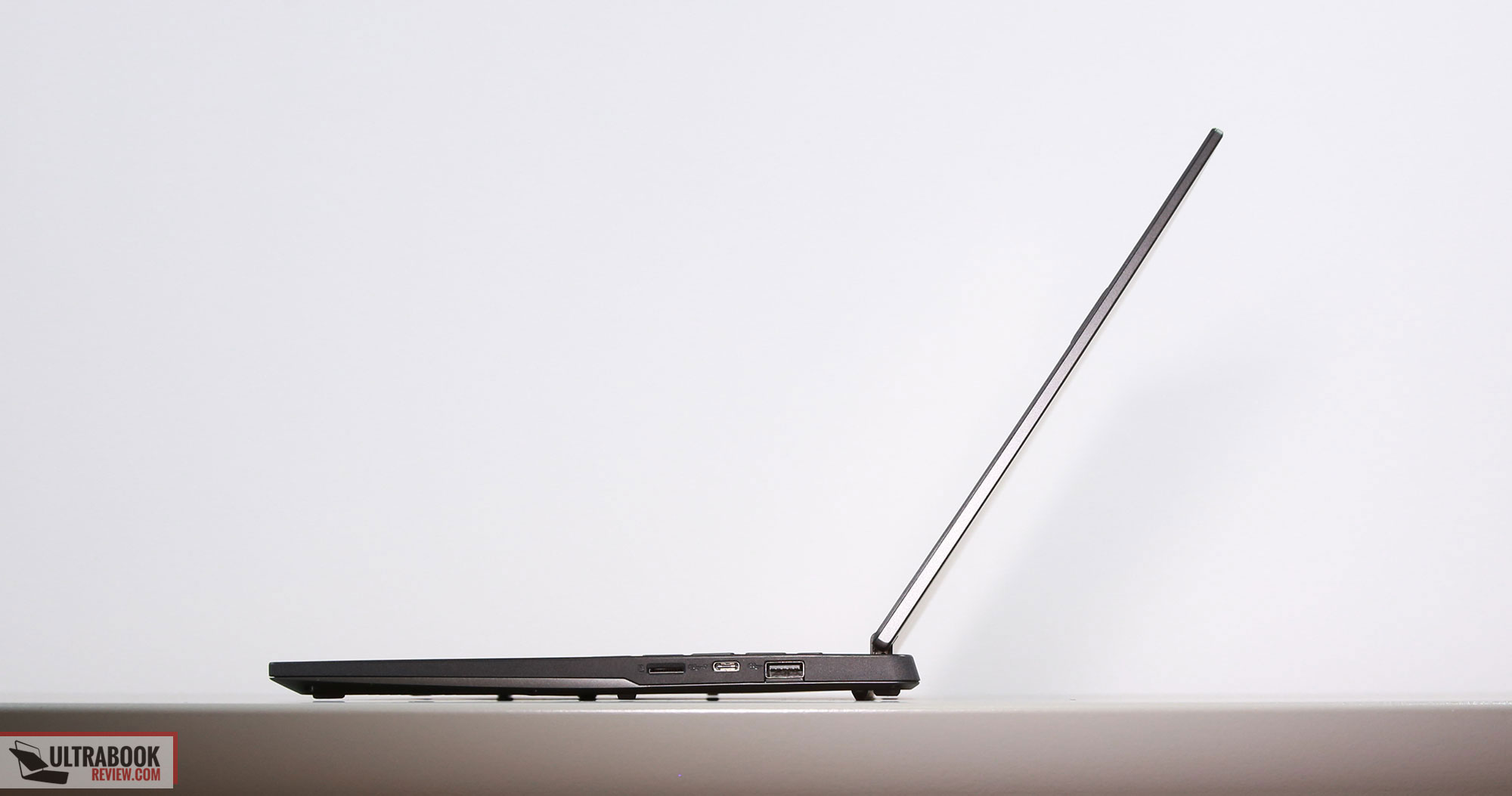
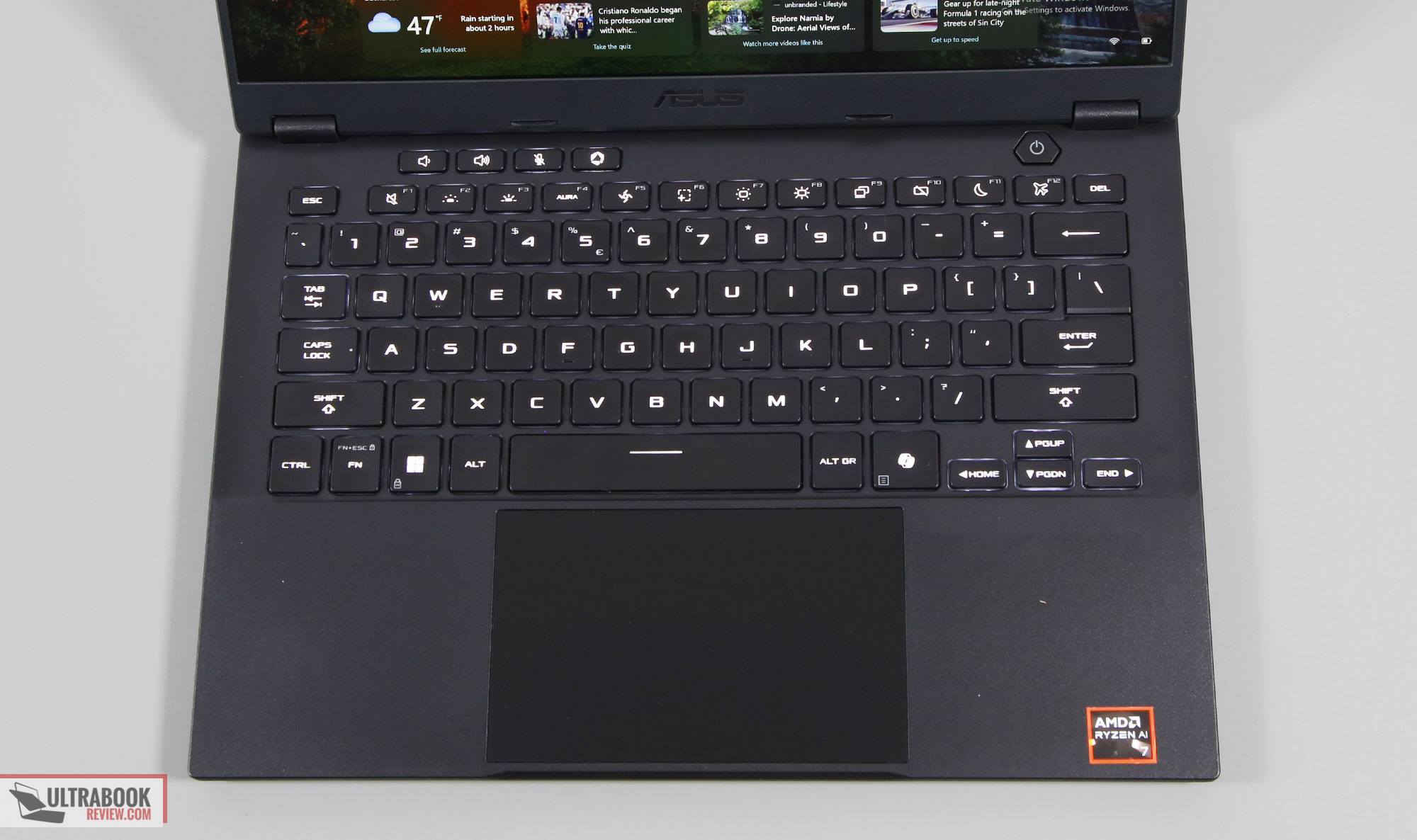
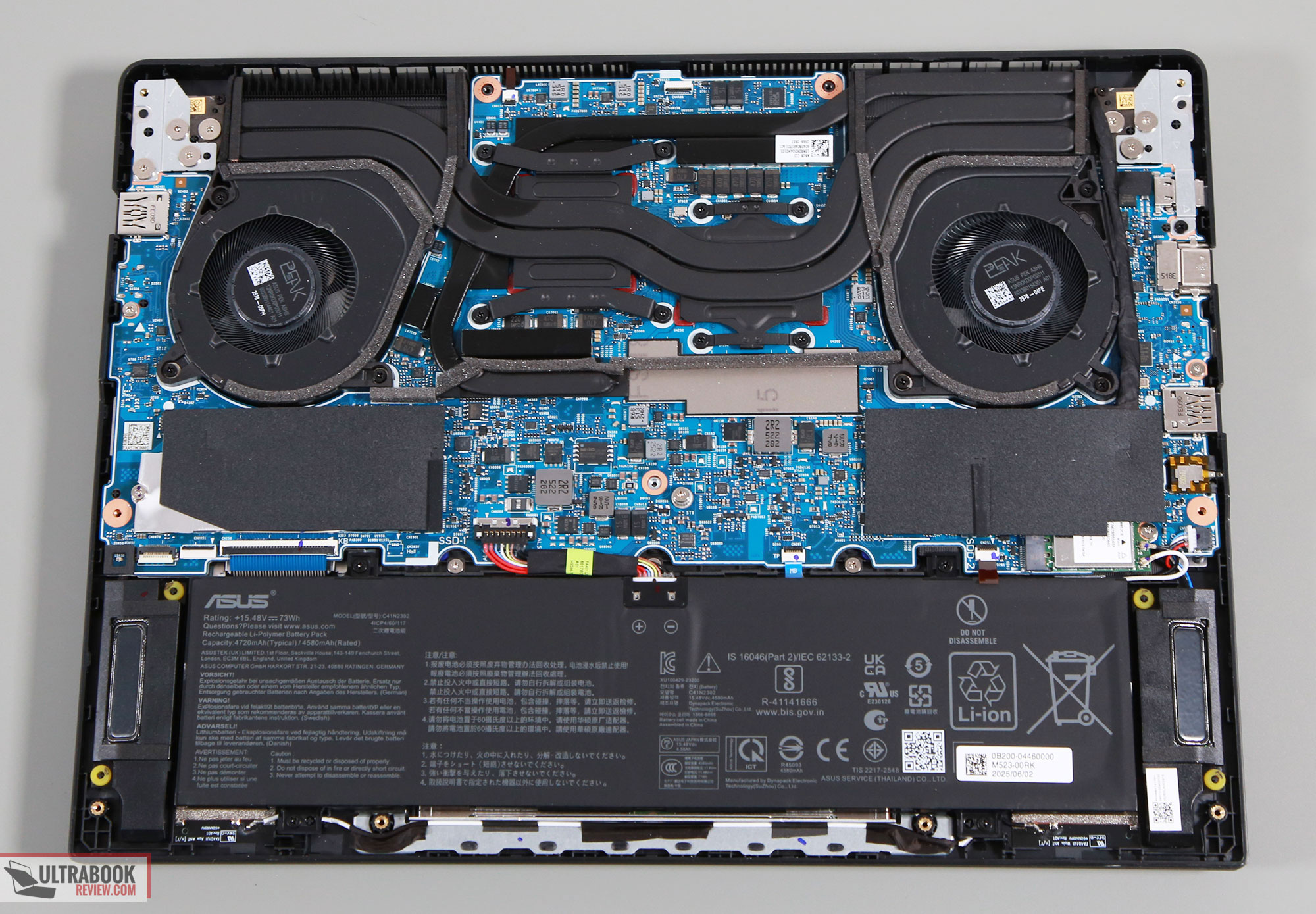
That means Asus offers the TUF A14 FA401EA subseries with the newer AMD Strix Halo SKUs launched in 2026 that bundle a 12C Zen5 processor with the 40 CUs variant of the Radeon iGPU – the AMD Ryzen AI Max+ 392. And while the platform supports up to 128 GB of memory, I doubt you’ll get more than 64 GB at this level. I was expecting a Ryzen AI Max+ 388 + 32 GB configuration as well, but it’s not available at launch.
Regardless, this configuration translates to faster overall performance on the CPU compared to the Ryzen AI 7 350 + RTX 5050/5060 105W popular configurations of 2025, and matching performance in GPU loads, but with some exceptions in games where the Nvidia chips benefit from DLSS support. This variant is rather a mixed-use/work daily driver and less of a gaming machine.
What’s especially interesting about this one is the advertised max combined TDP of 95W, lower than the 105W max crossload TDP on the Ryzen + Nvidia units. This setting could allow lower thermals and fan-noise around 40-42 dBA at full loads on this Strix Halo variant.
As a side note, there’s another update of this series ready for 2026, with the TUF A14 FA401G refresh that bundles an updated Ryzen AI Series platform with up to an RTX 5060 115W (with 130W total sustained power in Manual mode). This is going to hold an edge in GPU loads and especially in games where DLSS 4.0 can play an important role, as it is somehow a higher power implementation than the 2025 A14 models. But this is going to run warmer and louder (45-48 dBA at full blast), even if the power increase might also come with an updated thermal module, perhaps.
Stay around for our reviews of these TUF A14 lineups over the next months. I’m especially curious about the pricing and overall viability of the AMD Ryzen AI Max variant.